fragments and reflections
Fragments & Reflections
Joy that scandalizes crisis
Upon hearing that she will bear a child, Mary said, “My soul magnifies the Lord, and my spirit rejoices in God my Savior” (Luke 1:46-47). She is a teenager. She is unwed. She doesn’t understand how she can possibly be pregnant. She consents to the Lord’s words spoken through the angel. And she rejoices.
 Not only is Mary experiencing extreme personal insecurity; her people, the Israelites, are extremely vulnerable. The overwhelming majority of ethnic Israel is scattered among other countries and other ethnicities. The small percentage that has returned to Palestine is under the harsh Roman rule. They not only must work to meet the demands of the foreign power but also to pay the taxes of their own vassal king.
Far from the Roman throne, far from Herod’s palace, and far from Israel’s refurbished temple, a peasant girl receives the promise that the Messiah is coming. In the midst of economic hardship and political exploitation, in the face of hunger and need, and before the Messiah has come, Mary rejoices.
The economic and political crises that we experience today may be rough, but I wonder how they compare to Mary’s experience. Not only is her nation under brutal oppression and not only does she not have the modern benefits of running water, electricity or petroleum, but she also faces the likelihood of being marginalized by her family and society. In such a context we should expect fear or confusion or tears. In fact, if someone would rejoice in such circumstances, we would think they were crazy.
In the midst of job-loss, falling stock markets, failing currencies, deceptive political rhetoric, growing poverty, and crafty exploitation, Mary sings a song. And the Church has kept the song as her own, singing it in anticipation of God’s salvation. But now, as in Mary’s day, the “inappropriate” outburst of joy may scandalize those who have not experienced the good news that salvation is come. God has shown strength with his arm; he has scattered the proud in the thoughts of their hearts. He has brought down the powerful from their thrones, and lifted up the lowly; he has filled the hungry with good things, and sent the rich away empty. (1:51-53)
December Update
Dear Friends,
The Christmas season is already here, and we still feel like we haven’t caught up on all that God has been doing in our midst over the past months.
In September we helped initiate a Day Center in a village called Tudor Vladimirescu that is about a 40 minute drive outside of Galati. The chairperson of our board of directors purchased an old house and transformed it into a Day Center. While we are still working on acquiring all the necessary permits, we have enrolled 6 children thus far. They are helped with their homework and have times for games and art. As you can imagine, the situation in a village are different than in the city. Many of the kids are living in families with substance abuse and domestic violence. They have less access to running water and heat and do not benefit as much from social services. As we get to know the kids and receive new ones, we hope to develop activities that are truly supportive. Anca Nebunu is coordinating the Center, but we are praying that God will raise up others to help Anca and we are praying for the resources to develop the Center.
Since September we have been blessed with three interns, one from the U.S. and two from Scotland. They have been learning about Romanian culture by living with host families and studying Romanian. So that they can understand more about Word Made Flesh, our vision and our approach, I have been leading book discussions (which has given me the opportunity to re-read books that I haven’t perused for years). Our interns have been helping us with activities like re-doing our website, teaching dance, and figuring out the kids’ health issues. They have been a huge help to us. As they discern their vocations and future involvement, we pray that they will continue to develop community here with us. We also continue to pray for God to raise up non-Romanian long-term staff.
This autumn we have also been grateful to begin working more closely with a newer church plant near our Community Center. Some of the children attend the church, and Oana, our social worker, has begun leading the church’s children’s program on Saturday. We pray that other families in the neighborhood will integrate into the church, and we pray for a fruitful collaboration into the future.
We have continued our adult literacy program. During the summer we taught reading. This autumn we focused on writing. After the word got out that the adults that did the summer program are already reading, we had many more participants this autumn. We plan on starting a new reading module in January.
We are now planning our Christmas activities. The kids are learning carols – which is especially funny and challenging for the new children. We are preparing presents. We are organizing a Christmas drama, which the kids will perform for their parents. And we are planning our all-night Christmas party for the kids. Our prayer is that each child and their entire family will understand and experience the Son’s coming into the world, His life with us, and His life for us.
Thank you for praying for us and for all your support over the past months. We are extremely grateful to participate with you in what God is doing in Romania among marginalized families.
Yours in Christ,
David and Lenutsa Chronic
Advent: From Control To Surprise
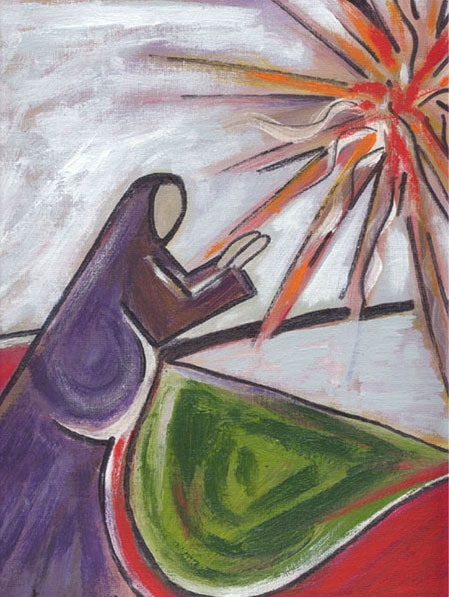 We have two conceptions of the future. One is how we normally think about the future. It is the time ahead of us. Although we don’t know what the future holds, we can predict the probability of events happening in the future by extrapolating the past and present. There are even scientists, called futurologists, who specialize in predicting the future based on current trends. This conception of the future gives us a sense of control over what is yet to happen.
The other conception of the future is advent, which means coming. We anticipate an event based on a prophetic promise. Advent is a surprise. It is not the continuation of time into the future; rather, it is the coming of the future into our present experience. It is an interruption. But advent is so discontinuous with our world and so unexpected that it more than a simple interruption that disturbs us and then allows us to return to our normal lives. Advent is an interruption that affects everything forever.
The danger of meditating on the coming of the Messiah through the first perspective of future is that we have a sense of what to expect. At the first Advent, everything was a surprise. Although there had been expectation for the Messiah, the way that he came was completely unexpected.
This is also the danger of anticipating Christmas every December 25th. We associate Advent with the cycle of the seasons. When it gets cold, we begin to expect Christmas. With its annual repetition, we get used to Advent. We get used to Magi, shepherds, and miraculous births. In a contradiction of terms, Advent becomes nostalgic.
But we can actively resist our tendency to turn Advent into a cyclical, foreseen future. We can try to bracket out the adult life of Jesus and the development of church theology as we read the early chapters of the Gospel narratives. We can ask ourselves what were they hoping for, how were their expectations fulfilled, how were expectations redefined, and how were they surprised?
We can also resist the temptation to control Advent by doing the unexpected or by doing something new, something different and something challenging. We can ask God for the grace to see the unexpected.
We can also reflect on Advent through the lens of the Second Advent. We have the prophetic promise that Jesus will come again. We don’t know when. We don’t know how. If his first coming is of any indication of his second coming, then I would postulate that we will be surprised by how unexpected Jesus’ glorious coming will be.
Although our waiting for the Second Advent is one of uncertainty, questioning and astonishment, we are also aware that the future of the kingdom of God is breaking into our present – even here and now. Our anticipation of God’s coming helps us to look for the signs of God’s kingdom in our midst. This may be Jesus’ invitation, given through the hungry, to the wealthy to be generous. It may be the praying, touching and healing of the sick by the Spirit. Or it may be the Father’s words and the Father’s presence communicated to you today. The signs of the kingdom of God cultivate our hope and make us long even more the fullness of his Advent. This is our future.
Generosity in the midst of poverty – a reflection on Nicholas
I will call him Nicholas – an English variant of his Romanian name. Nicholas has a toothy grin that he often flashes, revealing the deep joy of childhood. He is the youngest of four brothers and an uncle to a two-year-old nephew. He lives in social housing at the top of a hill in the city’s flood plain.
 On my first visit to Nicholas’ home, I was greeted by pigeons fluttering overhead and chicks and ducks filing along the narrow path that led up the hill. In the cleft of the clay, Nicholas’ family has built a roost for their various poultry. Nicholas had told me about his flock of pigeons that he faithfully cared for, but I didn’t know about the ducks and chickens. I thought that they must be a good source of food for the family, only to learn from his mother that they are too attached to them to slaughter them. The family cares for the birds out of the pure joy of having them. (They do have a pig, fattened on kitchen scraps that they will butcher at Christmas).
Christmas – this year will be a difficult holiday for Nicholas’ family. In the center of their small yard, they have dug an outdoor toilet. On the other side of the yard is their small, two-room house, built out of a wood frame and thatch. Although they have no running water, they have a little kitchen in the entry way, where they cook on a small gas-powered stove. The cracked and corroding floor is insulated with rugs, and couches covered with wet laundry line the wall. When the family finds wood scraps or when they receive firewood from a benefactor, their terracotta stove heats up the main room in which there is a large bed and a television that is always turned on. On the bed lies Nicholas’ father. He body is emaciated, the skin hanging loosely from his protruding bones.
Last year the family learned that their father has cancer. Although he wasn’t employed with proper working papers, he did work and he did bring home money and food. Nicholas has watched his father change from the strong bread-winner to one who is weak and dependent. As his father has grown weaker and weaker, so Nicholas’ attendance at school has been less and less frequent, his tantrums and fights with schoolmates have become more recurrent, and his joyful smile is shown more and more seldom.
It is a strange world in which cancer is “good” news for a family. Because Nicholas’ mother has to carry her husband without wheelchair to the outhouse or to the hospital and has to cook and clean for him, she is given a monthly “care-giver” salary. Without this source of income, the family would be even more desperate.
Last week Nicholas and I worked off some of his surplus energy by digging in the garden. As we plowed up the soil, I asked him about his grandmother and cousins who live on the other side of the tracks in a squatter community. Although his extended family is living in an even more impoverished environment, Nicholas smiled widely as he told of his grandmother and of all his little cousins. When I asked them what they would do for Christmas, Nicholas just shrugged. Then I asked him if he would like give his cousins presents for Christmas. I explained that he would have to work a few hours in order to get the gifts. Nicholas smiled again, and then he started to dig faster.
 Although we are witnessing the inner and outer turmoil in Nicholas and his family, his joy and his generosity remind me of Nicholas’ namesake, a saint famous for his gift-giving and his prayers for healing. In the English-speaking world, we have blended Saint Nicholas with Father Christmas, but in other parts of Europe, Saint Nicholas is celebrated on December 6th. Saint Nicholas was a fourth-century bishop, credited for bringing healing to the sick through his intercessory prayer. He is also famous for his secret gift-giving. After visiting the Saint, children often found coins in their shoes. That led to the tradition, still practiced in Romania, in which children leave their shoes at the door in order to find them in the morning, filled with gifts.
Unlike Saint Nicholas, our Nicholas doesn’t benefit from a stable church community, the luxury of a good education, or the wealth of the episcopate. Yet, our Nicholas opens a window through which we see surprising sources for joy and giving. Although he has little, Nicholas is a miraculously full of generosity. Although his family is needy, they are full of compassion, even for dozens of pet birds. Although Nicholas is presently experiencing deep pain, his smile cannot be restrained.
We pray that Nicholas will be graced with the other charisma of his namesake: healing. With Nicholas and his family, we pray that God would touch and heal his father. We pray that God would be especially present to them this Christmas. And, as Nicholas gives the presents that he worked for to his little nephew and cousins, we pray that the joy and generosity evident in Nicholas’ life will touch others.
The pain of waiting
The promise of the coming Messiah had been pronounced. The promise provoked anticipation. There was the prophet, Anna the daughter of Phanuel, of the tribe of Asher (Luke 2:36). Over 700 years earlier, her tribe had been exiled from Israel and largely assimilated amongst other ethnicities. As one of the few representatives of her tribe, she awaited their return from exile and the restoration of Israel (2:38).
 Anna was of a great age, having lived with her husband for seven years after her marriage, then as a widow to the age of eighty-four (2:36). She had suffered the loss of her husband, bread-winner and family-head. She endured as a female prophet. If women in today’s world have a tough time sharing God’s word, imagine the difficulties Anna confronted in the patriarchal culture of her day. She waited and waited. She was 84.
Anna never left the temple but worshipped there with fasting and prayer night and day (2:37). Her waiting was active, cultivated by days and nights, weeks and years of worship, prayer and fasting. When will the Messiah come?
We live on the other side of the Messiah’s coming, but we await his return. We have received the promise that Jesus will come again to resurrect the dead, to judge and to renew creation. In our waiting we witness injustice, oppression, evil and death. Knowing that the Messiah will come again makes the sickness, subjugation and wickedness all the more intolerable. We cry out with the martyrs at heaven’s altar, “How long until you come?” (Revelation 6:10).
Like Anna we participate in the long wait of all ethnicities for the day when the kingdoms of the earth become the kingdoms of our Lord. Like Anna we bear loneliness and social exclusion, honing in on God’s words that serve as daily nourishment for the wait. Our waiting takes the form of prayer and fasting, knowing that God is mysteriously waiting with us. We ask for signs of salvation, signs of healing, signs of deliverance. But where it seems that oppression and sin win the day, our waiting is painful. It means enduring. And we keep waiting, aging and anticipating, knowing that death will not have the last word. We believe the Messiah will come.
misiune si migrare
Acest video este de la Societatea Cersetorilor tinuta la biserica baptista “Sfanta Treime” despre misiune si migrare:
For Mission or For Church? – A Question about the Future of the Lausanne Movement
 As we approach the one-year anniversary of the Lausanne Congress in Cape Town, I thought I’d share some thoughts on the church’s participation in the Lausanne Movement. At the event, there were about 4,000 participants from 198 nations. The goal was to have the participants represent the demographic of global church leaders. Although women, as a percentage of the global church, were underrepresented, the ethnic representation was quite diverse. I was impressed by the constant possibility to listen, to encourage and to build relationships across broad swaths of the church.
However, Andy Crouch noticed that another particular group was underrepresented. In his article for Christianity Today entitled ‘Unrepresented at Cape Town’, Crouch observed that of the four thousand delegates participating at the Third Lausanne Congress in Cape Town, the prominent figures from evangelical churches in the U.S. were underrepresented. Crouch speculates that their absence is due to these “important” leaders’ decision to use their power and time elsewhere. From his observation, Crouch extrapolates implications on power, influence, innovation and the future of global evangelical movements. While I would agree with some of Crouch’s analysis, I think that the absence of “western” Church leaders is not simply a matter of their deciding how they use with their influence and their limited time; rather, it points to a deeper problem inherent in the Lausanne Movement. It reveals a division in the Lausanne Movement between traditional “sending” countries and traditional “receiving” countries, and it indicates a misguided division between church and mission.
The West and the Rest
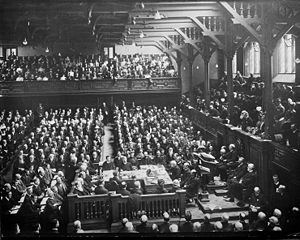 The inception and development of the Lausanne Movement has had the primary goal of engaging those outside the church through mission and evangelism. Many of the signatories and proponents of the Lausanne Covenant were churches interested in global mission, missionary agencies and para-church organizations.
However, as missionaries and evangelists established churches in these “unreached” locations, many of the new churches adopted the Lausanne Covenant as a statement of faith. The Lausanne Covenant was an intrinsic part of their make-up. Moreover, as churches networked, evangelical alliances and federations used the Lausanne Covenant as a basis for their organizations.
The result from these historical developments is that churches from the so-called “west” view the Lausanne Movement as relevant for outreach and primarily for cross-cultural mission while the rest of the global evangelical church understands the Lausanne Movement as a central statement of faith and a basis for ongoing church development.
So, I don’t think “western” evangelical church leaders were absent because they were not interested or because the Cape Town Congress was trumped by other priorities. Rather, I suspect that “western” church leaders do not view Lausanne as relevant to their church ministry. If my suspicion is true, a sad corollary is the cloaked patronization that our “western” churches, perhaps unwittingly, communicate: “We think that the Lausanne Movement is good for you, but we don’t need it.”
This, I think, is the real issue regarding the use of power – and not merely the access to the public platform, as Crouch supposes. The power of the “western” churches is the ability to do it alone. The “western” churches can afford to have their own individualized statements of faith and to choose whether or not they develop local partnerships. While these choices and individualistic stances are simply wrongheaded, in places where churches are a minority or where they have few resources, they are also luxuries. What is worse is that this use of power divides rather than unites the global church.
Church and Mission
Recognizing that the traditional “missionary-sending” churches appeal to the Lausanne Movement for its “missionary” activity but not for its “church” activity helps to identify an underlying theological problem. Namely, there is a rift between “church” and “mission”. Thinking that there is “mission” for those outside of the church and “church” for those inside the church is a mistake. Mission is the action of God through the Church. The Church is the Body of Christ, empowered by the Spirit to be the Father’s witnesses in the world. The church is missional, and mission is ecclesial.
Of course, this division between “church” and “mission” has been identified by many like Brunner, Newbigin and Bosch. What we see today in the lack of participation by “western” church pastors in the Lausanne Movement is a very concrete social manifestation of this theological error.
Unity through the Lausanne Movement
Although the divisions between the traditional “sending” churches and the traditional “receiving” churches and between conceptions of church and mission pose problems for the Lausanne Movement, the Lausanne Movement is in a unique position to ameliorate these divisions.
Lausanne can begin by naming these divisions as a problem. Lausanne can continue bringing churches together, including traditional “receiving” churches but especially traditional “sending” churches. Lausanne can help the “western” churches learn from the missional churches in the “non-west” to develop missional perspectives and activities in their local church contexts. They can also help the “western” churches understand that the Lausanne Movement is not simply a mission movement but a church movement, and they can build relationships between local churches in the “west” and local churches throughout the world.
Likewise, Lausanne can facilitate the “non-western” churches in working with “western” churches to send missionaries not only into the local communities, cities and villages but also into trans-geographic contexts.
The Lausanne Movement can also facilitate the development of a more robust theology of missional churches and ecclesial mission.
By recognizing and mediating these divisions, the Lausanne Movement can support not only the church’s engagement in the world but also mediate healing and development within the global church. The church’s power can serve to bring us together. The church’s resources can be shared more effectively. The global church can become more united. And, at the end of the day, the Lausanne Movement itself will be a more credible representation of the global church.
Hell: Not Just a Place in Michigan
 Last week I read Rob Bell’s book Love Wins and Francis Chan’s piggyback book Erasing Hell. Although I have not read the blog hype about Bell’s book, I did order the books to find out what all the commotion was about. Since I’m unfamiliar with the blog debates, this may be repetitive.
Because Bell’s book made New York Times best-seller, I expected to discover something new. I didn’t. So, I surmised that the timing of Bell’s discourse must coincide with a lot of people’s own struggles with questions about eternity.
Let me start with some problems I have with Bell’s presentation. I feel like he over-emphasized one’s “freedom” and one’s “choice.” Bell depicts human freedom as the result of God’s love, which I agree with. But it seems counterintuitive to propose that God’s love wins when I have the freedom to choose what I want.
I also think that Bell takes “restoration” out of its biblical context and imposes his own categories of hell. He offers Origen as an example of a Church Father who promotes the reconciliation of every person and thing, but the Church condemned this idea as heresy.
I disagree with Bell’s reduction of resurrection to the earth’s life-cycle. Resurrection in the New Testament is an interruption and a completely new experience of new life without death.
 I do appreciate Bell’s interpretation of the Last Judgment in Matthew 25 and his explanation of inclusivism and universalism. But he came across, to me at least, as being quite ambiguous. He presents these views sympathetically without explicitly siding with one of them.
As for Chan’s book, I appreciated that he didn’t simply write a rebuttal to Bell’s book but rather wrote a more extensive discourse on hell in which he also criticized Bell’s thought. I appreciate that Chan leaves open the question of eternal suffering versus annihilation. My main critique of Chan is that although he claims to be open to rejecting the familiar teaching on hell (pg. 16), his a priori commitments to his particular view on hell are evident throughout. I have the impression that he was choosing and interpreting texts through the lens of a Reformed-styled satisfaction theory of atonement.
Chan detracts from his argument by misconstruing Bell’s position (pg. 24 – though he clarifies by caveat in the endnote). I do appreciate Chan’s correction of Bell’s depiction of hell as the “garbage heap” and the appropriation of this metaphor. But throughout Chan repeatedly fails to account for the literary devices of hyperbole, parable, or the apocalyptic genre in which certain references to hell are depicted. Apart from these minor issues, I see more problematic Chan’s belief that hell is a motivation for Paul’s mission and his fideistic approach to God’s reasons for hell. Paul himself declares that he is compelled by love (not hell). And although God’s ways our higher than our ways, this is primarily an exposition of the cross and not a blanket to cover up all the ways i which we don’t understand God. I am a hard-sell for propositional affirmations that are not substantiated by reason especially where we can find in Scripture pointers to the reasoning and effects of hell and not merely an ignorant appeal to mystery.
I am unsatisfied with the (albeit different) assumptions of both authors about salvation and judgment – concepts that merit further articulation when addressing ideas on hell. Although both books are readily accessible for popular readership (especially Bell’s), I think that they needed to bring a more scholarly treatment to the subject – as done by other authors like Sanders’ No Other Name and the Counterpoint’s publication Four Views On Hell.
In comparing both books, it seems that Bell is emphasizing God’s love (and love wins), while Chan accentuates God’s power (saying that God does what He pleases and gets what He wants, otherwise He’s not powerful – pg. 30). Placing so much stress on the ability of God to win all of creation through God’s love may carry echoes of grace, but Bell risks sacrificing the justice accomplished by God by placing victims in front of their perpetrators. On the other hand, Chan stresses God’s sovereignty so much that he skirts the responsibility that human beings bear for their actions.
Both authors draw an apophatic line. Bell resists determining what hell is and who is in hell. Chan resists determining why God judges and how God passes the judgment of hell on people. Here I find myself much closer to Bell than to Chan, and I think that this is one reason why the spirit of Bell’s book is more inviting and attractive. I find many advantages in the indeterminacy of a theology of hell, leaving room for questions rather than speculation.
The fullest depiction of God’s judgment that we have seen up to this point in human history is Jesus on the cross. There, God chooses to absorb our violence, atone our sin, give us forgiveness and reconcile us rather than judge us and separate us from God’s Self. Evidently, God doesn’t want to be God without us. This is how God judges: through His cross.
By leaving the question about future judgment and hell open, we are less likely to create hells on earth. It is a truism that human beings are conformed to the images they worship. Those who established inquisitions and torture chambers justified their actions by claiming that they were following God by saving the soul and destroying the evil flesh. So too we, like the disciples, often call down fire from heaven in a heartbeat when we cry for “judgment” – and this in the name of God!
Here too is the dangerous rub of power and theologies of hell through which the powerful claim to secure heaven for themselves and hell for others. Listen to the words of N.T. Wright:
I think that Leslie Newbigin in his book the Open Secret sums it up nicely:
“The full number of the Gentiles will be gathered in and all Israel will be saved.” This text from Romans has a universal ring to it. Paul’s vision is truly cosmic and universal. His earlier description of Jesus as the new Adam also points in that direction. “As one man’s trespass led to condemnation for all, so one man’s act of righteousness leads to acquittal and life for all” (Rom 5:18). And yet the same time Paul can say of himself that he must exercise the strictest self-discipline “lest after preaching to others I myself should be disqualified” (1 Cor 9:27). It seems to me that the whole nature of the gospel requires us to maintain this tension and not to try to resolve it either by a rationalistic universalism which denies the possibility of finally missing the mark, or by increasingly fruitless arguments about who will and who will not be saved. When Jesus was asked the question about whether few or many would be saved he declined to answer it but sternly warned the questioner to strive to enter the narrow door that leads to life. There is a kind of confidence that leads to complacency, and there is a kind of anxiety which leads to selfish efforts to save oneself. It seems to me clear from the whole New Testament that the Christian life has room both for a godly confidence and for a godly fear. The contrast between these is not a contradiction. If I know that God in his limitless grace and kindness has chosen and called me to be a bearer of his grace for others, my trust in him will not exclude the awareness that I could betray his trust in me, and that very awareness will drive me closer to him. This is a deeply personal relationship. It excludes, I think, the kind of rationalistic universalism that I referred to. It also excludes, I think, any temptation to set limits to God’s grace, or to write off any human being as beyond God’s redeeming love.
Eunuchs, Muslims and Population Competitions
Over the past few years, I’ve repeatedly come across Christians who are sounding the alarm on Muslim expansion. (For example, see the Christianity Today.) They point out that the growth rate of Muslims is surpassing the growth rate of Christians and that this is largely due to Muslim birth rates. Because Muslims are birthing more children than Christians, the alarmists claim that they will surpass Christians. You can see an example of this perspective here:
There are many problems with this analysis. It assumes that the countries in which Muslims are immigrating are Christian. It carries undertones of racism in its opposition to higher birth rates in ethnic groups that are dominantly Muslim. When Christian families are told that they need to have more children, the burden for increasing birth rates is largely shouldered by women.
This anti-Muslim analysis also fails to account for the effects of migration on Muslim families. Muslim immigrants are more likely to educate their daughters, and the education of women results in lower birth rates. Where poverty is diminished, birth rates decrease. And when families migrate to cities, the birth rates decrease.
More importantly, advocating higher birth rates is not a biblical strategy for expanding the people of God. In fact, Scripture indicates that God’s people grow precisely in the face of low birth rates.
 This is seen at the inception of God’s entering into covenant with the patriarch and matriarch of Israel. God promises to Abraham and Sarah that they will birth a son even though they are old (Genesis 17). In fact, it is precisely in Sarah’s condition of barrenness that God promises, creates and births this particular people set aside for God’s purposes.
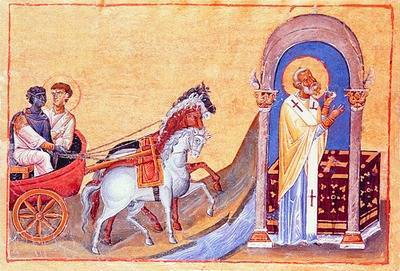
Later in Israel’s history, after they have been conquered and taken into exile, the Babylonians castrate the male leaders in order to cut off their progeny and to secure the “purity” of their own ethnic elite (2 Kings 20:18). In the midst of the threat of assimilation and in the face of what seems to be the end of their people, God promises through the prophet Isaiah that the eunuchs who are faithful to God’s covenant will receive an everlasting name that will not be cut off. This, God says, is even better than having sons and daughters (Isaiah 56:4-5). God asserts that it is through faithfulness and not through procreation that the people of God expand. In 56:3 and 6, the prophet says that through faithfulness, the foreigners (those outside the people of God) join themselves to the Lord.
Those who promote increasing birth rates in Christian families must also explain how they square their proposal with the life of Jesus. Jesus was not married and had no children. While Jesus does not assert celibacy as a model for all Christians, he does say: ‘Not everyone can accept this teaching, but only those to whom it is given. For there are eunuchs who have been so from birth, and there are eunuchs who have been made eunuchs by others, and there are eunuchs who have made themselves eunuchs for the sake of the kingdom of heaven. Let anyone accept this who can’ (Matthew 19:11-12).
Some also affirm that Jesus’ models renunciation of sex in order to unmask and disarm the idols of sex and fertility. Others assert celibacy as a pragmatic approach to mission, pointing to the Apostle Paul’s words to be unmarried “as I myself am” for “the unmarried are anxious about the affairs of the Lord, but the married are anxious about the affairs of the world… (1 Corinthians 7: 25-31, 36-40). Most probably, Jesus’ life of celibacy is indicative indicative of his priestly ministry for atonement (echoing back to Leviticus 16). Again, this atonement is coming from God, through God’s promise and through God’s act of reconciling humanity to God’s Self, not through our own initiatives of pro-creation. Would it be our prayer and expectation that the God who “calls into existence the things that do not exist” birth new life in our barren lands?
Visitors

 fragments and reflections