fragments and reflections
Fragments & Reflections
A Peace Testimony
This is a Peace Testimony that I wrote for the George Fox Center for Peace and Justice:
 Jesus says, “Blessed are the peace-makers.” Sadly, my first reaction to conflict, division and injustice is not usually peace but anger. Thankfully, my community helps me allay my anger and to cultivate actions rooted in love.
My wife Lenutsa and I participate in an organization called Word Made Flesh. Although peace, justice, and reconciliation are part of our ethos, they are not explicitly named as elements of our core values. What we do name as one of our defining marks is “community,” which implies peace, justice, and reconciliation.
In Galati, an industrial city in eastern Romania, our community is postured as a sign of peace in the midst of Orthodox Christian and Neo-Protestant tensions, Romanian and Roma violence, and wealthy and poor divisions. We are situated in a historically impoverished neighborhood in which we have made friendships across religious, ethnic, and economic lines. Here we attempt to respond on a daily basis to the wounds of broken and disenfranchised children and families. By addressing violence and injustices and by building healthy relationships, we pray that the seeds of peace are sown and nourished.
But when faced with conflict, my anger often gets the better of me. I am angry at the mutual exclusion of the different Christian traditions. I am angry at the entrenched racism and the self-victimization. I am angry at the patterns of abuse, neglect, and disempowerment. Of course, I can justify my anger as being “righteous,” but if I am honest, I realize that the anger feels good and gives me an illusion of control.
While anger seems like a knee-jerk reflex to conflict around me, the spiritual practices of my community prepare me and enable me to respond in love. Each morning we sit together in worship, prayer, silence, and Scripture reading. By focusing on the God who is love and who makes peace without violence, my vision, attitude, and actions are disciplined and directed towards love and peace. Although the cultivation of peace in my life is a long and continuous process and fraught with many failings, I have seen how our commitment to cultivate a community that is rooted in God’s life and presence leads to gestures of peace-making. Let me offer one example.
A few years back on a cool October day, I was watching the sun go down on our soccer game as I returned from the open market with two sacks full of groceries. I heard screaming and saw commotion, but I did not know what was causing the upheaval. I set the dinner food down and ran to the crowd of children who live on the streets. I found Ionuts cornered to the fence by a gang of teenagers who were beating him up. The reason for their aggression was simply that Ionuts was a “street child”, someone they considered lesser than themselves and easy prey for what they thought was a good time. The rest of the children from the streets and the volunteer workers did not know how to intervene except by shouting their protest. Without thinking, I walked into the middle of the gang and shielded Ionuts with my body. With my back to the belligerent teens, I looked Ionuts in the eye and tried to calm him as he screamed worthless threats at his attackers. Fortunately, the boys departed as quickly as they had jumped him. Unfortunately, Ionuts was bleeding through his cut eye, mouth and nose. He grabbed his glue bag and cried justice through the soothing intoxication.
While I was overwhelmed by my powerlessness to help Ionuts’ immediate pain, I was presently surprised that I didn’t respond to aggression with aggression. Certainly this small act of peace-making spoke love to Ionuts as well as to his attackers and the bystanders. Although violence seems to evoke my own violence from within, at least in this instance I could see how our community’s spiritual practices shape and enable actions that are non-violent in the face of violence. And as we see God work in us and change us, our daily prayer is not only to become signs of peace; we also pray that victims of violence like Ionuts experience God’s healing, justice, and reconciliation.
I forgot to post this in September…
Dear Friends,
Thank you for praying for us over the summer. Let me update you on what was a full, busy and beautiful season.
This spring we had lots of requests from parents and neighbors to do an adult literacy program. We also noticed that there was lots of interest and energy in our community to start this. So, in June, we enrolled six adults. Over the course of three months, four of them finished the program and learned how to read. Now we are enrolling a new group that will focus on writing.
This summer we placed all of our teenagers in a mentoring relationship. During the week we discussed issues like what it means to be a Christian, values and convictions, how to treat someone of the opposite gender, drugs and addiction, and personalities and temperaments. We had weekly meetings with each one and tried to help them evaluate their lives and to take steps in a healthy direction. This is something we’re hoping to continue this throughout the school year.
In midsummer we hosted a team from Lifegate Church. They have been incredibly supportive of me and our community over the years, so it was a joy for us to introduce them to the children and to our ministry. They helped out in the garden and played games with the kids. We are thankful for the relationships we were able to develop and trust that the investments made will reap fruit for the kingdom.
A group also visited us for a day from Grace Baptist Church. We spent the day playing soccer, volleyball and basketball. The girls painted their nails and the younger kids played with bubbles. It was a blessing for the kids and for our staff, and we hope to continue developing our relationship with this church.
We also hosted Dan Henry, who is our servant team coordinator in Sierra Leone. It was great to catch up with him and to introduce him to our Romanian staff and to our kids.
This year I have been involved with the pastoral committee from the church in which we participate in Galati, specifically with their outreach to the needy. We spent a few days with the church leadership to pray and plan together at Voronet. While there we also visited a 15th century monastery with amazing icon painted inside and out.
Over the past few years, we have organized a monthly “Beggars’ Society,” which raises awareness concerning poverty issues. Rather than holding this event at our Community Center, this year we have held it in local churches. The last series focused on migration, and we had really positive feedback on it.
In August, we organized camp for the younger children from the Community Center The theme of the week was “the fruit of the Spirit.” Thank you for praying for this time. We were able to build relationships and engage the kids in way that we cannot in Galati. It was great to see the children in nature, horseback riding, running around the open fields, jumping on the trampoline, and laughing. We saw God working in their lives throughout the week.
We were planning a hiking and camping trip with the teenage boys. But because they didn’t show much interest, we decided to direct them to camp with the church youth groups. A couple of them participated and are now much more involved in church. We still hope to do the hiking/camping trip in the future.
In August, I finished up my dissertation on St. Basil’s theology of the poor. It took a lot of time and a lot of work to get it done. I’m glad to have submitted it and am hopeful that it will be approved.
Over the summer we saw our expenses exceed our income. This is a little troubling in that our expenses during the winter are even higher. Almost all of our income is from many small regular donations of $10 or $15 per month. If you know anyone who would be interested in joining our support community, please speak with them on our behalf.
Although financial strains can be a burden, we continue to trust God who has provided beyond what we ever could hope for. We continue to walk on this road by faith in God’s provision. This summer we identified a number of grants that are designated for education and social projects. So, we applied. We received a letter of intention from one of them. You can help us win the grant. Register and vote here. The name of our project is called: “Sa-i invatam pe copii drumul catre scoala”.
A friend of ours held a concert this past week. She donated all the sales of her CDs to our community so that we could provide school supplies for children that are not enrolled at our Community Center but who do not go to school because they don’t have the necessary supplies. We are thankful that the local community is starting to resource us so that we can have a larger impact.
We also have had the local newspapers and television stations publish articles and interviews on our community and our various activities. This is helping the people of Galati know who we are and what we are about.
This month we are also launching a new project. In a village about 40 minutes outside of Galati, we are opening a Day Center to help kids that are at risk of dropping out of school. The chair of our board purchased and renovated an old house. Now we are in the process of acquiring all the necessary authorizations. We have employed a new staff person, Anca Nebunu, to coordinate the Center. At least 10 children will be enrolled this year.
In September, we are also receiving two interns. Tami is from George Fox University and will be with us for four months. Katy is from Scotland. She did a servant team with us in 2000 and is now a family practitioner. Over the next 10 months, she will be praying about and investigating the possibilities of setting up a medical practice in Galati.
As you see, it has been a busy summer and much is happening this autumn as well. We are grateful to see God at work and pray that we simply would God’s instruments in witnessing to and building for the kingdom.
Please do continue to pray for us:
– for the children and teenagers at the Center to progress in school, to get involved in a local church, and to discover God’s direction in their lives
– for the receiving of the grant
– for the Beggars’ Society events and advocacy activities
– for our new staff and interns
– for the development of our support community
With thanksgiving for your involvement in our lives,
david and lenutsa
Communion, Community and Mission
My friend and co-laborer Rachel Simons recently posted this:
My team and I recently watched a message by the late Henri Nouwen entitled “Becoming the Beloved”. Drawn from the passage in Luke 6 where Jesus goes up on a mountain to pray and then calls his disciples, Nouwen speaks of communion, community and mission as three essential elements of life in Christ.
Often, he says, we take things in reverse order when we respond first through ministry and programs (ministry), we gather others around us when we find we can’t make it on our own (community), and finally pray for God to bless our efforts (communion). Christ models the exact opposite for us: communion with the Father is first, followed by movement toward community, then ministry to the needs of the people around us.
With the school year in full swing it seems I’ve been thrown into a whirlwind of activity. After morning devotions some of us tutor children one-on-one for an hour and then prepare three hours of activities for about thirty children each afternoon. Some days have included hospital visits, trips to the park, a neighborhood clean-up initiative and various field trips.
In October we prepared an autumn festival and soon we’ll begin Christmas pageant preparations. We have more field trips to organize and have begun a recent initiative of bringing children into our homes on the weekends to distance them from the institutional environment for a brief time. We’ve written a grant to fund the school newsletter we started last year, and asked for support from the local government as we seek a more permanent location for our activites. We continue our comittment to train and disciple high school and college volunteers as they gain first-hand experience reaching out to vulnerable children.
The list of activities could continue, but I pause to ask that you pray for us and especially for me. I feel swept up by the wave of activity and momentum of so many adults and children involved in something wonderful and beautiful. Guests have observed and commented that the children clearly trust us and feel loved and safe in our presence. We watch some young ones take steps toward healing, while others love to pray and are unashamed to share of their faith in God.
The needs around us are great, but I sense our need for Christ is even greater at this time. Pray that we will be reminded often of this fact and listen attentively to God’s prompting in all we do and in the directions we choose to take. We so deeply need His clear guidance and direction in all our choices.
Peace in Christ,
Rahela
Encouragement for Activists
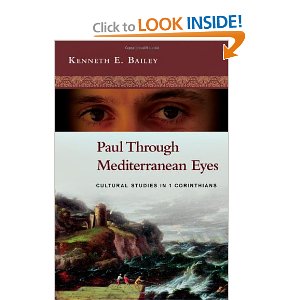 “The one who plants and he who waters are equal, and each shall receive his wages according to his labor. For we are fellow workers with God…” 1 Corinthians 3:8-9a
Kenneth Bailey comments:
Each worker receives wages “according to his labor,” not according to his or her production! A capitalist world judges the value of everything on the basis of production. This attitude is deeply ingrained in Western society. Throughout history many faithful servants have labored and seen little fruit as judged by the world. God has a different measuring stick, and wages are on the basis of labor, not production. In this text Paul affirms that God is pleased with and will reward that labor, irrespective of the visible results (Paul through Mediterranean Eyes, 127).
Kenneth Bailey on 1 Corinthians
I just finished reading Kenneth Bailey’s Paul Through Mediterranean Eyes. I have loved reading Bailey’s other works on the parables of Jesus and, especially, the Prodigal Son. In the book Bailey takes up Paul’s first epistle to the Corinthians. The strength of Bailey’s reflections on Paul is his analysis of Paul’s rhetoric. His identification of Paul’s use of chiasms and Paul’s appeal to Isaiah and Amos enlightens and clarifies anyone’s reading of 1 Corinthians. Although Bailey’s commentary isn’t as quite as informative (he primarily follows Thiselton and Fee), his autobiographical asides from experiences in the Middle East are jewels hidden throughout the text for the reader to discover and to sense the power of Paul’s letter for contemporary disciples in the Mediterranean and beyond.
Christian Ministry as a Contributor to Poverty?

While we may be good intentioned, full of compassion, and desiring everyone’s salvation, we Christians may unwittingly keep people in poverty. Here are a few ways this happens:
- In some instances, we hold a reductionist understanding of the Gospel. We seek to save the soul, while disregarding the body. We give people a message of salvation that includes a prayer for forgiveness without giving them a community that helps them in their hunger and need. We provide a spiritual solution for physical problems. Conversely, we may use their bodies to reach their souls. We offer food and assistance so that they listen to and respond to our message of salvation. But this often leads to Rice Christians: those that respond to manipulation with manipulation, responding to the thin messages of salvation in order to satisfy their present needs.
- Sometimes we patronize the poor. We have experienced something that we know everyone needs. But when we try to give to others, we aren’t always postured as receivers. We assume that we know their problems, and we come with the solution. Although we may not understand the cultural and social dynamics of the marginalized communities, we come with solutions that have worked in our communities. Moreover, we treat the marginalized as our projects and our mission objectives rather than as people and precious relationships.
- In some circles, Christians promote a skewed understanding of blessing. We affirm that God’s blessing is evidenced by wealth and prosperity. We tell the poor that if they come to a proper relationship with God, they will be blessed, and this blessing will lift them out of their poverty. Those that preach this gospel assume that their own material status is a sign of God’s favor. Those that do not rise in status are presumably not living in proper relationship with God. Although this message is highly attractive to the poor, it primarily serves the preachers of this gospel at the expense of their audience.
- Sometimes we disempower the poor. We may come with aid and inadvertently destroy vulnerable small businesses in the community. Or we may offer our charity without taking responsibility. This happens when we give money to charities that help poor factory workers while purchasing cheap clothing made in those factories. The other side of this is when we offer charity without developing responsibility. When people are treated like donation receptacles, they become dependent on charity and lose a sense of responsibility for what they receive.
When the Gospel doesn’t address the whole person but just their “spiritual” needs, the poor are left hopeless in their poverty, thinking that God is either baiting them through their physical needs or unconcerned in this life with their physical plight.
When we patronize the poor, the vulnerable are further marginalized, exploited and objectified.
When we promote a skewed understanding of blessing, we create discontent and guilt. Worse, we paint a picture of a god that relates to and through the wealthy, relegating the poor as cursed.
When we disempower the poor, we keep them in their poverty, subordinated to our “generosity” and numbed in their dependence. By giving charity we may quiet our conscience without addressing the structural causes of poverty.
Fundamental Questions about the Wall-Street Protests
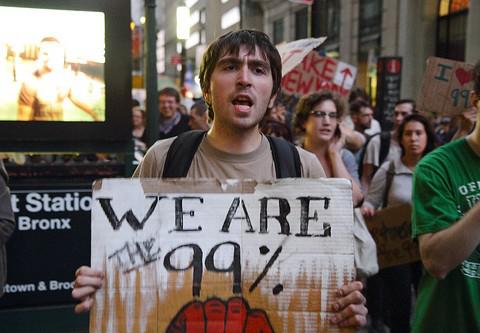
A few days ago, I posted an exchange of comments on a Fox News article about the Wall-Street Protests. You can read that by clicking here.
The comments on that post are mainly concerned with the protesters and their agenda. Here I would like to post what I see are some fundamental questions that are raised by the protesters and invite your thoughts:
– Is the current situation in which 1% of the population controls 40% of the wealth just or unjust?
– Is the fact that the very wealthy are getting wealthier and the poor poorer just or unjust?
– Is there a problem with the current system (which implies economics, politics and religion)?
– Do you have proposals for reformation or transformation?
A dialog on the Wall Street protests
 On October 16, I shared on facebook an article written by Fox news on the “Occupy Wall Street” protests. Although I’m not the biggest fan of Fox News, I think the article is an excellent depiction of the protests.
After that I received some comments from my friend John Malek. Because I think his views are such a good representation of many, I thought I would post the conversation on the blog. This is also an easier format through which to engage one another’s ideas.
You are welcome to join in on the conversation.
Jesus the Temple: the best book I’ve read this year
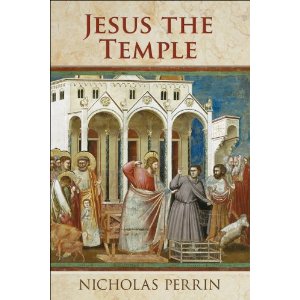 Perrin’s book Jesus the Temple is excellent. He follows the thought of N.T. Wright, for whom Perrin was a research assistant. Wright places Jesus’ teaching on the kingdom of God in its first-century Judaic context, arguing that the coming of the kingdom of God means the return from exile. God inaugurates the return from exile through the incarnation, life, death, resurrection and ascension of Jesus. The signs of the realization of the return from exile are the defeat of Israel’s enemies, the restoration of the temple, the flowing of the Gentiles to Jerusalem, and the renewal of creation. Wright points out that we see these signs in Jesus’ defeat of the enemies of sin (through forgiveness) and death (through resurrection), in the temple being redefined as Jesus’ body, in Jesus’ ministry to the Gentiles (and their incorporation into the people of God post-Pentecost), and in Jesus’ resurrected body as the first-fruit of the new creation.
Perrin takes up this theme, focusing on the restoration of the temple. The Jewish temple was not only the heart of worship but also the place of economic assistance for the poor, of social recognition, and of political confession. It was the place where Israel placed its hopes and from which it derived its national identity. But the temple was profaned by, inter alia, being constructed by human hands, by the corrupt administration of its priests, and by the defilement of the Gentiles. So, it functioned as a penultimate sign and anticipation of the true temple, which would bring together heaven and earth, God and humanity. Perrin argues that Jesus saw himself and his movement as the decisive embodiment of Yahweh’s eschatological temple.
Perrin describes how Jesus was not alone in developing counter-temple movements. The sects behind the Qumran and the Psalms of Solomon, as well as John the Baptist shared characteristics that set them against the temple and in anticipation of a new temple.
In Jesus’ cleansing of the temple, Perrin says that we see the most public expression of Jesus’ critique of the temple elite and their offenses toward the poor and the temple. It also is an announcement of Jesus’ establishment of a new temple in which he is its messianic high priest.
Perrin also links Jesus’ exorcisms and meals with the restoration of the temple. By defeating demonic powers, Jesus affirms that there is an alternative power to the temple. By dining with sinners, Jesus is not defiled but rather brings forgiveness, a power claimed through temple acts. Through these actions, Jesus and his followers constitute a new locus of the divine presence.
Another Jewish expectation that preceded the restoration of the temple was tribulation. Perrin argues that Jesus understand the period of tribulation as being well underway during his lifetime through the apostasy of Israel’s leadership, Herod and its temple aristocrats. Jesus bore this tribulation through persecution, torture and execution. And Jesus followers, the new temple built around the Cornerstone, continue to experience the tribulation as the temple is constructed.
One perspective I greatly appreciated was Perrin’s demonstration of Jesus’ solidarity with the poor as a function of his larger calling to be the eschatological temple. The temple aristocracy embezzled monies and then offered high interest loans to the poor. Thus, the financiers increased the temple landholdings and held the poor in an increasing cycle of destitution. The condition of being poor was not simply an economic, social or political status but also a theological reality. By thrusting those on the economic margins into disinheritance, the priestly rulers were in effect gerrymandering the boundaries of true Israel and forestalling full return from exile.
As high priest Jesus inaugurates Jubilee, which means not only an exile-ending release for the poor but also a prerequisite for proper temple worship. Jesus’ ministry among the poor, therefore, is ultimately grounded in his calling and introducing of a new temple. In the new temple, possessions are shared, almsgiving is redemptive and forgiveness entails economic debts, satisfying not only the immediate needs of the destitute but also giving them the ability to break the cycle of debt and poverty.
Jesus’ modeling and inviting to voluntary poverty and renunciation are not only for radical redistribution of possessions and diminishing one’s social status; they were also signs of the priestly calling (signifying the landless Levites).
Perrin also deals with the understanding of the temple in the early church and their connections and continuity with Jesus’ earthly ministry.
I highly recommend the book.
Visitors

 fragments and reflections