 A few weeks back, former President Bill Clinton said that the present political environment is poisonous. The Republicans and the Democrats have gone beyond ideology into a kind of political theology.Clinton said, “If we can break out of theology and get back to evidence and experience and the aspirations of ordinary people, I think we can have bipartisan cooperation.”
I appreciate Clinton’s naming of “theology” and his introducing of the concept into public discourse. However, his understanding of “theology” is incorrect. He understands “theology” as those beliefs and commitments for which there is no evidence. And he thinks that “theology” is a more extreme position beyond “ideology,” a relentless commitment to one’s own position. Contrary to Clinton’s view, each ideology is also based on beliefs and commitments for which there is no complete ground of evidence. Thus, some faith commitment is necessary for every ideology. Moreover, each ideology is itself a particular theology, addressing perspectives on justice, power and life. Each ideology flows from a particular understanding of “god,” and each ideology legitimizes and sanctions itself by appealing to its “god.”
Clinton’s observations and recommendations are themselves based on Clinton’s own theology.Clinton insists that we “look at the job numbers, look at the vested numbers, look at the growth numbers, look at the productivity numbers, look at the numbers.” Using these numbers requires a certain selection and a certain interpretation, and it portrays and sustains a certain theology. Clinton says, “It cannot be possible that either the Democrats or the Republicans are always wrong. It cannot be possible that a hundred percent of us are proceeding in bad faith.” Notice the bald theological language that Clinton uses: “faith.” The basis for discerning and determining what is right implies a “faith.”
Clinton urges us to move away from our theologies. This really is impossible. Politicians promote a certain view of society that reflects a particular view of “god” – even when the promoters claim to be secular or a-theistic. People cannot become less theological. Political views (just like social, economic, health policies, etc.) are always begging the question: which “god?” or whose “theology?” In a realm of lies, doublespeak and demagoguery, we should be calling for politicians and public personalities to be more theological. If theologies (i.e. ideologies, social visions, economic polices, etc) are clarified, policy objectives can be affirmed or disapproved in relation to the declared theologies. Deriving policy objectives from theology also creates space for negotiation, where policy objectives may be compromised without having to compromise one’s theology. And in democratic societies that include many diverse and contradicting theologies, compromise is essential.
In trying to have a gracious reading of Clinton’s view, I think that he is not really calling us to be less theological. Rather, he is inviting each party to become less entrenched in their own particular ideologies and to have the courage and willingness to consider the view of the other. Unfortunately, most political “gods” are jealous of their adherents and don’t allow them to consider others. As Christians, however, we can offer a unique perspective based on our theology that claims to know truth and to love those completely other than ourselves. In the sphere of larger society, we can call for candid speech and truth-telling, while naming and condemning discourse that is deceptive. And we can attempt to understand the perspectives of others and to build society together, even where there is disagreement. At this point, we can appropriate Clinton’s suggestion to identify what is right in those different than ourselves.
45.425720
28.031044
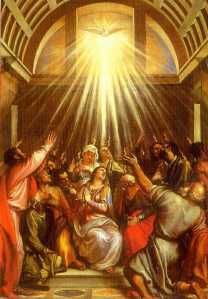 Section 5 of the first part of the Cape Town Commitments affirms that “we love God the Holy Spirit.” I really appreciate the emphasis in this section on the Person of the Spirit and mission of the Spirit, which are not subordinated to the other Persons or actions of the Trinity.*
In the draft version of part a), which elaborates the activity of the Spirit in the Old Testament, the effects of the outpouring of the Spirit listed are “new life and fresh obedience to the people of God.” Keeping in mind the theme of the Congress, “Reconciliation,” I was surprised that there was no explicit reference to “sons and daughters” or “all humanity,” which are clearly articulated in the text from Joel 2. While section 5b) does mention the power of the Spirit for social engagement, I recommended that 5a) should mention accessibility of the Spirit which, by virtue of the Spirit’s outpouring, brings social transformation.
In the final version of the Cape Town Commitments, the document incorporated this recommendation, stating:
Prophets also looked to the coming age that would be marked by the outpouring of God’s Spirit, bringing new life, fresh obedience, and prophetic gifting to all the people of God, young and old, men and women.
* This is my second post on the Cape Town Commitments. Please refer to the first post on Mary for background.
45.425720
28.031044
 Dear Friends,
Thank you for your prayers during this past month. Although Lenutsa and I are getting back into things in Galati, we’re finding that it takes more time than we anticipated in readjusting. Even when we aren’t doing too much, we come home at the end of the day completely exhausted. As we’ve read some books on sabbatical and spoken with others who have taken sabbatical, we understand that this is normal. But we do ask that you continue to pray for us.
I’ve gotten more involved with the pastoral committee of the church in which Lenutsa and I participate. I’ve been taking part in their weekly meetings and helping organize their department for social aid. Please pray for this church that we would be faithful to God in responding to the poor and needy.
This month we will receive an intern, Kelsey, from George Fox, who will be with us through July. While Lenutsa and I were in Oregon, we took a training course called Brighter Minds, which focuses on brain development. Kelsey went through this training and wants to help us implement it, particularly with the children at the Community Center who struggle with attention deficits. Please pray that we would develop a good tool for the kids and that God would use it to help the children as they face the many challenges in their lives.
A few years back, two of our children from the Center were abandoned by their mother, who left them with extended family to work in Italy. The situation was dire for these two kids. Thankfully, God sent a family to receive them in foster care, which was an almost perfect environment for this brother and sister – although it still meant a long battle with the state authorities for approval. Sadly, after two years the family decided that they could no longer care for them. So, the two youth went to live with an aunt. They lived there for a few months until the aunt decided she could no longer keep them. They then went to the Center for Minors, a building packed with youth that are transitioning out of difficult homes and into other homes under the state’s care. Initially, the mother of our kids said that she would come from Italy to take care of them, but that proved to be an empty promise. After much prayer and deliberation, Paul and Ana decided to take them into our community home. This is a big decision for this young couple, and it means yet another home for these two kids. Please pray for Paul and Ana and for our two kids, Eleni and Florin, that they would quickly adjust to life together and that it would be a healthy and healing place for them all.
Next week we are holing our annual community retreat. The theme is discipleship. Please pray that our relationships would grow and that we would be touched and refreshed by the Spirit of God.
I also plan on going to Moldova in June to visit our young community there and to discuss with them their organizational structure. I would appreciate your prayers for that time.
Thank you for your prayer and support,
davi
45.425720
28.031044
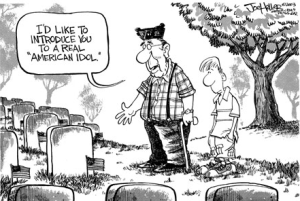 Memorial Day is the major holy day of American civic religion. More than Presidents’ Day, more than Labor Day and even more than Independence Day, Memorial Day is set apart for a service of commemoration of a particular narration of what has made America America. The power of the saluting rifles, the glory of the roaring F-16s, the waving red, white and blue, and the parading military is public liturgy, evoking worship from each citizen. Although the celebration feeds the acceptance and perpetuation of the largest military the world has ever known, the focus of this worship service is the memorial for the fallen soldiers. My question is: should we as Christians participate in Memorial Day?
A few months ago, I was asked to write a letter to my grandfather to honor him for his service in the army during World War II. As a Christian, I wrestle with the reality of violence and its correlates of war, nationalism and soldiers. This is not a new struggle for we know that the early church debated whether one could be a Christian and still be a soldier. But I do realize that we live in a violent world and that our actions and reactions are not always black and white. Although my views on my grandfather’s military service are certainly different than his own, I wanted to honor him for risking his life, for fighting for something greater than himself, for the suffering he witnessed and experienced in his body and soul. And I honored him for surviving and for living his life as a veteran by trying to honor those who did not survive.
There is something to be said for committing to care for one’s place, to one’s community and to one’s people. E.M. Forster said that if it came to a choice between dying for his country and dying for his friend, he hoped that he would have the courage to deny his country. However, Alasdair MacIntyre criticized Forster, saying that if anyone can formulate such a contrast, they have no country and that they are a citizen of nowhere. Still, a major problem with our commitment to country, to friends, and to citizenry is the increasing tribalism, which grounds its collective identity through the exclusion of others. This is easily visible on Memorial Day as we honor our victims of war but not their victims of war. As a Christian participating in the Memorial Day liturgy, I think the honoring of the victims of our “collateral damage” would be a good start in differentiating ourselves from non-Christian commemoration. After all, we are the “holy people” that is called to love the strangers and even our enemies.
This can be a first step but not the last, as the waters of this strange baptism of the military run deep. A dear Christian lady that I know attaches to the signature of all her correspondence this declaration: “Only two defining forces have ever offered to die for you. Jesus Christ and the American GI. One died for your soul, the other for your freedom.” Sadly, the enshrinement of soldiers alongside Jesus is not uncommon.
This not only wrongly legitimizes the American military, it is also heretical by projecting salvific power onto the American GI. Here the soldier is not only an American idol; they are also the sacrifice placed on the altar of American claims to power. As Christians, we say that all power, honor and glory belong to a slain Lamb – an image that counters and subverts all worldly idols and their claims to power.
Also, Christians do not understand freedom and conferred by the State but rather by Christ. He whom the Son sets free is free indeed. That is why the heroes of the church are the martyrs: those who are free to lay down their lives for others. It is a little disturbing that many churches set aside time during their worship services to honor the soldiers who have died but do not set aside time during their services to honor the Christian martyrs, who lived and died as examples and witnesses to our faith.
The major irreconcilable difference between the American GI and Christ is that the soldier is commissioned to kill for the American people, while Jesus chose not to kill but rather to die for me and for all peoples, while we were still his enemies.
Ultimately, for Christians, America’s Memorial Day must be subordinated to the Church’s “Memorial Day,” which we celebrate every time we partake of the Eucharistic liturgy: taking the cup and the broken bread in remembrance of him who chose to die for us rather than to destroy us. We remember, ingest and proclaim his death until he comes. That is a Memorial we can truly celebrate.
45.425720
28.031044
 Our community has used the Lausanne Covenant as a statement of faith and has also promoted the Manila Manifesto with our staff. The latest statement of faith from the Lausanne Movement is the Cape Town Commitments. Although all statements of faith have their weaknesses, I am a fan of the Commitments. While the Lausanne Covenant and the Manila Manifesto took as their point of departure Jesus’ Great Commission to go into all the world to make disciples of all nations, the Cape Town Commitments start with Jesus’ Great Commandment to love God and to love our neighbors as ourselves.
The translation of the Cape Town Commitments into Romanian has just been completed by Paulian Petric and published on Danut Manastireaunu’s blog.
With the advent of the translation, I decided to post some of my suggestions for the final version of the Cape Town Commitments. We received a draft at the convention in Cape Town, and I sent my suggestions to a few of the members of the theology working group. Although I never heard back from the theology working group, I did notice that some of my suggestions were incorporated into the final version.
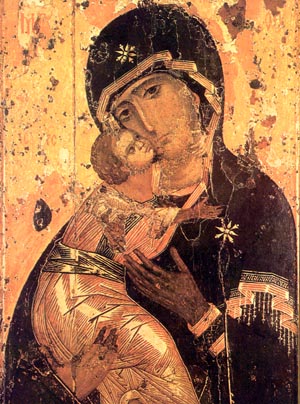
In the draft, under point number four, the Commitments affirm that “We love God the Son.” Sub-point a) offers a summary of Jesus’ life. However, nowhere did it reference Mary, to whom the church later gives the name “God-bearer.” It might be expected of Protestant and Neo-protestant Christians to exclude Mary, either intentionally or unintentionally, from their statements of faith. It actually seems strange to me that I would be advocating for Mary in light of the fact that I have witnessed many non-orthodox attitudes and practices towards Mary. Still, to marginalize Mary from our theologies and practices means that our own theologies and practices are distorted.
When we affirm Mary as the virgin mother of Jesus, as the Nicene Creed correctly does, we acknowledge that Jesus is situated not only in historical terms (which the Commitments imply by naming Jesus “of Nazareth”) but also in human terms. If Jesus would not be born of Mary, then the Son would not be human. Athanasius and the Church Fathers said that whatever is not assumed by Christ is not redeemed. By assuming all of our humanity, all humanity may be redeemed (1 Corinthians 15:20-28). That is, God didn’t act in human history from an outer realm, and the Son didn’t fall from the sky into human history. Rather, the Son is “born of a virgin through the Holy Spirit”, bringing salvation through and within humanity. Without Mary, our humanity is lost.
Mary has been included in this section of the final version of the Cape Town Commitments.

45.425720
28.031044
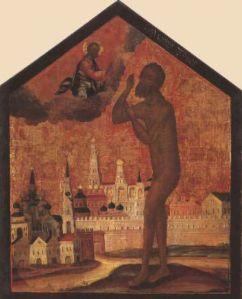 The harshest form of covetousness is not even to give things perishable to those who need them. “But whom do I treat unjustly,” you say, “by keeping what is my own?” Tell me, what is your own? What did you bring into this life? From where did you receive it? It is as if someone were to take the first seat in the theater, then bar everyone else from attending, so that one person alone enjoys what is offered for the benefit of all-this is what the rich do. They first take possession of the common property, and then they keep it as their own because they were the first to take it. But if every man took only what sufficed for his own need, and left the rest to the needy, no one would be rich, no one would be poor, no one would be in need.
Did you not fall naked from the womb? Will you not go back naked to the earth? Where is your present property from? If you think that it came to you by itself, you don’t believe in God, you don’t acknowledge the creator and you are not thankful to Him who gave it to you. But if you agree and confess that you have it from God, tell us the reason why He gave it to you.
Is God unjust, dividing unequally the goods of this life? Why are you rich, while the other is poor? Isn’t it, if for no other reason, so that you can gain a reward for your kindness and faithful stewardship, and for him to be honored with the great virtue of patience? But you, having gathered everything inside the empty bosom of avarice, do you think that you wrong no one, while you rob so many people?
Who is the greedy person? It’s him, who doesn’t content himself with what he has. And who the thief? He who steals what belongs to others. And you think that you are not greedy, and that you do not rob others? What had been granted to you so that you might care for others, you claim for yourself.
He who strips a man of his clothes is to be called a thief. Is not he who, when he is able, fails to clothe the naked, worthy of no other title? The bread which you do not use is the bread of the hungry; the garment hanging in your wardrobe is the garment of him who is naked; the shoes that you do not wear are the shoes of the one who is barefoot; the money that you keep locked away is the money of the poor; the acts of charity that you do not perform are so many injustices that you commit.
45.425720
28.031044
 I’ve had it in mind to address some of the wrong-headed, yet widely-held doctrines that have a negative effect on Christians, there’s no better day to start this than a few days after a predicted “end-of-the-world” rapture has passed unfulfilled. Although I’m disturbed by how the prediction of such a small Christian group has received so much media attention, I do give them kudos for putting their money where their mouth is. The organization invested millions of dollars in propagating their message. Some quit their jobs. Some sold their belongings. Some hired atheist companies that guaranteed the care of their pets after their owners were raptured. But, at the end of the day, this event shows us how important theology is – even bad theology – and how it affects our lives and society.
There are some nuances on the idea of the rapture, but basically it is the belief that Jesus will come back and true believers will be taken from the earth to meet Jesus in heaven.
Here I just want to outline some of the major reasons by which the church should name the doctrine of the “rapture” as heresy and denounce it.
Although this heresy has become part of the mainstream evangelical understanding about the return of Christ, the doctrine is relatively new. You can find it in some 18th century Puritan writings, but it was developed and popularized by Mathew Henry and John Darby in the 19th century and by Hal Lindsey in the 20th century. That means that although the church has had different understandings about the Second Coming since the beginning of the church, the idea of the rapture was not held by any of them. For the church, the concept of the rapture is new.
The book in the Bible that speaks about the future of the world more than any other is Revelation. Revelation has no mention of the rapture.
The idea of the rapture is read into Jesus’ statements about the end in Matthew 24. Jesus says that as it was in the days of Noah, so will it be in the coming of the Son of Man. People were eating, drinking and marrying until the flood came and swept them away. Likewise, when the Son of Man comes, two will be in a field; one will be taken and one will be left behind. Those that promote the rapture heresy believe that the true believers will be taken and the condemned will be left behind. However, the text says that those taken away, as in the flood, are destroyed; those left behind, like Noah, are “saved” and enjoy life. The rapture heresy is completely backwards.
The main text that causes interpreters to believe that Christians will be raptured is 1 Thessalonians 4:15–7, which says that the dead in Christ and then the living will be caught up in the air at the coming of Jesus. Read outside of its cultural context, one can understand why so many would think that they will be raptured from the world. However, in its cultural context, the text speaks of the consummation of the kingdom of God. When a king, in the ancient world, would come to a city, he was announcing the reign of his kingdom over the city. If the leaders of the city, accepted the king’s authority, they would come out of the city to meet the king and bring him to the city to establish or affirm his kingship. This is the image from 1 Thessalonians. The direction of Jesus’ coming is not from earth to heaven but rather from heaven to earth. The believers go out to meet their King so they can be part of the triumphant procession in the full coming of the kingdom.
This heresy of Christ coming to rapture his church also implies that there will be a “third coming” when Jesus comes to judge and establish the new heaven and new earth. But a third coming has never been held by the church.
The problems with the rapture heresy are not only the ridicule coming from unbelievers or the despair of those who put their trust in false prophecies. Here are a few real world implications that are justified by this heresy:
If God will save an elect (which is us) from the creation, then we are enabled to exploit the earth and enjoy its plunder without consideration for others (which are not us). Practically, that means we can burn so much fossil fuel that we heat up the globe and make hurricanes, typhoons and flooding more likely and more deadly. Rapture proponents believe that when the real tribulation comes, God will take us out of it.
If God will save an elect (which is us) from tribulation, then we are less likely to be involved when others (the non-elect) suffer tribulations. If God is not involved in the tribulation, and His people are not involved in the tribulation in the future, then we (the elect) have no place in tribulation in the present because it is for the damned.
If God will secure an elect (which is us) from tribulation, then we too should secure an elect (which is us) from tribulation. The amount that America spends on “defense” could wipe out global hunger (from which 24,000 people die every day).
If God will save an elect (which is us) from tribulation, then we do not need to consider the affects of our decisions on future generations (which are not us). Economists continue to promote consumption in order to grow economies. The message transmitted is consume the benefits now without worrying about the costs in the future.
If God will save an elect (which is us) from tribulation, then we are enabled to project our view of the end times onto a political agenda. Already in the 19th century, when pre-millennial dispensationalism was being formulated, George Eliot said, “Advertising the pre-millennial Advent is simply the transportation of political passions on to a so-called religious platform; it is the anticipation of the triumph of ‘our party,’ accomplished by our principal men being ‘sent for’ into the clouds.” We see this today when apocalyptic imagery is written into our party politics. But we must ask ourselves, “How are we to be a people of the cross as a prophetic, suffering witness that seeks redemption in the midst of tribulation?”
45.425720
28.031044
 Last September, our community took a number of new kids into our Community Center activities. Since we were away for the past months, I’m only now getting to know them, mainly by playing or working together.
A few weeks ago, I and our Moldova servant team were flattening a section of the garden and raking out the rocks so we could plant grass. Before we started to plan the grass seed, Alin, one of our new boys, arrived from school. He asked if he could help, so I picked up rocks and flattened the dirt. Then I gave him the sack of seed and taught him how to spread it evenly over the dirt and then pack it in. Then I showed him how to water it and told him that he was responsible for the plot. Even when I wasn’t at the Center, Alin remembered to water.
One day as Alin was watering and weeding, he told me that he also helps his elderly neighbor with his garden. He said that his neighbor is too old to dig or to carry big loads, so he helps him out. I was impressed because lots of kids need lots of motivation to work. And I know that this is a way that some of our kids, who have very little, are able to earn a little pocket money. So, I asked Alin how much he gets paid for doing chores for his neighbor. Alin was surprised. He said that he doesn’t do it for money but to help his neighbor. He said, “My neighbor doesn’t have a dime to buy bread. Do you want me to take his last dime? Isn’t it better to help him because he needs it rather than for money?”
After being away from the Center for a week at our community retreat, I greeted Alin at our gate as he came from school and took him up to see the plot where he had planted and watered. His face lit up when he saw the green grass sprouting up.
45.425720
28.031044
 Over the past few weeks, I blogged about the vast income disparity between the rich and the poor – even within the U.S. – and about the meager aid given by the U.S. One could argue that the burden of the problem lies with the very rich. While this may be true, I don’t understand why someone would be motivated to be generous or philanthropic – someone, that is, who is not a Christian. Christians are called to love, to respond compassionately to the needs of others, and to share what they have with others. This is one of the main mandates Christ gives to his church. So, the important question isn’t “how generous is the U.S.?”, but rather, “how generous is the church?”
The church in America is the wealthiest church in the history of the world. In his book, The Hole in Our Gospel, Richard Stearns tells us that the total income of American churchgoers is $5.2 trillion. It would take just a little over 1% of the income of American Christians to lift the poorest 1 billion in the world out of extreme poverty.
American Christians, who make up about 5 percent of the Church worldwide, control half of global Christian wealth.
If tithing is defined as giving 10 percent or more of one’s pretax income to the church or to nonprofit ministries, only about 5% of American households tithe. The number of those called “born again” Christians in America who tithe is higher: 9%. Of those who call themselves “evangelical Christians,” 24% tithe. That still leaves 76% who are not tithing!
If we are not giving 10%, how much are we giving? The average giving of American church members in 2005 (pre-economic recession) was just 2.58 percent of their income, about 75% less than the oft-promoted 10%. Sadly, as our incomes have increased, our giving has significantly declined. In 1933 at the height of the Great Depression, giving averaged 3.3 percent, 27 percent more than what we gave in 2005.
If we look at where the money goes after it is received by the churches, we find that just about 2% of it goes to overseas missions of any kind. The other 98% stays in the U.S., within our churches and communities.
American Christians, the wealthiest Christians in all history are making to the world is just about 2 percent of 2 percent – actually about five ten-thousandths of our income. That amounts to 6 pennies per person per day that we give through our churches to the rest of the world.
If American Christians gave 10 percent of their incomes instead of the 2.5 percent we currently give, we would have an extra $168 billion to spend in funding the work of the Church worldwide!
45.425720
28.031044




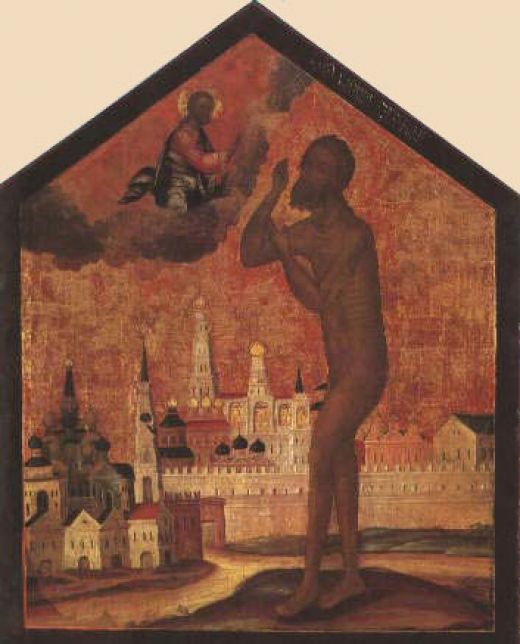 The harshest form of covetousness is not even to give things perishable to those who need them. “But whom do I treat unjustly,” you say, “by keeping what is my own?” Tell me, what is your own? What did you bring into this life? From where did you receive it? It is as if someone were to take the first seat in the theater, then bar everyone else from attending, so that one person alone enjoys what is offered for the benefit of all-this is what the rich do. They first take possession of the common property, and then they keep it as their own because they were the first to take it. But if every man took only what sufficed for his own need, and left the rest to the needy, no one would be rich, no one would be poor, no one would be in need.


 fragments and reflections