fragments and reflections
Culture
Is this class warfare?
‘Blessed are you who are poor,
for yours is the kingdom of God.
‘Blessed are you who are hungry now,
for you will be filled.
‘Blessed are you who weep now,
for you will laugh.
‘But woe to you who are rich,
for you have received your consolation.
‘Woe to you who are full now,
for you will be hungry.
‘Woe to you who are laughing now,
for you will mourn and weep.
Neamtu and the New Republic
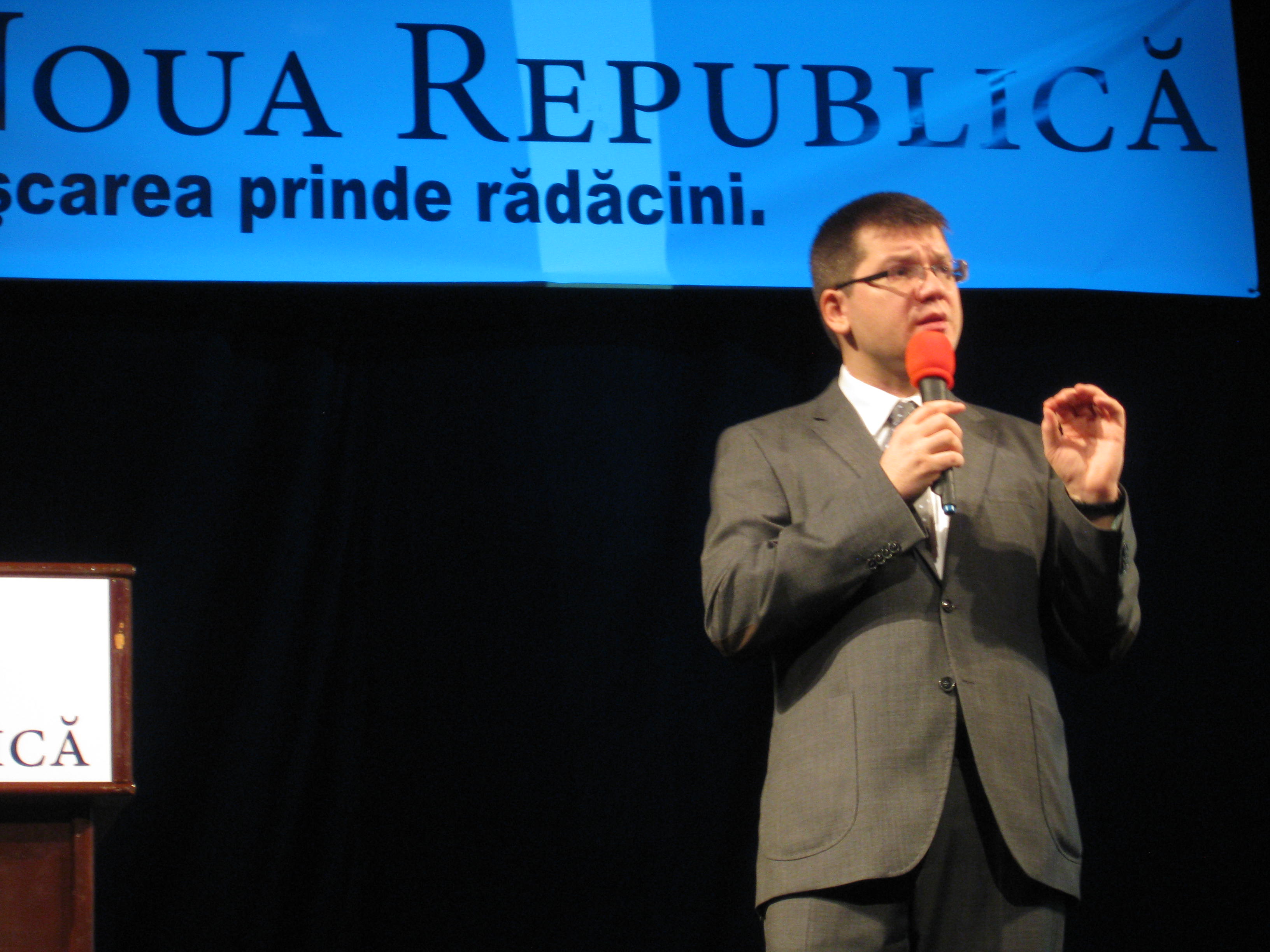 Last week, I had the opportunity to go to Braila (Galati’s neighbor city) and listen to Mihail Neamtu – a young Romanian theologian whose writings I have followed over the past few years. I am a fan. Recently, he has established a political movement called the New Republic (Noua Republica), which will soon become a political party.
 Neamtu explained the concept of the New Republic whose logo is a tree, rooted in Romania’s long tradition and extending upward towards Romania’s future.
Neamtu criticized Romania’s government, which since the fall of communism in 1989 has claimed to be socialist. The socialist government has promised to provide education, health care, and the security of the police. However, students are obliged to pay all sorts of fees. If they want to succeed in school, they have to pay for tutors. As for health care, one must pay for needles, syringes and medicine, not to mention paying bribes for nurses and doctors to provide medical care. As for the police force, there are cities in which the police is impotent in the face of mafias and the illegal underworld. While this is nothing controversial or surprising, Neamtu simply pointed out that the government claims to be socialist – something that many citizens would affirm without hesitation – but largely fails to deliver on its claims.
In opposition to the narrative of socialism, Neamtu is promoting the New Republic as a party on the right of center – something missing from the political spectrum in Romania. In his discourse, Neamtu drew on the ancient Greek idea of the agora: the public square in which civic discourse and commerce take place. Neamtu said that in today’s economy in Romania, the agora is dysfunctional. Instead of a context of free trade and in which competition creates expertise and specialization, Romania has a clientele economy. There are clients who are privileged in the marketplace because of friendship and family or because of bribery or blackmail. This cultivates corruption and impedes development.
While Neamtu didn’t mention that the ancient agora also privileged a certain clientele – namely the male, landowning citizens – he did advocate for laissez-faire capitalism in which agriculture, industry, technology and investment are encouraged. This he sees as a response that will alleviate poverty in Romania. Neamtu also articulated the hope for a country in which Romanians would not feel impelled to migrate in order to succeed, but rather are encouraged to participate in building a country that could be passed on to future generations. While his promotion of personal investment, responsibility and work is a welcome and appropriate response to the present needs in Romania, Neamtu failed to address the weaknesses of globalization and consumerism.
At the moment, the New Republic is at the stage of articulating its ideas and ideals and of recruiting adherents. Realistically, I don’t see the New Republic being elected to office – at least in the short-term. But it can and increasingly is introducing new ideas into the public debate. And it can stimulate fresh imagination for the politically conservative.
I appreciate that Neamtu is not organizing the party around himself but rather around values. It remains to be seen who are the personalities, other than Neamtu, that will publicly promote this new party. The party’s stated values are: citizens, people, justice, free trade, faith, memory and the voice of future generations. However, there is need for these values to be better described and less ambiguous. For example, the New Republic describes citizens as participants in civic society and not simply consumers. But what do they mean by “faith,” especially in an increasingly context of religious pluralism?
Also, as Neamtu declares the New Republic being a movement of the middle-class, how do they reconcile the middle-class with right-wing politics that, speaking strictly as a historical posture, sides with the bourgeois and, speaking contemporarily, has facilitated the increasing disparity between the upper and middle-class as wealth is more and more concentrated in the hands of a smaller and smaller minority?
I am also looking for proposals from the New Republic on how it will not simply critique but concretely address corruption, the client economy, the development of commerce, and the development of “conscience.”
While the New Republic is bringing fresh ideas and a healthy critique to the status quo, the movement’s strength can also be its weakness. Namely, it lacks experience. I am looking at whether the New Republic can attract those with some level of experience in public administration and political engagement to help implement their ideals into reality.
Children as Metaphors of Hope
Jurgen Moltmann writes:
For me, children are metaphors of hope for three reasons:
 (1) With every child, a new life begins, original, unique, incomparable. And while it seems that we always ask, who this or that child looks like (apparently because we seem to think we can only understand the new in the comparison with what is already known or similar), we also encounter the entirely different, the entirely dissimilar and unique in each child. It is these differences that we need to respect if we want to love life and allow an open future.
(2) With every beginning of a new life, the hope for the reign of peace and justice is given a new chance. It is important to see children in their own transcendent perspective and so to resist forming them according to the images of our world. Every new life is also a new beginning of hope for a homeland in this unredeemed world. If it were not, we would have no reason to expect anything new from a beginning.
(3) The last reason to see “a new beginning” or a “beginning of the New” in the beginning of a child’s life is the fact that, for me, children are not only metaphors of our hopes, of that which we want, wish for and expect, but also are metaphors of God’s hope for us: God wants us, expects us, and welcomes us. Humanity is God’s great love, God’s dream for God’s earthly world, God’s image for God’s beloved earth. God is “waiting” for the “human person” in every child, is “waiting” for God’s echo, resonance, and rainbow. Maybe that is the reason God is so patient with us, bearing the ruins of human history, inviting one human generation after the other into existence. God is not silent, God is not “dead”—God is waiting for the menschlichen Menschen the “truly humane human.” “In all of the prophets, I have waited for you,” Martin Buber has the Eternal One speak to the Messiah, “and now you have come.”
With this kind of transcendental expectation placed on every newborn child, it becomes the task of parents, siblings, and teachers to hold open the doors to this future and to walk with these children into this future.
Generosity in the midst of poverty – a reflection on Nicholas
I will call him Nicholas – an English variant of his Romanian name. Nicholas has a toothy grin that he often flashes, revealing the deep joy of childhood. He is the youngest of four brothers and an uncle to a two-year-old nephew. He lives in social housing at the top of a hill in the city’s flood plain.
 On my first visit to Nicholas’ home, I was greeted by pigeons fluttering overhead and chicks and ducks filing along the narrow path that led up the hill. In the cleft of the clay, Nicholas’ family has built a roost for their various poultry. Nicholas had told me about his flock of pigeons that he faithfully cared for, but I didn’t know about the ducks and chickens. I thought that they must be a good source of food for the family, only to learn from his mother that they are too attached to them to slaughter them. The family cares for the birds out of the pure joy of having them. (They do have a pig, fattened on kitchen scraps that they will butcher at Christmas).
Christmas – this year will be a difficult holiday for Nicholas’ family. In the center of their small yard, they have dug an outdoor toilet. On the other side of the yard is their small, two-room house, built out of a wood frame and thatch. Although they have no running water, they have a little kitchen in the entry way, where they cook on a small gas-powered stove. The cracked and corroding floor is insulated with rugs, and couches covered with wet laundry line the wall. When the family finds wood scraps or when they receive firewood from a benefactor, their terracotta stove heats up the main room in which there is a large bed and a television that is always turned on. On the bed lies Nicholas’ father. He body is emaciated, the skin hanging loosely from his protruding bones.
Last year the family learned that their father has cancer. Although he wasn’t employed with proper working papers, he did work and he did bring home money and food. Nicholas has watched his father change from the strong bread-winner to one who is weak and dependent. As his father has grown weaker and weaker, so Nicholas’ attendance at school has been less and less frequent, his tantrums and fights with schoolmates have become more recurrent, and his joyful smile is shown more and more seldom.
It is a strange world in which cancer is “good” news for a family. Because Nicholas’ mother has to carry her husband without wheelchair to the outhouse or to the hospital and has to cook and clean for him, she is given a monthly “care-giver” salary. Without this source of income, the family would be even more desperate.
Last week Nicholas and I worked off some of his surplus energy by digging in the garden. As we plowed up the soil, I asked him about his grandmother and cousins who live on the other side of the tracks in a squatter community. Although his extended family is living in an even more impoverished environment, Nicholas smiled widely as he told of his grandmother and of all his little cousins. When I asked them what they would do for Christmas, Nicholas just shrugged. Then I asked him if he would like give his cousins presents for Christmas. I explained that he would have to work a few hours in order to get the gifts. Nicholas smiled again, and then he started to dig faster.
 Although we are witnessing the inner and outer turmoil in Nicholas and his family, his joy and his generosity remind me of Nicholas’ namesake, a saint famous for his gift-giving and his prayers for healing. In the English-speaking world, we have blended Saint Nicholas with Father Christmas, but in other parts of Europe, Saint Nicholas is celebrated on December 6th. Saint Nicholas was a fourth-century bishop, credited for bringing healing to the sick through his intercessory prayer. He is also famous for his secret gift-giving. After visiting the Saint, children often found coins in their shoes. That led to the tradition, still practiced in Romania, in which children leave their shoes at the door in order to find them in the morning, filled with gifts.
Unlike Saint Nicholas, our Nicholas doesn’t benefit from a stable church community, the luxury of a good education, or the wealth of the episcopate. Yet, our Nicholas opens a window through which we see surprising sources for joy and giving. Although he has little, Nicholas is a miraculously full of generosity. Although his family is needy, they are full of compassion, even for dozens of pet birds. Although Nicholas is presently experiencing deep pain, his smile cannot be restrained.
We pray that Nicholas will be graced with the other charisma of his namesake: healing. With Nicholas and his family, we pray that God would touch and heal his father. We pray that God would be especially present to them this Christmas. And, as Nicholas gives the presents that he worked for to his little nephew and cousins, we pray that the joy and generosity evident in Nicholas’ life will touch others.
misiune si migrare
Acest video este de la Societatea Cersetorilor tinuta la biserica baptista “Sfanta Treime” despre misiune si migrare:
Eunuchs, Muslims and Population Competitions
Over the past few years, I’ve repeatedly come across Christians who are sounding the alarm on Muslim expansion. (For example, see the Christianity Today.) They point out that the growth rate of Muslims is surpassing the growth rate of Christians and that this is largely due to Muslim birth rates. Because Muslims are birthing more children than Christians, the alarmists claim that they will surpass Christians. You can see an example of this perspective here:
There are many problems with this analysis. It assumes that the countries in which Muslims are immigrating are Christian. It carries undertones of racism in its opposition to higher birth rates in ethnic groups that are dominantly Muslim. When Christian families are told that they need to have more children, the burden for increasing birth rates is largely shouldered by women.
This anti-Muslim analysis also fails to account for the effects of migration on Muslim families. Muslim immigrants are more likely to educate their daughters, and the education of women results in lower birth rates. Where poverty is diminished, birth rates decrease. And when families migrate to cities, the birth rates decrease.
More importantly, advocating higher birth rates is not a biblical strategy for expanding the people of God. In fact, Scripture indicates that God’s people grow precisely in the face of low birth rates.
 This is seen at the inception of God’s entering into covenant with the patriarch and matriarch of Israel. God promises to Abraham and Sarah that they will birth a son even though they are old (Genesis 17). In fact, it is precisely in Sarah’s condition of barrenness that God promises, creates and births this particular people set aside for God’s purposes.
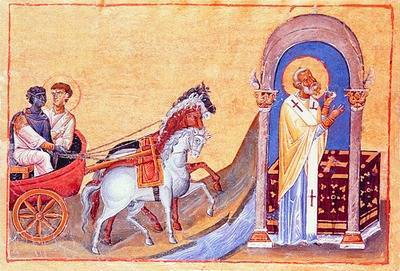
Later in Israel’s history, after they have been conquered and taken into exile, the Babylonians castrate the male leaders in order to cut off their progeny and to secure the “purity” of their own ethnic elite (2 Kings 20:18). In the midst of the threat of assimilation and in the face of what seems to be the end of their people, God promises through the prophet Isaiah that the eunuchs who are faithful to God’s covenant will receive an everlasting name that will not be cut off. This, God says, is even better than having sons and daughters (Isaiah 56:4-5). God asserts that it is through faithfulness and not through procreation that the people of God expand. In 56:3 and 6, the prophet says that through faithfulness, the foreigners (those outside the people of God) join themselves to the Lord.
Those who promote increasing birth rates in Christian families must also explain how they square their proposal with the life of Jesus. Jesus was not married and had no children. While Jesus does not assert celibacy as a model for all Christians, he does say: ‘Not everyone can accept this teaching, but only those to whom it is given. For there are eunuchs who have been so from birth, and there are eunuchs who have been made eunuchs by others, and there are eunuchs who have made themselves eunuchs for the sake of the kingdom of heaven. Let anyone accept this who can’ (Matthew 19:11-12).
Some also affirm that Jesus’ models renunciation of sex in order to unmask and disarm the idols of sex and fertility. Others assert celibacy as a pragmatic approach to mission, pointing to the Apostle Paul’s words to be unmarried “as I myself am” for “the unmarried are anxious about the affairs of the Lord, but the married are anxious about the affairs of the world… (1 Corinthians 7: 25-31, 36-40). Most probably, Jesus’ life of celibacy is indicative indicative of his priestly ministry for atonement (echoing back to Leviticus 16). Again, this atonement is coming from God, through God’s promise and through God’s act of reconciling humanity to God’s Self, not through our own initiatives of pro-creation. Would it be our prayer and expectation that the God who “calls into existence the things that do not exist” birth new life in our barren lands?
Christian Ministry as a Contributor to Poverty?

While we may be good intentioned, full of compassion, and desiring everyone’s salvation, we Christians may unwittingly keep people in poverty. Here are a few ways this happens:
- In some instances, we hold a reductionist understanding of the Gospel. We seek to save the soul, while disregarding the body. We give people a message of salvation that includes a prayer for forgiveness without giving them a community that helps them in their hunger and need. We provide a spiritual solution for physical problems. Conversely, we may use their bodies to reach their souls. We offer food and assistance so that they listen to and respond to our message of salvation. But this often leads to Rice Christians: those that respond to manipulation with manipulation, responding to the thin messages of salvation in order to satisfy their present needs.
- Sometimes we patronize the poor. We have experienced something that we know everyone needs. But when we try to give to others, we aren’t always postured as receivers. We assume that we know their problems, and we come with the solution. Although we may not understand the cultural and social dynamics of the marginalized communities, we come with solutions that have worked in our communities. Moreover, we treat the marginalized as our projects and our mission objectives rather than as people and precious relationships.
- In some circles, Christians promote a skewed understanding of blessing. We affirm that God’s blessing is evidenced by wealth and prosperity. We tell the poor that if they come to a proper relationship with God, they will be blessed, and this blessing will lift them out of their poverty. Those that preach this gospel assume that their own material status is a sign of God’s favor. Those that do not rise in status are presumably not living in proper relationship with God. Although this message is highly attractive to the poor, it primarily serves the preachers of this gospel at the expense of their audience.
- Sometimes we disempower the poor. We may come with aid and inadvertently destroy vulnerable small businesses in the community. Or we may offer our charity without taking responsibility. This happens when we give money to charities that help poor factory workers while purchasing cheap clothing made in those factories. The other side of this is when we offer charity without developing responsibility. When people are treated like donation receptacles, they become dependent on charity and lose a sense of responsibility for what they receive.
When the Gospel doesn’t address the whole person but just their “spiritual” needs, the poor are left hopeless in their poverty, thinking that God is either baiting them through their physical needs or unconcerned in this life with their physical plight.
When we patronize the poor, the vulnerable are further marginalized, exploited and objectified.
When we promote a skewed understanding of blessing, we create discontent and guilt. Worse, we paint a picture of a god that relates to and through the wealthy, relegating the poor as cursed.
When we disempower the poor, we keep them in their poverty, subordinated to our “generosity” and numbed in their dependence. By giving charity we may quiet our conscience without addressing the structural causes of poverty.
Visitors


