fragments and reflections
Theology
Hell: Not Just a Place in Michigan
 Last week I read Rob Bell’s book Love Wins and Francis Chan’s piggyback book Erasing Hell. Although I have not read the blog hype about Bell’s book, I did order the books to find out what all the commotion was about. Since I’m unfamiliar with the blog debates, this may be repetitive.
Because Bell’s book made New York Times best-seller, I expected to discover something new. I didn’t. So, I surmised that the timing of Bell’s discourse must coincide with a lot of people’s own struggles with questions about eternity.
Let me start with some problems I have with Bell’s presentation. I feel like he over-emphasized one’s “freedom” and one’s “choice.” Bell depicts human freedom as the result of God’s love, which I agree with. But it seems counterintuitive to propose that God’s love wins when I have the freedom to choose what I want.
I also think that Bell takes “restoration” out of its biblical context and imposes his own categories of hell. He offers Origen as an example of a Church Father who promotes the reconciliation of every person and thing, but the Church condemned this idea as heresy.
I disagree with Bell’s reduction of resurrection to the earth’s life-cycle. Resurrection in the New Testament is an interruption and a completely new experience of new life without death.
 I do appreciate Bell’s interpretation of the Last Judgment in Matthew 25 and his explanation of inclusivism and universalism. But he came across, to me at least, as being quite ambiguous. He presents these views sympathetically without explicitly siding with one of them.
As for Chan’s book, I appreciated that he didn’t simply write a rebuttal to Bell’s book but rather wrote a more extensive discourse on hell in which he also criticized Bell’s thought. I appreciate that Chan leaves open the question of eternal suffering versus annihilation. My main critique of Chan is that although he claims to be open to rejecting the familiar teaching on hell (pg. 16), his a priori commitments to his particular view on hell are evident throughout. I have the impression that he was choosing and interpreting texts through the lens of a Reformed-styled satisfaction theory of atonement.
Chan detracts from his argument by misconstruing Bell’s position (pg. 24 – though he clarifies by caveat in the endnote). I do appreciate Chan’s correction of Bell’s depiction of hell as the “garbage heap” and the appropriation of this metaphor. But throughout Chan repeatedly fails to account for the literary devices of hyperbole, parable, or the apocalyptic genre in which certain references to hell are depicted. Apart from these minor issues, I see more problematic Chan’s belief that hell is a motivation for Paul’s mission and his fideistic approach to God’s reasons for hell. Paul himself declares that he is compelled by love (not hell). And although God’s ways our higher than our ways, this is primarily an exposition of the cross and not a blanket to cover up all the ways i which we don’t understand God. I am a hard-sell for propositional affirmations that are not substantiated by reason especially where we can find in Scripture pointers to the reasoning and effects of hell and not merely an ignorant appeal to mystery.
I am unsatisfied with the (albeit different) assumptions of both authors about salvation and judgment – concepts that merit further articulation when addressing ideas on hell. Although both books are readily accessible for popular readership (especially Bell’s), I think that they needed to bring a more scholarly treatment to the subject – as done by other authors like Sanders’ No Other Name and the Counterpoint’s publication Four Views On Hell.
In comparing both books, it seems that Bell is emphasizing God’s love (and love wins), while Chan accentuates God’s power (saying that God does what He pleases and gets what He wants, otherwise He’s not powerful – pg. 30). Placing so much stress on the ability of God to win all of creation through God’s love may carry echoes of grace, but Bell risks sacrificing the justice accomplished by God by placing victims in front of their perpetrators. On the other hand, Chan stresses God’s sovereignty so much that he skirts the responsibility that human beings bear for their actions.
Both authors draw an apophatic line. Bell resists determining what hell is and who is in hell. Chan resists determining why God judges and how God passes the judgment of hell on people. Here I find myself much closer to Bell than to Chan, and I think that this is one reason why the spirit of Bell’s book is more inviting and attractive. I find many advantages in the indeterminacy of a theology of hell, leaving room for questions rather than speculation.
The fullest depiction of God’s judgment that we have seen up to this point in human history is Jesus on the cross. There, God chooses to absorb our violence, atone our sin, give us forgiveness and reconcile us rather than judge us and separate us from God’s Self. Evidently, God doesn’t want to be God without us. This is how God judges: through His cross.
By leaving the question about future judgment and hell open, we are less likely to create hells on earth. It is a truism that human beings are conformed to the images they worship. Those who established inquisitions and torture chambers justified their actions by claiming that they were following God by saving the soul and destroying the evil flesh. So too we, like the disciples, often call down fire from heaven in a heartbeat when we cry for “judgment” – and this in the name of God!
Here too is the dangerous rub of power and theologies of hell through which the powerful claim to secure heaven for themselves and hell for others. Listen to the words of N.T. Wright:
I think that Leslie Newbigin in his book the Open Secret sums it up nicely:
“The full number of the Gentiles will be gathered in and all Israel will be saved.” This text from Romans has a universal ring to it. Paul’s vision is truly cosmic and universal. His earlier description of Jesus as the new Adam also points in that direction. “As one man’s trespass led to condemnation for all, so one man’s act of righteousness leads to acquittal and life for all” (Rom 5:18). And yet the same time Paul can say of himself that he must exercise the strictest self-discipline “lest after preaching to others I myself should be disqualified” (1 Cor 9:27). It seems to me that the whole nature of the gospel requires us to maintain this tension and not to try to resolve it either by a rationalistic universalism which denies the possibility of finally missing the mark, or by increasingly fruitless arguments about who will and who will not be saved. When Jesus was asked the question about whether few or many would be saved he declined to answer it but sternly warned the questioner to strive to enter the narrow door that leads to life. There is a kind of confidence that leads to complacency, and there is a kind of anxiety which leads to selfish efforts to save oneself. It seems to me clear from the whole New Testament that the Christian life has room both for a godly confidence and for a godly fear. The contrast between these is not a contradiction. If I know that God in his limitless grace and kindness has chosen and called me to be a bearer of his grace for others, my trust in him will not exclude the awareness that I could betray his trust in me, and that very awareness will drive me closer to him. This is a deeply personal relationship. It excludes, I think, the kind of rationalistic universalism that I referred to. It also excludes, I think, any temptation to set limits to God’s grace, or to write off any human being as beyond God’s redeeming love.
Eunuchs, Muslims and Population Competitions
Over the past few years, I’ve repeatedly come across Christians who are sounding the alarm on Muslim expansion. (For example, see the Christianity Today.) They point out that the growth rate of Muslims is surpassing the growth rate of Christians and that this is largely due to Muslim birth rates. Because Muslims are birthing more children than Christians, the alarmists claim that they will surpass Christians. You can see an example of this perspective here:
There are many problems with this analysis. It assumes that the countries in which Muslims are immigrating are Christian. It carries undertones of racism in its opposition to higher birth rates in ethnic groups that are dominantly Muslim. When Christian families are told that they need to have more children, the burden for increasing birth rates is largely shouldered by women.
This anti-Muslim analysis also fails to account for the effects of migration on Muslim families. Muslim immigrants are more likely to educate their daughters, and the education of women results in lower birth rates. Where poverty is diminished, birth rates decrease. And when families migrate to cities, the birth rates decrease.
More importantly, advocating higher birth rates is not a biblical strategy for expanding the people of God. In fact, Scripture indicates that God’s people grow precisely in the face of low birth rates.
 This is seen at the inception of God’s entering into covenant with the patriarch and matriarch of Israel. God promises to Abraham and Sarah that they will birth a son even though they are old (Genesis 17). In fact, it is precisely in Sarah’s condition of barrenness that God promises, creates and births this particular people set aside for God’s purposes.
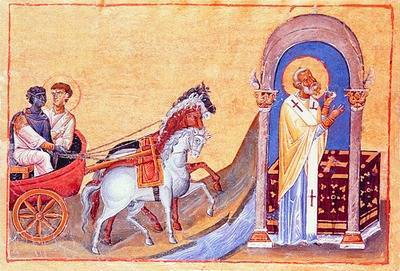
Later in Israel’s history, after they have been conquered and taken into exile, the Babylonians castrate the male leaders in order to cut off their progeny and to secure the “purity” of their own ethnic elite (2 Kings 20:18). In the midst of the threat of assimilation and in the face of what seems to be the end of their people, God promises through the prophet Isaiah that the eunuchs who are faithful to God’s covenant will receive an everlasting name that will not be cut off. This, God says, is even better than having sons and daughters (Isaiah 56:4-5). God asserts that it is through faithfulness and not through procreation that the people of God expand. In 56:3 and 6, the prophet says that through faithfulness, the foreigners (those outside the people of God) join themselves to the Lord.
Those who promote increasing birth rates in Christian families must also explain how they square their proposal with the life of Jesus. Jesus was not married and had no children. While Jesus does not assert celibacy as a model for all Christians, he does say: ‘Not everyone can accept this teaching, but only those to whom it is given. For there are eunuchs who have been so from birth, and there are eunuchs who have been made eunuchs by others, and there are eunuchs who have made themselves eunuchs for the sake of the kingdom of heaven. Let anyone accept this who can’ (Matthew 19:11-12).
Some also affirm that Jesus’ models renunciation of sex in order to unmask and disarm the idols of sex and fertility. Others assert celibacy as a pragmatic approach to mission, pointing to the Apostle Paul’s words to be unmarried “as I myself am” for “the unmarried are anxious about the affairs of the Lord, but the married are anxious about the affairs of the world… (1 Corinthians 7: 25-31, 36-40). Most probably, Jesus’ life of celibacy is indicative indicative of his priestly ministry for atonement (echoing back to Leviticus 16). Again, this atonement is coming from God, through God’s promise and through God’s act of reconciling humanity to God’s Self, not through our own initiatives of pro-creation. Would it be our prayer and expectation that the God who “calls into existence the things that do not exist” birth new life in our barren lands?
Encouragement for Activists
 “The one who plants and he who waters are equal, and each shall receive his wages according to his labor. For we are fellow workers with God…” 1 Corinthians 3:8-9a
Kenneth Bailey comments:
Each worker receives wages “according to his labor,” not according to his or her production! A capitalist world judges the value of everything on the basis of production. This attitude is deeply ingrained in Western society. Throughout history many faithful servants have labored and seen little fruit as judged by the world. God has a different measuring stick, and wages are on the basis of labor, not production. In this text Paul affirms that God is pleased with and will reward that labor, irrespective of the visible results (Paul through Mediterranean Eyes, 127).
Kenneth Bailey on 1 Corinthians
I just finished reading Kenneth Bailey’s Paul Through Mediterranean Eyes. I have loved reading Bailey’s other works on the parables of Jesus and, especially, the Prodigal Son. In the book Bailey takes up Paul’s first epistle to the Corinthians. The strength of Bailey’s reflections on Paul is his analysis of Paul’s rhetoric. His identification of Paul’s use of chiasms and Paul’s appeal to Isaiah and Amos enlightens and clarifies anyone’s reading of 1 Corinthians. Although Bailey’s commentary isn’t as quite as informative (he primarily follows Thiselton and Fee), his autobiographical asides from experiences in the Middle East are jewels hidden throughout the text for the reader to discover and to sense the power of Paul’s letter for contemporary disciples in the Mediterranean and beyond.
Jesus the Temple: the best book I’ve read this year
 Perrin’s book Jesus the Temple is excellent. He follows the thought of N.T. Wright, for whom Perrin was a research assistant. Wright places Jesus’ teaching on the kingdom of God in its first-century Judaic context, arguing that the coming of the kingdom of God means the return from exile. God inaugurates the return from exile through the incarnation, life, death, resurrection and ascension of Jesus. The signs of the realization of the return from exile are the defeat of Israel’s enemies, the restoration of the temple, the flowing of the Gentiles to Jerusalem, and the renewal of creation. Wright points out that we see these signs in Jesus’ defeat of the enemies of sin (through forgiveness) and death (through resurrection), in the temple being redefined as Jesus’ body, in Jesus’ ministry to the Gentiles (and their incorporation into the people of God post-Pentecost), and in Jesus’ resurrected body as the first-fruit of the new creation.
Perrin takes up this theme, focusing on the restoration of the temple. The Jewish temple was not only the heart of worship but also the place of economic assistance for the poor, of social recognition, and of political confession. It was the place where Israel placed its hopes and from which it derived its national identity. But the temple was profaned by, inter alia, being constructed by human hands, by the corrupt administration of its priests, and by the defilement of the Gentiles. So, it functioned as a penultimate sign and anticipation of the true temple, which would bring together heaven and earth, God and humanity. Perrin argues that Jesus saw himself and his movement as the decisive embodiment of Yahweh’s eschatological temple.
Perrin describes how Jesus was not alone in developing counter-temple movements. The sects behind the Qumran and the Psalms of Solomon, as well as John the Baptist shared characteristics that set them against the temple and in anticipation of a new temple.
In Jesus’ cleansing of the temple, Perrin says that we see the most public expression of Jesus’ critique of the temple elite and their offenses toward the poor and the temple. It also is an announcement of Jesus’ establishment of a new temple in which he is its messianic high priest.
Perrin also links Jesus’ exorcisms and meals with the restoration of the temple. By defeating demonic powers, Jesus affirms that there is an alternative power to the temple. By dining with sinners, Jesus is not defiled but rather brings forgiveness, a power claimed through temple acts. Through these actions, Jesus and his followers constitute a new locus of the divine presence.
Another Jewish expectation that preceded the restoration of the temple was tribulation. Perrin argues that Jesus understand the period of tribulation as being well underway during his lifetime through the apostasy of Israel’s leadership, Herod and its temple aristocrats. Jesus bore this tribulation through persecution, torture and execution. And Jesus followers, the new temple built around the Cornerstone, continue to experience the tribulation as the temple is constructed.
One perspective I greatly appreciated was Perrin’s demonstration of Jesus’ solidarity with the poor as a function of his larger calling to be the eschatological temple. The temple aristocracy embezzled monies and then offered high interest loans to the poor. Thus, the financiers increased the temple landholdings and held the poor in an increasing cycle of destitution. The condition of being poor was not simply an economic, social or political status but also a theological reality. By thrusting those on the economic margins into disinheritance, the priestly rulers were in effect gerrymandering the boundaries of true Israel and forestalling full return from exile.
As high priest Jesus inaugurates Jubilee, which means not only an exile-ending release for the poor but also a prerequisite for proper temple worship. Jesus’ ministry among the poor, therefore, is ultimately grounded in his calling and introducing of a new temple. In the new temple, possessions are shared, almsgiving is redemptive and forgiveness entails economic debts, satisfying not only the immediate needs of the destitute but also giving them the ability to break the cycle of debt and poverty.
Jesus’ modeling and inviting to voluntary poverty and renunciation are not only for radical redistribution of possessions and diminishing one’s social status; they were also signs of the priestly calling (signifying the landless Levites).
Perrin also deals with the understanding of the temple in the early church and their connections and continuity with Jesus’ earthly ministry.
I highly recommend the book.
The Servant Nature of God
Q ideas just published an article that I wrote some years back on the Servant Nature of God.
Negotiating Citizenship: Matriotism
There is something in me that commits to place. I feel it when I visit my native state or the city where I was born. It’s as if the land of our fathers and mothers taps on our inner compass needle, calling us home to our Fatherland.
The Fatherland is a place not only for citizens but for friends. One of my favorite philosophers of ethics, Alasdair MacIntyre, criticized E.M. Forser for saying that if it came to a choice between dying for his country and dying for his friend, he hoped that he would have the courage to deny his country. MacIntyre said that if anyone can formulate such a contrast, they have no country, and they are a citizen of nowhere.
Of course, there are problems with patriotism, not least of which is the violence that underlies the competing claims to land, resources and ideology. Patriots usually define themselves by who is in and who is out. Those on the inside, our compatriots, are called on to protect the homeland and to guard against those who are on the outside. If I am committed to my fatherland and you are committed to your fatherland, we may eventually become entrenched in our tribe and enter into conflict.
Because of the violence associated with patriotism and because of the demands by our society to be a ‘patriot’ that I find incompatible with Christian convictions, I prefer to describe my commitment to place as matriotism. Rather than a commitment to the fatherland (patriotism), it is a commitment to the motherland (matriotism). By emphasizing ‘feminine’ traits of birth, nurture and cooperation and de-emphasizing ‘masculine’ features of violence, competition and machoism, I can celebrate a commitment to place that includes rather than excludes others and a place for hospitality rather than competition.
Negotiating Citizenship: Immigrants
What if citizenship in heaven translated to immigrants being made to feel at home and as fellow citizens because we too are strangers and aliens made to feel welcome and offered citizenship in a kingdom in which we are completely unworthy to visit, let alone call home?
What if citizenship in heaven meant that immigrants were viewed by the church as a gift rather than a threat?
Negotiating Citizenship
 A country always calls its people to be good citizens. This commitment to citizenship trumps all other allegiances.
We see this in American Christians who do not differentiate between being a Christian and American but rather equate being Christian with being American. We fly American flags in our sanctuaries, support our troops, and encourage Christians to support the Constitution and to obey the laws.
The fact that the commitment to one’s nation is the paramount obligation is even more evident in the national discourse on American Muslims. At every turn, Muslims are asked to prove that they are “good” Americans, which they do by affirming the Constitution, their belief in freedom and democracy, their participation in and sacrifice for the military, and their fidelity in paying taxes. But the burden of proving their American-ness is constantly on their shoulders – and the shoulders of other non-White and non-Christian citizens.
In the ancient Greco-Roman world, citizenship was even more a privilege than it is in our democratic countries, and just a small portion of the population was citizens. Only males qualified for citizenship. You could not be a slave. Most were land owners. The Greco-Roman society was structured around its citizens, who were the Pater Familias, around whom other family members, servants, slaves and beneficiaries had their livelihoods and status.
Although cities were allowed to have their own civic religions, the emperor demanded utmost allegiance to himself. A good citizen was loyal to the king. Interestingly, one of the purposes of Josephus’s history of the Jews is to demonstrate that Jews are good Roman citizens.
In the early Church, there are also Christian claims to being good citizens. For instance, some speculate that Luke’s description of the Jerusalem church in Acts 2 and 4 depicts the ideal Greek notion of society.
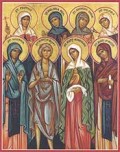
However, most Christians were not citizens but rather, as Peter says, “strangers and aliens.” The early Church spoke about having their citizenship in heaven. Although they were not given citizenship in the kingdoms of this world, early Christians asserted their citizenship in the heavenly city. Today, I often hear interpretations of heavenly citizenship as being one’s passport to heaven. But for the early Church, heavenly citizenship was not so much about one’s eternal destination as it was a different basis for living in the present world. This citizenship shaped one’s convictions and actions. This citizenry was a place of belonging and social identity for the excluded and oppressed, particularly, for women, slaves, and non-property owners.
When the Church is later accepted and authorized by the Roman Empire, the distinction between Roman citizenship and heavenly citizenship is diluted. How did the Church respond? Many of the Church Fathers defended Christians as “good” citizens but still challenged the claims of the empire. Others renounced the privileges of the empire and lived in solitude or in small communities on the fringes of the empire, committing themselves to celibacy, poverty and other ascetic disciplines.
Usually, the ascetic commitments to celibacy, poverty and obedience are viewed as a reaction to the world’s dominant temptations of sex, wealth and power. While this is true, this view usually fails to see the social implications. Patlagean points out that these ascetic commitments redefined citizenship. The ascetic commitments challenged the foundations that shaped traditional identity: marriage, family and property. To be a “good” citizen in this new vision of society meant to choose poverty, celibacy, and ascetic generosity. This meant that relationships were based on freedom rather than power, on chastity and equality rather than progeny and misogyny, and on generosity rather than competition.
When I look at the vision of the early Church for a new society and its citizenry, I am challenged to renegotiate the places in which I commit to country and the places where I must resist its demands. I am challenged to re-evaluate my commitments to the state in light of my ultimate allegiance to my citizenship in heaven.
Visitors

 fragments and reflections