fragments and reflections
Fragments & Reflections
Lucrarea creștină ca o cauză care contribuie la sărăcie?
Cu toate că venim cu intenții bune, plini de compasiune și cu dorința să vedem pe toți mântuiți, noi creștinii putem contribui neintenționat la sărăcia oamenilor. Iată câteva moduri prin care se întâmplă acest lucru:
– În unele instanțe, susținem o înțelegere reducționistă a Evangheliei. Căutăm mântuirea sufletului în timp ce disconsiderăm trupul. Dăm oamenilor un mesaj al mântuirii care conține o rugăciune pentru iertare, fără să le dăm o comunitate care îi ajută în foamea și nevoia lor. Oferim o soluție spirituală pentru o problemă fizică sau invers, ne folosim de trupurile lor pentru a ajunge la suflet. Aprovizionăm hrană și ajutorare pentru ca să asculte și să raspunde la mesajul nostru de mântuire. Însă, această abordare duce de multe ori la ceea ce se numește creștini de orez: cei care întorc manipulare pentru manipulare, răspunzând la mesajul nostru subțire de mântuire ca să satisfacă nevoile lor prezente.
– Uneori îi luăm pe săraci de sus. Noi am experimentat ceva de care știm că fiecare are nevoie. Însă, când încercăm să dăm altora, nu întotdeaună ne așezăm în postură de primitori. Presupunem că noi cunoaștem problemele celor în nevoi și venim cu soluția noastră. Cu toate că nu înțelegem de multe ori dinamicele culturale și sociale ale comunităților marginale, venim noi cu soluții care funcționează în comunitățile noastre. Pe lângă asta, îi tratăm pe cei marginalizați ca și cum sunt proiectele noastre și obiective de misiune mai degrabă decât oameni și relații prețioase.
– În unele cercuri, creștinii promovează o înțelegere disțorsionată a binecuvântării. Noi afirmăm că binecuvântărea lui Dumnezeu se vede prin bogăție și prosperitate. Le spunem celor săraci că dacă ajung la o relație corectă cu Dumnezeu, vor fi binecuvântați și că această binecuvântare îi va ridica din sărăcia lor. Cei care predică această „evanghelie” presupun că starea lor materială este un semn de favoare din partea lui Dumnezeu. Cei care nu se ridică din starea aceasta sunt văzuți ca având probleme și păcate în viața lor. Cu toate că acest mesaj este foarte atrăgător pentru cei săraci, slujește în primul rând pe predicatorii acestei „evanghelii” prin faptul că se îmbogățesc pe seama audienței lor.
– De multe ori asuprim sau luăm putere de la cei săraci. Poate că venim cu asistența, dar într-un mod necugetat distrugem afacerile mici și vulnerabile ale comunității. Sau oferim caritatea noastră ca să ameliorăm starea lor fără să ne asumăm responsabilitatea pentru starea lor. Acest lucru se întâmplă când dăm banii organizațiilor caritabile care îi ajută pe muncitorii care sunt exploatați în fabrici în timp ce cumpărăm îmbrăcămintea ieftină de la aceste fabrici. Partea cealaltă a acestei probleme este atunci când oferim caritatea fără să cultivăm responsabilitatea. Când oamenii sunt tratați ca un recipient de donații, ei devin dependenți de caritate și pierd un simț de responsabilitate pentru ceea ce au și ceea ce primesc.
Când Evanghelia nu se adresează întregii persoane, ci doar nevoilor lor „spirituale”, cei săraci sunt lăsați în sărăcia lor deznădăjduitoare, crezând că Dumnezeu îi trage cu momeală prin nevoile lor fizice sau că este indiferent față de suferința fizică din viața aceasta.
Când îi luăm pe săraci de sus, cei vulnerabili sunt și mai marginalizați, exploatați și obiectificați.
Când promovăm o înțelegere distorsionată a binecuvântării, creăm nemulțumire și vină. Mai rău, pictăm o imagine a unui zeu care relaționează prin și pentru cei bogați, alungând pe cei săraci ca și cum sunt blestemați.
Atunci când luăm puterea de la cei săraci, îi ținem în sărăcia lor, subordonați „generozității”noastre și anesteziați în dependența lor. Poate că ne liniștim conștiința prin milostenia noastră, dar nu ne adresăm cauzelor structurale ale sărăciei.
Sperăm ca să cultivăm alte tipuri de lucrări creștine – lucrări care caută să fie holistice, care prețuiesc relațiile și reciprocitatea, care se identifică cu cei marginalizați, care afirmă faptul că Dumnezeu este este împreună cu și pentru cei vulnerabili, și care împuternicesc și dezvoltă responsabilitatea.
Vulnerability, Children and the Image of God – part 2
In part 1 of the post “Vulnerability, Children and the Image of God,” I outlined humanity’s imaging God through vulnerability and difference rather than through power. I follow Jensen’s book Graced Vulnerability. What I am attracted to in Jensen’s depiction of vulnerability as expression of image of God is that it speaks of a status rather than of an activity like rationality, dominion, etc. But this line of thought may be accused of begging the question unless we describe how humanity, as imago Dei, is distinguished from the rest of creation which also is marked by vulnerability and difference.
 I don’t have a fully-worked-out answer to this. At the moment, this is where I am at: When thinking of human beings in the image of God, we usually have an individualistic framework. We can justify our individualism with Genesis 1 – God created humankind in God’s own image – and then finding in Genesis 2 a solitary man. But individualistic readings are subverted by the same text: So God created humankind in his image, in the image of God he created them; male and female he created them (Genesis 1:27). The image of God is a collective identity, not individualistic. If image of God is a collective, speaking of humanity rather than a solitary human being, then humanity’s representation of God is not the life of solitary individuals. This provides space for the exercise of rationale, stewarding, and multiplication without denying the image of God in those without abilities to rationalize, steward or multiply. What is more, is that understanding imago Dei as vulnerability means that rationale, stewardship and multiplication are directed towards and used on behalf of those that are most vulnerable.
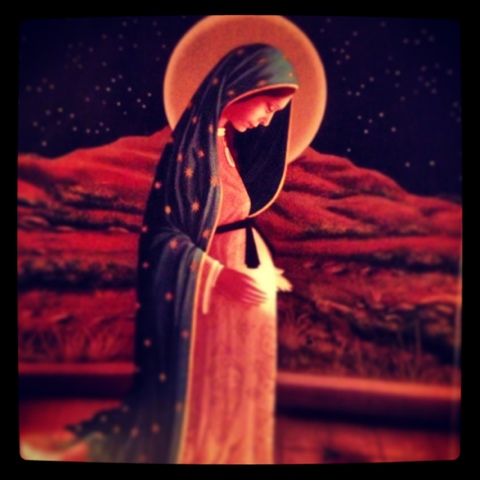 So, along those lines, I’m thinking about image of God as an ontological designation. God designs/designates humanity as God’s image. It is who humanity is, not what humanity does. This would be compatible with some Orthodox theology that states that humanity participates in the material (animal) world and in the spiritual (angelic) world. That seems to me to be an ontology that is all-inclusive, especially of those so vulnerable that they do not have capacities to perceive or act on their own behalf. Yet, while the participation of humankind in the material and spiritual spheres differentiates humanity from the rest of creation, we are still placing too much weight on humanity’s distinction from the rest of creation. Rather, humanity as image of God must be based on correspondence to God. The correspondence is rooted in God’s designation of humanity as God’s image. The designation of humanity at Creation then leads us to Incarnation. God as human being affirms the divine correspondence with humanity (without dissolving divinity into humanity). And the glimpses of the revelation of God in the womb and of God on the cross affirm the ideas of image of God as vulnerability and difference. In Jesus we have the invitation to be fully human, imaging God through vulnerability, which is received more than achieved, as described in Philippians 2:5-11 – “Let the same mind be in you that was in Christ Jesus, who, though he was in the form of God, did not regard equality with God as something to be exploited, but emptied himself, taking the form of a slave, being born in human likeness. And being found in human form, he humbled himself and became obedient to the point of death – even death on a cross” – without succumbing to the serpent’s and Babel’s grandiose temptations of power “you will be like God” (Genesis 3:5).
This is an attractive notion of image of God in which humanity affirms and accepts this correspondence to God as a grace, designation and invitation. It also removes any ideas being gods in the world – ideas that have deluded the powerful throughout history and delude us today – and actually dehumanize and mar the image of God. Against the power-brokers: we image God by simply being, and we let God be God. 
Baschet
Baschet (Basket) is how we refer to basketball in Romania. In the summer I run a little clinic to teach the kids the basics. Then we play…even when it’s so cold outside that I would rather not.
This picture, drawn on a cold day better spent indoors, is a depiction by one of our kids of our time at play:

Vulnerability, Children and the Image of God – part 1
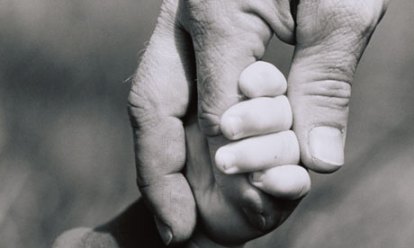
For the past 17 years, we have been building relationships with children living on the streets, children abandoned with HIV, children with disabilities, and children at risk of being trafficked. Our hope and prayer is that these vulnerable children will have a better future. But often, it is the children that inspire our hope and teach us to pray – and that by simply being vulnerable children.
When we speak about vulnerability, we think of the word’s Latin roots: the ability to be wounded. For children, vulnerability is the combination of present dangers and difficulties that they must face and cope with. Most often, we understand vulnerability as a challenge to be overcome or solved. While it is true that we need to protect children and reduce the threat of exploitation, we also need to understand vulnerability as a gift.
In actuality, this gift is one endowed by God to every child at creation. We are familiar with the text from Genesis:
Then God said, ‘Let us make humankind in our image, according to our likeness; and let them have dominion over the fish of the sea, and over the birds of the air, and over the cattle, and over all the wild animals of the earth, and over every creeping thing that creeps upon the earth.’ So God created humankind in his image, in the image of God he created them; male and female he created them (Genesis 1:26-27).
Although the concept of “image of God” is debated, there is general consensus around the idea that humanity in the image of God translates to humanity as God’s representative on earth. (That is why we are forbidden to make graven images because the image is already created and set in creation by God.) The question is: how does humanity represent God?
Usually, humanity’s likeness to God is understood as having rationality, the power to exert dominion, ethics, the capacity to love or – through Platonic influence – the having of an eternal soul. While all of these ideas may distinguish humanity from the rest of creation, they revolve around the abilities of human beings and, therefore, the most common understanding is power. Those that hold this opinion connect power with humanity’s ability to exert dominion over God’s creation. However, humanity’s representation of God through power has its problems. For example, from the creation narratives on through Genesis and the First Testament, we almost always find humanity’s power in negative terms. There is the fall and exile from Eden because they wanted to be like God; there is the construction of the temple-tower in Babel because they wanted to reach heaven; and there is the exploitation of other humans Egypt and later by the Israeli kings and temple. We also have before our eyes the real effects of human power today in the oppression of the power and ecological destruction through our consumer economies.
Rather than understanding humanity’s likeness to God through power or what humans can do, we are better to view likeness through vulnerability. God reveals God’s-self as vulnerable. God loves, which entails the risk of misunderstanding and rejection. The God of the cosmos enters into covenant with human beings, saying, “And I will walk among you, and will be your God, and you shall be my people’ (Lev 26:12). God acts on behalf of the vulnerable by rescuing the Israelite slaves from Egypt. God takes the place of a slave by carrying the shade (in the form of a cloud) and the torch (a pillar of fire). The culmination of God’s Self-revelation is the incarnation, when the Son is conceived in a mother’s womb, is born in a stable, lives on the margins, and critiques power. The Son touches the excluded like children, diseased and sinners. The Son goes the way of a cross and is seen as the most vulnerable: a little lamb that appears slain. All of this doesn’t just tell us what God does. With God, there is no difference between acting and being. In fact, we begin to understand God’s being through God’s action. So, the vulnerability that we see through God’s actions open us up who God is.
If God reveals God’s-self through vulnerability and if we represent God through our vulnerability, rather than through our power, we can then affirm the image of God in children. Interpretations based on power and ability usually do not consider children, and if they do, they view children as lives anticipating adulthood – as if only adults can image God. In this way, children are either seen as less than human or almost human and only in a process of becoming. Viewing children as images of God affirms their vulnerability and also empowers them to be who they are as children. Moreover, by affirming children as the image of God, we also critique adults who, sometimes unwittingly, try to make children after their own images.
Children as image of God is developed further by Jesus who makes the intrinsic link between children and God’s kingdom. We learn from Jesus’ interaction with children:
People were bringing little children to him in order that he might touch them; and the disciples spoke sternly to them. But when Jesus saw this, he was indignant and said to them, ‘Let the little children come to me; do not stop them; for it is to such as these that the kingdom of God belongs (Mark 10:13-14).
In our proclamation the kingdom of God, we are invited to see children as participants – not because they prayed a certain prayer, but simply because they are children.
In our community we have had many babies born in the last year or two. In their infancy, and precisely in their vulnerability, they image God. One of the children, Abel, has been my icon at our Sunday worship services – a window through which I see God. When Abel was still in the womb, the doctors identified a developmental problem and recommended that the mother have an abortion. After much prayer and many conflicts with the doctors, the parents gave birth to Abel. The first weeks were touch in go with head swelling and many seizures, but Abel survived. Although he has low-level brain activity and still has seizures, Abel continues to live and to receive love and to give love. He is dependent at every moment on others for his survival. Abel represents God’s image. Abel belongs to God’s kingdom.
Abel and other children are vulnerable in their dependence on others and in their openness to others. We can affirm their vulnerability by caring for them (especially in a world that rejects them).
Jesus gives us a mandate to protect children: ‘If any of you put a stumbling-block before one of these little ones who believe in me, it would be better for you if a great millstone were fastened around your neck and you were drowned in the depth of the sea. Woe to the world because of stumbling-blocks! Occasions for stumbling are bound to come, but woe to the one by whom the stumbling-block comes!” (Matt. 18:6).
Along with protecting children, we can affirm their vulnerability by receiving them (by accepting their uniqueness). Through our hospitality towards vulnerable children, we also receive God. ‘Whoever welcomes one such child in my name welcomes me’ (Matt 18:5).
By recognizing the vulnerability of children, maybe we will more readily affirm our own vulnerability. And the gift of vulnerability that we see in children can become the gift of vulnerability that we are and that we offer by more faithfully imaging God in the world.
Again, the invitation of Jesus: ‘Truly I tell you, unless you change and become like children, you will never enter the kingdom of heaven. Whoever becomes humble like this child is the greatest in the kingdom of heaven’ (Matt. 18:3-4).
Recent Reading
 Helmut Thielicke A little exercise for young theologians – a good little book to give young students a healthy perspective on studying. I wish I had read this 15 years ago.
 Richard Rohr Falling Upward – I was told not to read this book until I was “older”, so I waited and read it for my 40th birthday. Some may struggle to get beyond his existential reading of Scripture and his use of other faith traditions, but it is full of wisdom.
 Richard Rohr From Wild Man to Wise Man – Again, lots of wisdom and much healthier perspective than most of the stuff I’ve read on manhood.
 Ken Shigematsu God in My Everything – This book was a gift to me by Jennifer Seo, new Word Made Flesh staff to Sierra Leone, of whome Shigematsu is pastor. It’s a good introduction to creating a Rule of Life and contemplative prayer practices for those engaged in a busy world.
 David Jensen Graced Vulnerability – A Theology of Childhood – This is one of my favorites. It is an advocate theology for the child, looking at child in theological perspective and what that means for children in a violent world. I will be posting reflections from this book later.
 Emilie Griffin Clinging – A book recommended by friend Becca Gray. A book that makes you want to pray.

Richard Behr Kiss the Hand You Cannot Bite – A good telling of Ceausecu’s rise and fall.
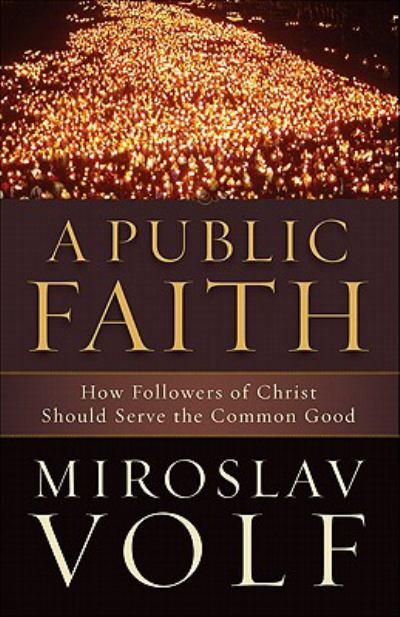
Miroslav Volf A Public Faith – Volf is one of my favorites. Much of this book’s ideas are found in his book on Allah. The middle section is a great alternative to Niehbur’s Christ and Culture. Volf outlines possibilities for a democratic context. It is difficult for me to imagine them working in a totalitarian state.
 Scott Morton Funding Your Ministry – a bit sexist and ethnocentric; difficult for me to accept the presuppositions; but contains helpful charts and planning sheets
 Jim Collins Great By Choice – A continuation of his previous books, raising some good research on business management success.
 Wendell Berry What Are People For? – helpful to read together with the previous two that assume competition (winners and losers); Berry helped me to focus again on imagining a world of community and sustainability and delight.
 Bill O’Reilly Killing Jesus – I suspected to find a Jesus co-opted by contemporary American right-wing politics, and, in the end, this is what happens. The book is basically a telling of the Gospels’ birth and passion narratives with some historical context. Still, by carefully excluding any of Jesus’ miracles and especially by excluding Jesus’ teaching and public ministry, not to mention the resurrection and ascension, and by avoiding any reflection on whether Jesus is related to the divinity or what Jesus’ life says about God, O’Reilly sets Jesus up to be used as one sees fit. There is no reflection on God’s kingdom and its contrary nature to kingdoms of the world (which is ironic, since, although he fails to bring out the overt political implications of Jesus’ death, the cover claims O’Reilly to be “the most talked about political commentator in America). Likewise, there is no discussion of ethics, and there is no demands on the reader after interacting with these historical events. O’Reilly sets Jesus up to be domesticated. For example, the author credits the expansion of Christianity to Constantine’s acceptance and legalization of the faith – although Christianity was expanding in contradiction and in spite of Caesar’s opposition. O’Reilly then puts “Jesus” in the mouth of his heroes, as if employing the name of Jesus automatically validates the person citing him. He is cited by George Washington, who baptizes war and killing in the name of Christ. A citation of Abraham Lincoln follows, which also joins dying on the battlefield with weapon in hand with the dying of Jesus who refused weapons and killing. O’Reilly makes a step in the right direction by evoking Martin Luther King’s call to love enemies – though the authors don’t mention non-violence or the very clear difference between King’s death and those of military soldiers that were cited previously. And O’Reilly concluded with Ronald Reagan’s comments on Jesus – a sad attempt to subjugate Jesus to support his own political agenda and to sell books.
 Catalin Raiu Ortodoxie, Postcomunism si Neoliberalism – some good, some not as good reflections on Romanian society and culture.
Donating Blood in Dracula Country
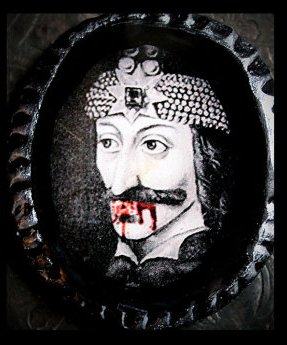 I know that Galati is not officially in Dracula Country. We are just a port on the Danube that Braham Stoker’s characters use to access the region, before riding west across the mountains to Transylvania. Still, the blood-fanged menace has come to be associated with all of Romania, and we too sell the Dracula souvenirs in Galati.
The spirit of Dracula is alive and well in our medical system. Last week I finally figured out how to donate blood. This was a big step for me since I cringe at just hearing words like blood, clot or transfusion. Still, it is something that I’ve wanted to do for a long while but had never made the time to do it. I know that there is a serious need for those with medical illnesses or emergencies. I figured that this is a practical way to participate in my local community and invest in its health and survival. I’m attracted to the idea of being able to give of yourself in order to bring life to others.
There is a blood bank not far from my home. Because they receive donations every day from 8 to 10, I assumed that there wouldn’t be many donors. I checked my coat, received a number and was ushered up the stairs to a large waiting room. The room was packed. At first, I thought it was full of people there for blood tests but I soon learned that they were all donors.
I registered and then waited in line to get my blood pressure checked (I’m a healthy 13/8). Then, I waited in another line to consult with a doctor about my recent medications, operations and sexual history. Then, I waited in line to have my finger pricked and my blood checked. The nurses noticed my name and my nationality, and they asked me to tell them my life story. That took me a whole 2 minutes. Then they asked me how much money I made, and if it was enough for me to live on. The nurses couldn’t understand what motivated me to donate blood. It was only later that I realized that all my fellow donors were quite poor.
Then, I moved to another line and waited to donate. As I stood there, someone tapped me on the shoulder. I turned around to see Coco and Gabi’s mother – two children that had been a big part of our Community Center’s early activities. They had left the programs a few years back, and it had been a long time since I had seen them. Their mother and I caught up on the whereabouts of our mutual friends. She told me that she was there to get some blood tests – something that the blood bank provides for free when you donate.
Finally, after 2 hours, I was called in to give blood. Now, I have had my blood taken many times in order to check my thyroid levels. Usually, they take the whole vile. One time, when I was 12, they filled 3 viles and I fainted on the way to check out. So, with all my experience with syringes, I approached the bed and I saw a small sack connected to a tube. The pack was quite a bit larger than the viles I was used to. Next to me sat a tattooed man, dutifully opening and clinching his fist as his bag filled with red juice. I started to panic. I wondered if I had enough fluid in my body to fill that thing. But what could I do? It took me 2 hours to get to this point and there others waiting in line behind me. I felt like the kid who waits in the long line up the ladder to have his turn going down the slide, only to look down, get scared and climb back down the ladder over the others that are hanging on. Wishing that I had eaten breakfast and at least had something to drink – at least 2 liters of something – I laid on the bed, the nurse rubber banded my arm, and she yelled at me a couple of times to keep my arm straight. Then she told me to open and close my fist. I cringed. I sweated. I looked at the clock. I kept rubbing my eyes and my vacation goatee. The nurse asked me a couple of times if I was ok and assured me that I was almost finished. As I felt the blood drain from my hand and some weird pulsing sensations in my arm, I hoped that she was right. Of course, I couldn’t look at my arm. Finally, my 450 ml bag started beeping and the nurse disconnected me. I sat there for a few minutes, remembering when I fainted as a child. I made sure everything felt ok, stood up, and got yelled at again by the nurse for not keeping the cotton pressed tight enough to my arm. Then I stood to wait in another line. I signed out and they gave me about 20 dollars worth of food vouchers. That, for me and my fellow donors, was the price of our lifeblood.
The following day I returned to the blood bank to collect the results from the blood test. After seeing all the donors from the previous day, I expected to wait in another line. This time though I was alone in the room – not even Coco and Gabi’s mother.
I realize that no one is being paid money for blood and that some benefits are welcome encouragements for blood donations, but essentially, the food vouchers represent an income for those who make less than $150 per month. I’m sure that there are some like me who do not come from poverty that chose to donate blood, but the motivation of the overwhelming majority is their need for the food vouchers every 70 days. If the motivation for the donation is acquiring the voucher, then this is wrong. Sadly, we are not even asking ourselves the ethical question about turning blood into a commodity or a currency. This is the same mentality that has convinced the poor to donate kidneys and other organs for money and has led to organ trafficking and ultimately to human trafficking.
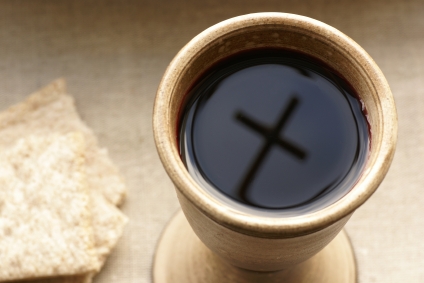 Just as Dracula fed on the blood of others in order to live, the Romanian medical system feeds on the blood of the poor in order to provide transfusions for those that have access to medical care. Today there is lots of complaining about the wages of medical workers – and maybe they do not get paid enough – but how do we compare a reasonable working wage for medical professionals with a reasonable compensation for blood? What is the price you put on blood? How much is it worth? There is an irony in the medical workers refusing to work because they do not receive enough pay while the blood, which is cheap, is given by those who do not have access to the services of the medical system that they are donating to. Wouldn’t it be better to give each donor access to the medical system’s services if and when they need it? Shouldn’t everyone have to invest in it in some capacity, whether by coin or by blood, to insure one’s self and one’s community? Maybe then we could move from being a nation known for Dracula to a nation known by its practice of Eucharist.
November 2013 Update
Dear Friends,
I want to thank you for praying for us, especially during my whirlwind trip through the US last month. Traveling through six states, I was able to meet with many organizations, speak in undergraduate and graduate classes, and share at a number of churches. In the 17 years that I have been serving in Romania, I have never taken a trip like this before. As a community, we see that we need to develop some new partnerships in order to continue and expand Christian ministry among the vulnerable. I was really encouraged by people’s response. If you know of others that you think would be interested in connecting with us, please let us know.
I returned to Galati to find our Community Center full of kids. This summer we saw a few of our youth graduate from high school. One was also baptized and is planning to continue with her studies at the university. This was the first group that started with us when they were 6 years old or from the first grade. They successfully made it through 12 grades of school with the support of our community. While we celebrated their hard-fought victories, we also asked ourselves, “What helped them succeed where many others didn’t?” What we saw, for example, was that they had an “alternative” group of friends that they had at the Center, they began coming to the Center at a young age and in the first years of school, they had worked through behavioral, developmental and familial impediments, they had cooperative, if not supportive, parents, and they were involved in a local church at an early age. So, we are trying to build on these lessons learned. We are trying to take new children in when they are in their first years of school. We are structuring them in groups of 10 and receiving them at the same time so that they can form friendships. We focus on behavioral development rather than homework. We are making the monthly parent meeting mandatory. And we are trying to facilitate their integration in a local church, even when they are young. Currently, we have about 50 children participating in the Community Center on a daily basis and 10 at the Day Center – more than ever before in our community’s history. We have more than 30 parents or caregivers participating in the monthly parent meeting – more than ever before. Our prayer is that many kids will have their lives transformed and that the transformation will be lasting and contagious.
As some of you may know, Galati is situated in one of the poorest parts of the country in one of the poorest countries in Europe. We are building relationships with children at risk of under-nutrition, neglected by their parents or legal guardians, at risk of turning to begging and living on the streets, at risk of never enrolling or of dropping out of school. We are also developing friendships with the children’s parents who suffer from a lack of education, generational dependence, alcoholism, racism, unemployment and forced migration. This year we have made the audacious goal of visiting all of the vulnerable families in the neighborhood to build relationships and to assess their level of vulnerability. Up to now, we have made it to 70 families in the neighborhood. Our prayer is that in every relationship we can sow seeds of hope for a different and better future.
Some of you have asked about our practical needs as our activities have expanded. Here are a few:
- Our kids have poor diets and many are undernourished. You can help provide
a hot, healthy meal, which the kids receive every day at the Center and costs $60 per child per month.
- For a child to go to a week of camp, it costs about $200.
- For every educator that cares for and disciples at least 10 children every day, it costs $500 per month, which means $50 per child per month.
- We need to renovate our kitchen and appliances, which will cost about $2,500.
If you would like to make a year-end donation, please let me know.
With gratitude,
david and lenuta
Visitors

 fragments and reflections