fragments and reflections
Life in Galati
Cemetery at the Margins of Galati
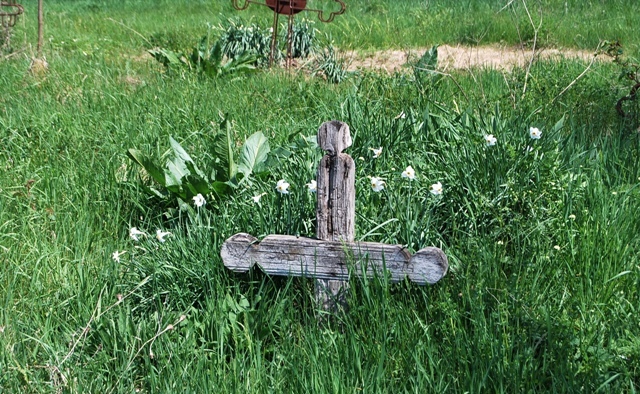 Our community practices remembering: remembering the forgotten, the marginalized and the lost. This past summer a group of students from George Fox University spent a few weeks serving with us. One afternoon we visited a cemetery on the periphery of our city where many of our kids have been buried. Sadly, many of their graves are no longer marked; some have been removed altogether.
Margi Felix-Lund, one of the leaders of the summer team, wrote this poem:
God remembers…
…the birth of each child
the smiles & the tears
the injustice & the sorrow
the hope & the joy
God remembers the death of each child.
Although men & women may try
to wipe these children from the face of this planet-
although they may succeed in eradicating
the physical commemoration of their death-
these children, these vulnerable ones
will remain forever present
in the memory of God.
May Update
Dear Friends,
I wanted to give you a brief update on how life is in Galati so that you can know specifically how to continually pray for us.
Spring is here and our lives and schedules are fuller as the weather warms. Sadly, the person we employed to coordinate the new Day Center in the village resigned, but we have seen God’s hand at work. Within days another person, who volunteered with us a few years back, expressed interest in coordinating the Center. Her name is Mariana and we are so thankful that she is now involved with us. She’s getting to know the kids and figuring out the role.
We celebrated Easter this year as we have in years past. The kids prepared a performance of songs and poems, Lenutsa explained the reason for the holiday, and then we had a big meal together with the kids and their families. Afterwards, the kids tried to break a Romanian version of a piñata. It was a struggle, but they eventually broke the candy out.
It was a huge blessing that our friends Frank and John came out from England to help us build a playground at the new Day Center in the village. We also had a group from New Hampshire that were with us for a few days and helped us plant grass both in Galati and in the village.
We also received David Clark, a pastor from Scotland, for a few days. He led us in some reflections and discussions on what it means to do ministry in, with and for the city. It really helped us to start thinking about our ministry and our community in a larger context. We are now thinking and praying about some different activities to better engage our urban context.
Last month our community in Galati took two full days to create a one-year tactical plan. It was a time that helped us evaluate the positives and the negatives from the past year and focus our energies for the year to come. Each month we will come together to analyze our implementation of the plan. Please pray that we would continue to seek God’s heart for the vulnerable in Galati and that we would have wisdom in prioritizing our activities.
After lots of preparation, we are getting ready to take our community on a retreat. This year it is a regional retreat, which means that some of our staff from Sierra Leone and from Moldova will be participating with us. Sadly, three of our Sierra Leonean and one of our Moldovan national staff did not receive visas and are unable to come. So, our time of building and rejuvenating community is also mixed with grieving the kingdoms of this world that divide and try and keep us divided. The theme of our retreat is Reconciliation. We do pray that God would do a work in us personally and communally and a work through us towards reconciling all of creation to God. Please do pray with us and for us.
I would ask you to especially pray for our teenagers. Most of them have been with us since they were very young. But, as with most teenagers, they are struggling with the major decisions that will give direction to their futures. And they face struggles much more difficult than I did. For example, one of our teens has an older brother who was never sent to school and never learned to read or write. As you can imagine, it is difficult for him to get a job. Yet, he comes back from Italy with a car (that he has to hire someone to drive) and money to buy an apartment. The way he gets money is through stealing or through pimping girls. Although our teens do not think that this is a “good” way to make money, they do see it as a viable job. This is the model that they see at home. And it is a spiritual battle to help them seek God and reject the things and the ways the world values.
I continue to write some reflections on my blog: davidchronic.com. In March, Lenutsa and I were in Assisi with the other Regional Coordinators and the US co-executive directors of WMF where we had a great time together and were able to walk in the same place where Francis and Clare started the mendicant movement. A number of the recent posts are about the Franciscan movement. I have attached a short reflection below.
Thank you for standing with us in prayer,
David and Lenutsa
Neamtu and the New Republic
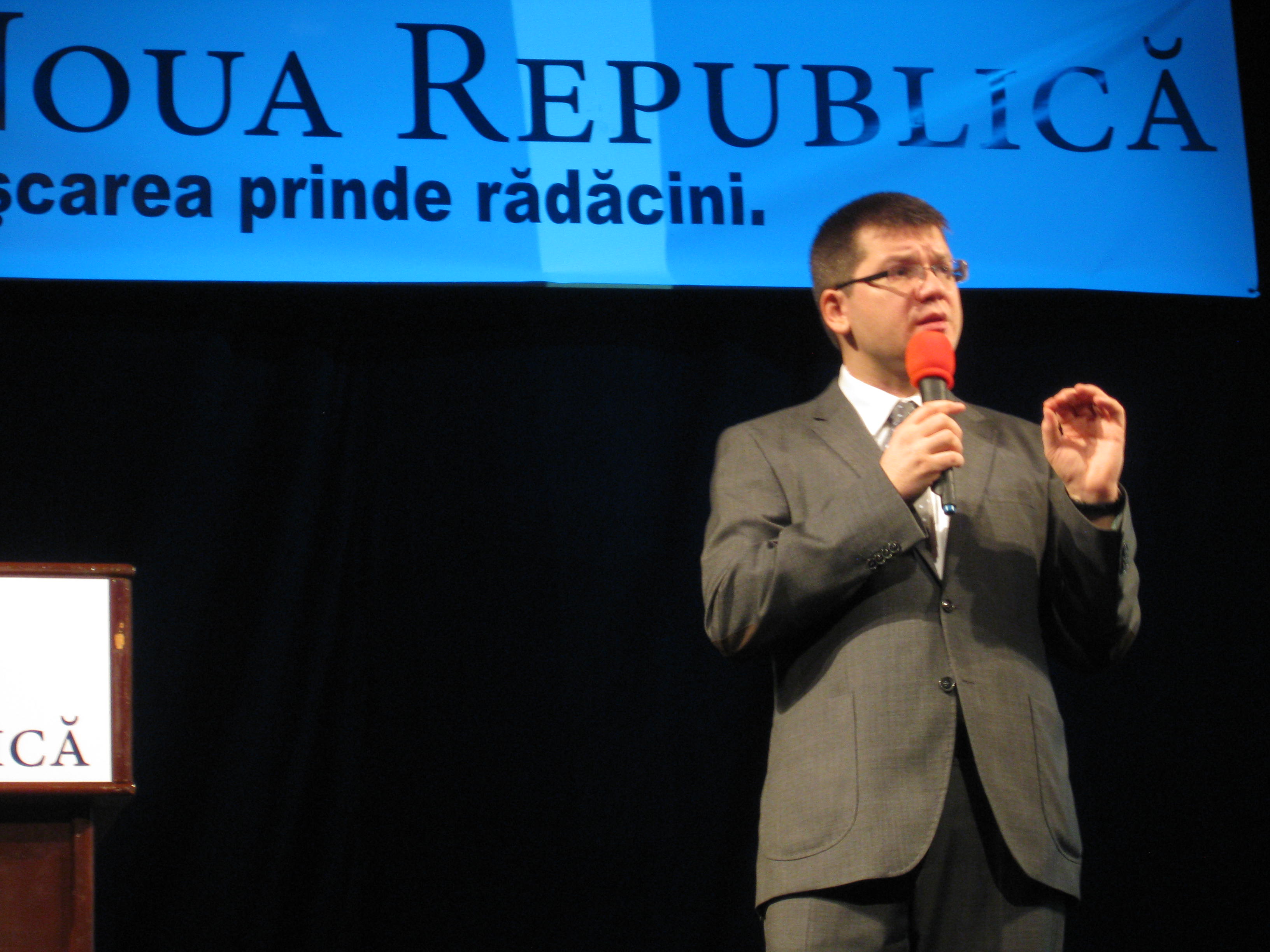 Last week, I had the opportunity to go to Braila (Galati’s neighbor city) and listen to Mihail Neamtu – a young Romanian theologian whose writings I have followed over the past few years. I am a fan. Recently, he has established a political movement called the New Republic (Noua Republica), which will soon become a political party.
 Neamtu explained the concept of the New Republic whose logo is a tree, rooted in Romania’s long tradition and extending upward towards Romania’s future.
Neamtu criticized Romania’s government, which since the fall of communism in 1989 has claimed to be socialist. The socialist government has promised to provide education, health care, and the security of the police. However, students are obliged to pay all sorts of fees. If they want to succeed in school, they have to pay for tutors. As for health care, one must pay for needles, syringes and medicine, not to mention paying bribes for nurses and doctors to provide medical care. As for the police force, there are cities in which the police is impotent in the face of mafias and the illegal underworld. While this is nothing controversial or surprising, Neamtu simply pointed out that the government claims to be socialist – something that many citizens would affirm without hesitation – but largely fails to deliver on its claims.
In opposition to the narrative of socialism, Neamtu is promoting the New Republic as a party on the right of center – something missing from the political spectrum in Romania. In his discourse, Neamtu drew on the ancient Greek idea of the agora: the public square in which civic discourse and commerce take place. Neamtu said that in today’s economy in Romania, the agora is dysfunctional. Instead of a context of free trade and in which competition creates expertise and specialization, Romania has a clientele economy. There are clients who are privileged in the marketplace because of friendship and family or because of bribery or blackmail. This cultivates corruption and impedes development.
While Neamtu didn’t mention that the ancient agora also privileged a certain clientele – namely the male, landowning citizens – he did advocate for laissez-faire capitalism in which agriculture, industry, technology and investment are encouraged. This he sees as a response that will alleviate poverty in Romania. Neamtu also articulated the hope for a country in which Romanians would not feel impelled to migrate in order to succeed, but rather are encouraged to participate in building a country that could be passed on to future generations. While his promotion of personal investment, responsibility and work is a welcome and appropriate response to the present needs in Romania, Neamtu failed to address the weaknesses of globalization and consumerism.
At the moment, the New Republic is at the stage of articulating its ideas and ideals and of recruiting adherents. Realistically, I don’t see the New Republic being elected to office – at least in the short-term. But it can and increasingly is introducing new ideas into the public debate. And it can stimulate fresh imagination for the politically conservative.
I appreciate that Neamtu is not organizing the party around himself but rather around values. It remains to be seen who are the personalities, other than Neamtu, that will publicly promote this new party. The party’s stated values are: citizens, people, justice, free trade, faith, memory and the voice of future generations. However, there is need for these values to be better described and less ambiguous. For example, the New Republic describes citizens as participants in civic society and not simply consumers. But what do they mean by “faith,” especially in an increasingly context of religious pluralism?
Also, as Neamtu declares the New Republic being a movement of the middle-class, how do they reconcile the middle-class with right-wing politics that, speaking strictly as a historical posture, sides with the bourgeois and, speaking contemporarily, has facilitated the increasing disparity between the upper and middle-class as wealth is more and more concentrated in the hands of a smaller and smaller minority?
I am also looking for proposals from the New Republic on how it will not simply critique but concretely address corruption, the client economy, the development of commerce, and the development of “conscience.”
While the New Republic is bringing fresh ideas and a healthy critique to the status quo, the movement’s strength can also be its weakness. Namely, it lacks experience. I am looking at whether the New Republic can attract those with some level of experience in public administration and political engagement to help implement their ideals into reality.
Insanely Warm Winters
It has yet to snow in Galati this year. Well, we did see a few flakes, but nothing stuck. On the warm winter days, I’ve been able to go for jogs and spend more time outside. All over the northern world, I’ve heard people rejoicing in the blessing of a 60 degree January.
Now, most of us are also aware of the negative effects of warm winters: diminishing glaciers, rising sea-level, endangering species, among others. But I was struck last week by the comments of Gregory.
 Gregory is a bearded, middle-aged man that I’ve known for years. He often sits near a marketplace near my home, displaying and trying to sell trinkets, nuts and bolts, and other items he’s found mostly by rummaging through the trash. Gregory has mental problems that make it difficult to speak and to interact with others. But he doesn’t have any inhibitions when it comes to dogs. Usually, Gregory is surrounded by a pack of street dogs that he cares for.
During the holiday season, Gregory looked better kept than usual. He decorated his frayed stocking cap by tying Christmas tree decorations to the bob. I was happy to see both his creativity and his awareness of the festivities.
Walking past Gregory, I observed a group of kids that were following him, mimicking him, and calling him “crazy.” But Gregory didn’t seem to notice the kids’ mockery. He continued to direct cars into the parking spots as they pulled in and out of the narrow street, hoping that the drivers would give him some small change for his service.
As I was finishing up my shopping, Gregory came into the store to buy some food with his freshly earned coins. The sales clerks obviously knew him, helped him with his purchase, and tried to usher him quickly back outside. Before he left the store, Gregory blessed everyone in the store with his “Happy New Year!” This surprised me as I had never seen him so communicative, especially in public. He was obviously struggling to be coherent, but he continued with a prayer: “May God give us snow in the new year!” Again, I was taken aback. I assumed that Gregory, like others that I know who live on the streets, would be happy with a warmer and drier winter, but here he was praying for snow. Gregory went on: “I have some debts that I can pay off by sweeping the snow off of your walkways.”
After I received my change and picked up my grocery bags, I exited the store to find Gregory giving some of his food to each of the dogs surrounding him. On my way home, I smiled as I thought of Gregory’s smile and his words. Although I am strongly against the street dog population, Gregory has made them his friends. Although I often hear people accuse the poor of being lazy, Gregory was finding ways to serve and work for his daily bread. Although I find myself secretly hoping for a warm winter, Gregory is praying for a “normal” winter with snow. His kindness, gentleness, industriousness and generosity provoked me. I found myself asking, “Really, who is acting sane and who is acting insane?”
Dar din dar – Crăciun pentru fiecare
Dar din dar – Crăciun pentru fiecare [9979] | Eveniment, Monitorul de Galati.
December Update
Dear Friends,
The Christmas season is already here, and we still feel like we haven’t caught up on all that God has been doing in our midst over the past months.
In September we helped initiate a Day Center in a village called Tudor Vladimirescu that is about a 40 minute drive outside of Galati. The chairperson of our board of directors purchased an old house and transformed it into a Day Center. While we are still working on acquiring all the necessary permits, we have enrolled 6 children thus far. They are helped with their homework and have times for games and art. As you can imagine, the situation in a village are different than in the city. Many of the kids are living in families with substance abuse and domestic violence. They have less access to running water and heat and do not benefit as much from social services. As we get to know the kids and receive new ones, we hope to develop activities that are truly supportive. Anca Nebunu is coordinating the Center, but we are praying that God will raise up others to help Anca and we are praying for the resources to develop the Center.
Since September we have been blessed with three interns, one from the U.S. and two from Scotland. They have been learning about Romanian culture by living with host families and studying Romanian. So that they can understand more about Word Made Flesh, our vision and our approach, I have been leading book discussions (which has given me the opportunity to re-read books that I haven’t perused for years). Our interns have been helping us with activities like re-doing our website, teaching dance, and figuring out the kids’ health issues. They have been a huge help to us. As they discern their vocations and future involvement, we pray that they will continue to develop community here with us. We also continue to pray for God to raise up non-Romanian long-term staff.
This autumn we have also been grateful to begin working more closely with a newer church plant near our Community Center. Some of the children attend the church, and Oana, our social worker, has begun leading the church’s children’s program on Saturday. We pray that other families in the neighborhood will integrate into the church, and we pray for a fruitful collaboration into the future.
We have continued our adult literacy program. During the summer we taught reading. This autumn we focused on writing. After the word got out that the adults that did the summer program are already reading, we had many more participants this autumn. We plan on starting a new reading module in January.
We are now planning our Christmas activities. The kids are learning carols – which is especially funny and challenging for the new children. We are preparing presents. We are organizing a Christmas drama, which the kids will perform for their parents. And we are planning our all-night Christmas party for the kids. Our prayer is that each child and their entire family will understand and experience the Son’s coming into the world, His life with us, and His life for us.
Thank you for praying for us and for all your support over the past months. We are extremely grateful to participate with you in what God is doing in Romania among marginalized families.
Yours in Christ,
David and Lenutsa Chronic
Generosity in the midst of poverty – a reflection on Nicholas
I will call him Nicholas – an English variant of his Romanian name. Nicholas has a toothy grin that he often flashes, revealing the deep joy of childhood. He is the youngest of four brothers and an uncle to a two-year-old nephew. He lives in social housing at the top of a hill in the city’s flood plain.
 On my first visit to Nicholas’ home, I was greeted by pigeons fluttering overhead and chicks and ducks filing along the narrow path that led up the hill. In the cleft of the clay, Nicholas’ family has built a roost for their various poultry. Nicholas had told me about his flock of pigeons that he faithfully cared for, but I didn’t know about the ducks and chickens. I thought that they must be a good source of food for the family, only to learn from his mother that they are too attached to them to slaughter them. The family cares for the birds out of the pure joy of having them. (They do have a pig, fattened on kitchen scraps that they will butcher at Christmas).
Christmas – this year will be a difficult holiday for Nicholas’ family. In the center of their small yard, they have dug an outdoor toilet. On the other side of the yard is their small, two-room house, built out of a wood frame and thatch. Although they have no running water, they have a little kitchen in the entry way, where they cook on a small gas-powered stove. The cracked and corroding floor is insulated with rugs, and couches covered with wet laundry line the wall. When the family finds wood scraps or when they receive firewood from a benefactor, their terracotta stove heats up the main room in which there is a large bed and a television that is always turned on. On the bed lies Nicholas’ father. He body is emaciated, the skin hanging loosely from his protruding bones.
Last year the family learned that their father has cancer. Although he wasn’t employed with proper working papers, he did work and he did bring home money and food. Nicholas has watched his father change from the strong bread-winner to one who is weak and dependent. As his father has grown weaker and weaker, so Nicholas’ attendance at school has been less and less frequent, his tantrums and fights with schoolmates have become more recurrent, and his joyful smile is shown more and more seldom.
It is a strange world in which cancer is “good” news for a family. Because Nicholas’ mother has to carry her husband without wheelchair to the outhouse or to the hospital and has to cook and clean for him, she is given a monthly “care-giver” salary. Without this source of income, the family would be even more desperate.
Last week Nicholas and I worked off some of his surplus energy by digging in the garden. As we plowed up the soil, I asked him about his grandmother and cousins who live on the other side of the tracks in a squatter community. Although his extended family is living in an even more impoverished environment, Nicholas smiled widely as he told of his grandmother and of all his little cousins. When I asked them what they would do for Christmas, Nicholas just shrugged. Then I asked him if he would like give his cousins presents for Christmas. I explained that he would have to work a few hours in order to get the gifts. Nicholas smiled again, and then he started to dig faster.
 Although we are witnessing the inner and outer turmoil in Nicholas and his family, his joy and his generosity remind me of Nicholas’ namesake, a saint famous for his gift-giving and his prayers for healing. In the English-speaking world, we have blended Saint Nicholas with Father Christmas, but in other parts of Europe, Saint Nicholas is celebrated on December 6th. Saint Nicholas was a fourth-century bishop, credited for bringing healing to the sick through his intercessory prayer. He is also famous for his secret gift-giving. After visiting the Saint, children often found coins in their shoes. That led to the tradition, still practiced in Romania, in which children leave their shoes at the door in order to find them in the morning, filled with gifts.
Unlike Saint Nicholas, our Nicholas doesn’t benefit from a stable church community, the luxury of a good education, or the wealth of the episcopate. Yet, our Nicholas opens a window through which we see surprising sources for joy and giving. Although he has little, Nicholas is a miraculously full of generosity. Although his family is needy, they are full of compassion, even for dozens of pet birds. Although Nicholas is presently experiencing deep pain, his smile cannot be restrained.
We pray that Nicholas will be graced with the other charisma of his namesake: healing. With Nicholas and his family, we pray that God would touch and heal his father. We pray that God would be especially present to them this Christmas. And, as Nicholas gives the presents that he worked for to his little nephew and cousins, we pray that the joy and generosity evident in Nicholas’ life will touch others.
misiune si migrare
Acest video este de la Societatea Cersetorilor tinuta la biserica baptista “Sfanta Treime” despre misiune si migrare:
A Peace Testimony
This is a Peace Testimony that I wrote for the George Fox Center for Peace and Justice:
 Jesus says, “Blessed are the peace-makers.” Sadly, my first reaction to conflict, division and injustice is not usually peace but anger. Thankfully, my community helps me allay my anger and to cultivate actions rooted in love.
My wife Lenutsa and I participate in an organization called Word Made Flesh. Although peace, justice, and reconciliation are part of our ethos, they are not explicitly named as elements of our core values. What we do name as one of our defining marks is “community,” which implies peace, justice, and reconciliation.
In Galati, an industrial city in eastern Romania, our community is postured as a sign of peace in the midst of Orthodox Christian and Neo-Protestant tensions, Romanian and Roma violence, and wealthy and poor divisions. We are situated in a historically impoverished neighborhood in which we have made friendships across religious, ethnic, and economic lines. Here we attempt to respond on a daily basis to the wounds of broken and disenfranchised children and families. By addressing violence and injustices and by building healthy relationships, we pray that the seeds of peace are sown and nourished.
But when faced with conflict, my anger often gets the better of me. I am angry at the mutual exclusion of the different Christian traditions. I am angry at the entrenched racism and the self-victimization. I am angry at the patterns of abuse, neglect, and disempowerment. Of course, I can justify my anger as being “righteous,” but if I am honest, I realize that the anger feels good and gives me an illusion of control.
While anger seems like a knee-jerk reflex to conflict around me, the spiritual practices of my community prepare me and enable me to respond in love. Each morning we sit together in worship, prayer, silence, and Scripture reading. By focusing on the God who is love and who makes peace without violence, my vision, attitude, and actions are disciplined and directed towards love and peace. Although the cultivation of peace in my life is a long and continuous process and fraught with many failings, I have seen how our commitment to cultivate a community that is rooted in God’s life and presence leads to gestures of peace-making. Let me offer one example.
A few years back on a cool October day, I was watching the sun go down on our soccer game as I returned from the open market with two sacks full of groceries. I heard screaming and saw commotion, but I did not know what was causing the upheaval. I set the dinner food down and ran to the crowd of children who live on the streets. I found Ionuts cornered to the fence by a gang of teenagers who were beating him up. The reason for their aggression was simply that Ionuts was a “street child”, someone they considered lesser than themselves and easy prey for what they thought was a good time. The rest of the children from the streets and the volunteer workers did not know how to intervene except by shouting their protest. Without thinking, I walked into the middle of the gang and shielded Ionuts with my body. With my back to the belligerent teens, I looked Ionuts in the eye and tried to calm him as he screamed worthless threats at his attackers. Fortunately, the boys departed as quickly as they had jumped him. Unfortunately, Ionuts was bleeding through his cut eye, mouth and nose. He grabbed his glue bag and cried justice through the soothing intoxication.
While I was overwhelmed by my powerlessness to help Ionuts’ immediate pain, I was presently surprised that I didn’t respond to aggression with aggression. Certainly this small act of peace-making spoke love to Ionuts as well as to his attackers and the bystanders. Although violence seems to evoke my own violence from within, at least in this instance I could see how our community’s spiritual practices shape and enable actions that are non-violent in the face of violence. And as we see God work in us and change us, our daily prayer is not only to become signs of peace; we also pray that victims of violence like Ionuts experience God’s healing, justice, and reconciliation.
Visitors

 fragments and reflections