fragments and reflections
Poverty
Embezzlement in the Church
This is an excellent article on tithing in the Church by my pastor, Ray Mayhew. He compares contemporary Christian giving to the generosity of the Church in history. Embezzlement: The Corporate Sin of Contemporary Christianity?
Insanely Warm Winters
It has yet to snow in Galati this year. Well, we did see a few flakes, but nothing stuck. On the warm winter days, I’ve been able to go for jogs and spend more time outside. All over the northern world, I’ve heard people rejoicing in the blessing of a 60 degree January.
Now, most of us are also aware of the negative effects of warm winters: diminishing glaciers, rising sea-level, endangering species, among others. But I was struck last week by the comments of Gregory.
 Gregory is a bearded, middle-aged man that I’ve known for years. He often sits near a marketplace near my home, displaying and trying to sell trinkets, nuts and bolts, and other items he’s found mostly by rummaging through the trash. Gregory has mental problems that make it difficult to speak and to interact with others. But he doesn’t have any inhibitions when it comes to dogs. Usually, Gregory is surrounded by a pack of street dogs that he cares for.
During the holiday season, Gregory looked better kept than usual. He decorated his frayed stocking cap by tying Christmas tree decorations to the bob. I was happy to see both his creativity and his awareness of the festivities.
Walking past Gregory, I observed a group of kids that were following him, mimicking him, and calling him “crazy.” But Gregory didn’t seem to notice the kids’ mockery. He continued to direct cars into the parking spots as they pulled in and out of the narrow street, hoping that the drivers would give him some small change for his service.
As I was finishing up my shopping, Gregory came into the store to buy some food with his freshly earned coins. The sales clerks obviously knew him, helped him with his purchase, and tried to usher him quickly back outside. Before he left the store, Gregory blessed everyone in the store with his “Happy New Year!” This surprised me as I had never seen him so communicative, especially in public. He was obviously struggling to be coherent, but he continued with a prayer: “May God give us snow in the new year!” Again, I was taken aback. I assumed that Gregory, like others that I know who live on the streets, would be happy with a warmer and drier winter, but here he was praying for snow. Gregory went on: “I have some debts that I can pay off by sweeping the snow off of your walkways.”
After I received my change and picked up my grocery bags, I exited the store to find Gregory giving some of his food to each of the dogs surrounding him. On my way home, I smiled as I thought of Gregory’s smile and his words. Although I am strongly against the street dog population, Gregory has made them his friends. Although I often hear people accuse the poor of being lazy, Gregory was finding ways to serve and work for his daily bread. Although I find myself secretly hoping for a warm winter, Gregory is praying for a “normal” winter with snow. His kindness, gentleness, industriousness and generosity provoked me. I found myself asking, “Really, who is acting sane and who is acting insane?”
Christian Ministry as a Contributor to Poverty?

While we may be good intentioned, full of compassion, and desiring everyone’s salvation, we Christians may unwittingly keep people in poverty. Here are a few ways this happens:
- In some instances, we hold a reductionist understanding of the Gospel. We seek to save the soul, while disregarding the body. We give people a message of salvation that includes a prayer for forgiveness without giving them a community that helps them in their hunger and need. We provide a spiritual solution for physical problems. Conversely, we may use their bodies to reach their souls. We offer food and assistance so that they listen to and respond to our message of salvation. But this often leads to Rice Christians: those that respond to manipulation with manipulation, responding to the thin messages of salvation in order to satisfy their present needs.
- Sometimes we patronize the poor. We have experienced something that we know everyone needs. But when we try to give to others, we aren’t always postured as receivers. We assume that we know their problems, and we come with the solution. Although we may not understand the cultural and social dynamics of the marginalized communities, we come with solutions that have worked in our communities. Moreover, we treat the marginalized as our projects and our mission objectives rather than as people and precious relationships.
- In some circles, Christians promote a skewed understanding of blessing. We affirm that God’s blessing is evidenced by wealth and prosperity. We tell the poor that if they come to a proper relationship with God, they will be blessed, and this blessing will lift them out of their poverty. Those that preach this gospel assume that their own material status is a sign of God’s favor. Those that do not rise in status are presumably not living in proper relationship with God. Although this message is highly attractive to the poor, it primarily serves the preachers of this gospel at the expense of their audience.
- Sometimes we disempower the poor. We may come with aid and inadvertently destroy vulnerable small businesses in the community. Or we may offer our charity without taking responsibility. This happens when we give money to charities that help poor factory workers while purchasing cheap clothing made in those factories. The other side of this is when we offer charity without developing responsibility. When people are treated like donation receptacles, they become dependent on charity and lose a sense of responsibility for what they receive.
When the Gospel doesn’t address the whole person but just their “spiritual” needs, the poor are left hopeless in their poverty, thinking that God is either baiting them through their physical needs or unconcerned in this life with their physical plight.
When we patronize the poor, the vulnerable are further marginalized, exploited and objectified.
When we promote a skewed understanding of blessing, we create discontent and guilt. Worse, we paint a picture of a god that relates to and through the wealthy, relegating the poor as cursed.
When we disempower the poor, we keep them in their poverty, subordinated to our “generosity” and numbed in their dependence. By giving charity we may quiet our conscience without addressing the structural causes of poverty.
Fundamental Questions about the Wall-Street Protests

A few days ago, I posted an exchange of comments on a Fox News article about the Wall-Street Protests. You can read that by clicking here.
The comments on that post are mainly concerned with the protesters and their agenda. Here I would like to post what I see are some fundamental questions that are raised by the protesters and invite your thoughts:
– Is the current situation in which 1% of the population controls 40% of the wealth just or unjust?
– Is the fact that the very wealthy are getting wealthier and the poor poorer just or unjust?
– Is there a problem with the current system (which implies economics, politics and religion)?
– Do you have proposals for reformation or transformation?
Jesus the Temple: the best book I’ve read this year
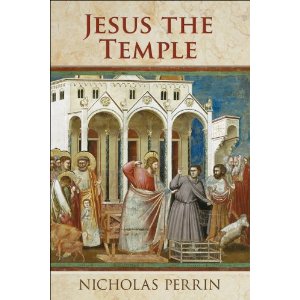 Perrin’s book Jesus the Temple is excellent. He follows the thought of N.T. Wright, for whom Perrin was a research assistant. Wright places Jesus’ teaching on the kingdom of God in its first-century Judaic context, arguing that the coming of the kingdom of God means the return from exile. God inaugurates the return from exile through the incarnation, life, death, resurrection and ascension of Jesus. The signs of the realization of the return from exile are the defeat of Israel’s enemies, the restoration of the temple, the flowing of the Gentiles to Jerusalem, and the renewal of creation. Wright points out that we see these signs in Jesus’ defeat of the enemies of sin (through forgiveness) and death (through resurrection), in the temple being redefined as Jesus’ body, in Jesus’ ministry to the Gentiles (and their incorporation into the people of God post-Pentecost), and in Jesus’ resurrected body as the first-fruit of the new creation.
Perrin takes up this theme, focusing on the restoration of the temple. The Jewish temple was not only the heart of worship but also the place of economic assistance for the poor, of social recognition, and of political confession. It was the place where Israel placed its hopes and from which it derived its national identity. But the temple was profaned by, inter alia, being constructed by human hands, by the corrupt administration of its priests, and by the defilement of the Gentiles. So, it functioned as a penultimate sign and anticipation of the true temple, which would bring together heaven and earth, God and humanity. Perrin argues that Jesus saw himself and his movement as the decisive embodiment of Yahweh’s eschatological temple.
Perrin describes how Jesus was not alone in developing counter-temple movements. The sects behind the Qumran and the Psalms of Solomon, as well as John the Baptist shared characteristics that set them against the temple and in anticipation of a new temple.
In Jesus’ cleansing of the temple, Perrin says that we see the most public expression of Jesus’ critique of the temple elite and their offenses toward the poor and the temple. It also is an announcement of Jesus’ establishment of a new temple in which he is its messianic high priest.
Perrin also links Jesus’ exorcisms and meals with the restoration of the temple. By defeating demonic powers, Jesus affirms that there is an alternative power to the temple. By dining with sinners, Jesus is not defiled but rather brings forgiveness, a power claimed through temple acts. Through these actions, Jesus and his followers constitute a new locus of the divine presence.
Another Jewish expectation that preceded the restoration of the temple was tribulation. Perrin argues that Jesus understand the period of tribulation as being well underway during his lifetime through the apostasy of Israel’s leadership, Herod and its temple aristocrats. Jesus bore this tribulation through persecution, torture and execution. And Jesus followers, the new temple built around the Cornerstone, continue to experience the tribulation as the temple is constructed.
One perspective I greatly appreciated was Perrin’s demonstration of Jesus’ solidarity with the poor as a function of his larger calling to be the eschatological temple. The temple aristocracy embezzled monies and then offered high interest loans to the poor. Thus, the financiers increased the temple landholdings and held the poor in an increasing cycle of destitution. The condition of being poor was not simply an economic, social or political status but also a theological reality. By thrusting those on the economic margins into disinheritance, the priestly rulers were in effect gerrymandering the boundaries of true Israel and forestalling full return from exile.
As high priest Jesus inaugurates Jubilee, which means not only an exile-ending release for the poor but also a prerequisite for proper temple worship. Jesus’ ministry among the poor, therefore, is ultimately grounded in his calling and introducing of a new temple. In the new temple, possessions are shared, almsgiving is redemptive and forgiveness entails economic debts, satisfying not only the immediate needs of the destitute but also giving them the ability to break the cycle of debt and poverty.
Jesus’ modeling and inviting to voluntary poverty and renunciation are not only for radical redistribution of possessions and diminishing one’s social status; they were also signs of the priestly calling (signifying the landless Levites).
Perrin also deals with the understanding of the temple in the early church and their connections and continuity with Jesus’ earthly ministry.
I highly recommend the book.
Visitors

 fragments and reflections