fragments and reflections
Culture
Can Christians Celebrate Memorial Day?
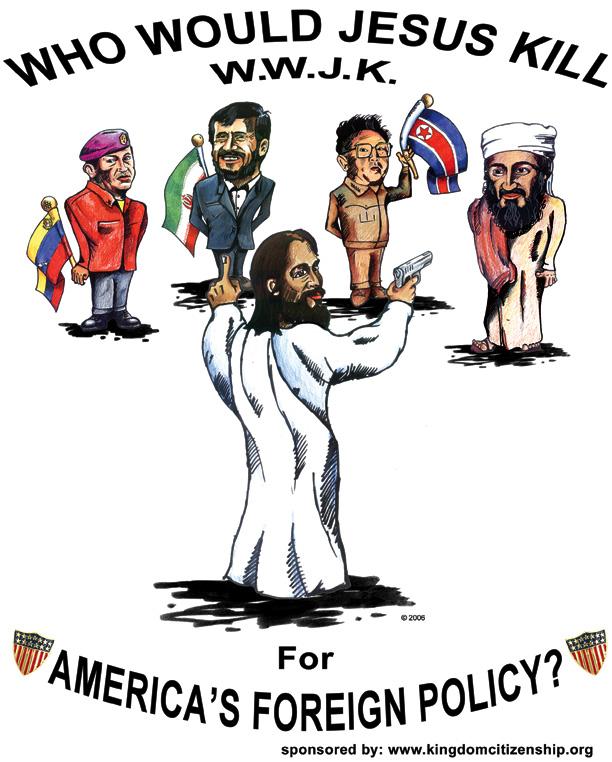
 Memorial Day is the major holy day of American civic religion. More than Presidents’ Day, more than Labor Day and even more than Independence Day, Memorial Day is set apart for a service of commemoration of a particular narration of what has made America America. The power of the saluting rifles, the glory of the roaring F-16s, the waving red, white and blue, and the parading military is public liturgy, evoking worship from each citizen. Although the celebration feeds the acceptance and perpetuation of the largest military the world has ever known, the focus of this worship service is the memorial for the fallen soldiers. My question is: should we as Christians participate in Memorial Day?
A few months ago, I was asked to write a letter to my grandfather to honor him for his service in the army during World War II. As a Christian, I wrestle with the reality of violence and its correlates of war, nationalism and soldiers. This is not a new struggle for we know that the early church debated whether one could be a Christian and still be a soldier. But I do realize that we live in a violent world and that our actions and reactions are not always black and white. Although my views on my grandfather’s military service are certainly different than his own, I wanted to honor him for risking his life, for fighting for something greater than himself, for the suffering he witnessed and experienced in his body and soul. And I honored him for surviving and for living his life as a veteran by trying to honor those who did not survive.
There is something to be said for committing to care for one’s place, to one’s community and to one’s people. E.M. Forster said that if it came to a choice between dying for his country and dying for his friend, he hoped that he would have the courage to deny his country. However, Alasdair MacIntyre criticized Forster, saying that if anyone can formulate such a contrast, they have no country and that they are a citizen of nowhere. Still, a major problem with our commitment to country, to friends, and to citizenry is the increasing tribalism, which grounds its collective identity through the exclusion of others. This is easily visible on Memorial Day as we honor our victims of war but not their victims of war. As a Christian participating in the Memorial Day liturgy, I think the honoring of the victims of our “collateral damage” would be a good start in differentiating ourselves from non-Christian commemoration. After all, we are the “holy people” that is called to love the strangers and even our enemies.
This can be a first step but not the last, as the waters of this strange baptism of the military run deep. A dear Christian lady that I know attaches to the signature of all her correspondence this declaration: “Only two defining forces have ever offered to die for you. Jesus Christ and the American GI. One died for your soul, the other for your freedom.” Sadly, the enshrinement of soldiers alongside Jesus is not uncommon.
This not only wrongly legitimizes the American military, it is also heretical by projecting salvific power onto the American GI. Here the soldier is not only an American idol; they are also the sacrifice placed on the altar of American claims to power. As Christians, we say that all power, honor and glory belong to a slain Lamb – an image that counters and subverts all worldly idols and their claims to power.
Also, Christians do not understand freedom and conferred by the State but rather by Christ. He whom the Son sets free is free indeed. That is why the heroes of the church are the martyrs: those who are free to lay down their lives for others. It is a little disturbing that many churches set aside time during their worship services to honor the soldiers who have died but do not set aside time during their services to honor the Christian martyrs, who lived and died as examples and witnesses to our faith.
The major irreconcilable difference between the American GI and Christ is that the soldier is commissioned to kill for the American people, while Jesus chose not to kill but rather to die for me and for all peoples, while we were still his enemies.
Ultimately, for Christians, America’s Memorial Day must be subordinated to the Church’s “Memorial Day,” which we celebrate every time we partake of the Eucharistic liturgy: taking the cup and the broken bread in remembrance of him who chose to die for us rather than to destroy us. We remember, ingest and proclaim his death until he comes. That is a Memorial we can truly celebrate.
How Generous Are We Americans?
While we were in the States this past year, we had many opportunities to share about our community, our ministry, and our experiences outside the U.S. It was interesting to hear people talk proudly about how generous Americans are towards other nations. And in a way, we are.
 Looking at the U.S. government’s foreign aid in 2009, you see that it approached 30 billion dollars, more than double the totals of the next closest nations. However, if you look at the sums as a percentage of Gross National Income, the graph tells a quite different story.
 Not only is the U.S. giving far below their target of 0.7% of the Gross National Income, but we are amongst the least generous of the world’s wealthiest nations.
Delivering Happiness on the Backs of the Unhappy

I recently read Tony Hsieh’s Delivering Happiness. Tony is the CEO of Zappos, an online shoe-seller. Hsieh seems to be a entrepreneurial genius. While a student at Harvard, he founded an internet company, which he later sold to Microsoft for millions. Then he invested in Zappos, which became the largest online shoe-seller and eventually merged with Amazon.
Hsieh’s book portrays a fantastic model of building a company by building its culture around its values, economic drivers and vision beyond the company. It seems that he has been able to engage cultural displacement and the lack of collective identity by developing a tribal identity for the corporation, its investors and its customers…without being corporate. The book also provides great examples for recruitment, interviewing, staff development and succession planning.
Hsieh primary presupposition is that you can create a work culture of happy people, and, as a corporation, you can value happiness more than profit, which in the long-term will mean higher profits. So, says Hsieh, if someone calls Zappos and wants to know where they can order a pizza in the middle of the night in their city, Zappos phone agents will try to help you out – even if you aren’t buying shoes.
While I find the idea of promoting happiness over profit refreshing, I ultimately don’t see how Hsieh or Zappos delivering what it promises. Sure, paying clients may sense happiness when they receive a surprise gift of flowers from Zappos, and Zappo employees may sense happiness as their company invests in their professional development and encourages a happy environment, and Zappo investors may sense happiness as they receive a return on their investment, all the while believing that they are bettering the world. But what about the shoe maker? Stories continue to come out about shoe corporations, like Nike or Adidas, exploiting their workers in countries likeHonduras,El Salvador andIndonesia. Does the happiness of these workers matter to Zappos? Is happiness reserved for the wealthy who can purchase via the internet and forgotten for the poor who suffer the brunt of corporate outsourcing?
“Delivering happiness” seems to be a clever sales ploy but, by failing to recognize the unhappiness of those who produce their goods, it is deceptive. Happiness, delivered on the backs of the unhappy, is no happiness at all.
Our Enemies: Why Do They Hate Us?
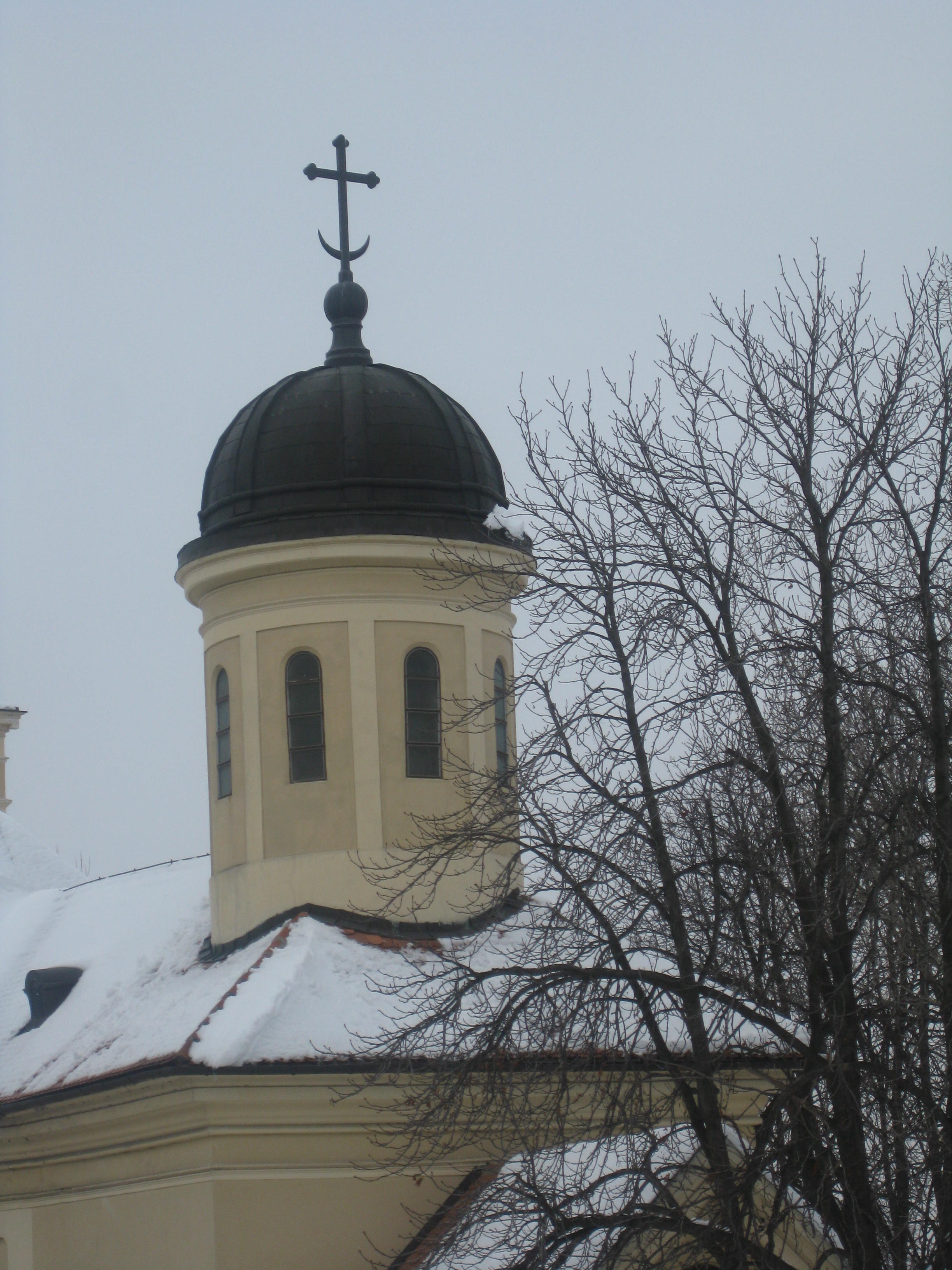 A few weeks back, we were in Serbia and visited the Monastery of the Great Martyr St. Demetrius in Velika Remeta. At the entrance, were greeted by a nun who talked to us about the various icons and saints as we looked through their books. Before we entered the monastery courtyard, she gave us a candle and told us to pray for our enemies. Lenuța said that we don’t have any enemies because when we love our enemies, they are no longer enemies. The nun responded without hesitation with a wisdom that is forged not in academia or in places of power or influence, but rather in prayer and in a secluded monastery – a setting which itself speaks as an act of faith that it is not humanity but God who redeems the world. The nun said, “You may not have enemies, but there may be others who see you as their enemy. Pray for them.” The monastery was beautiful and the monks hospitable, but it was through the words of this nun that God spoke to me and inspired me that day.
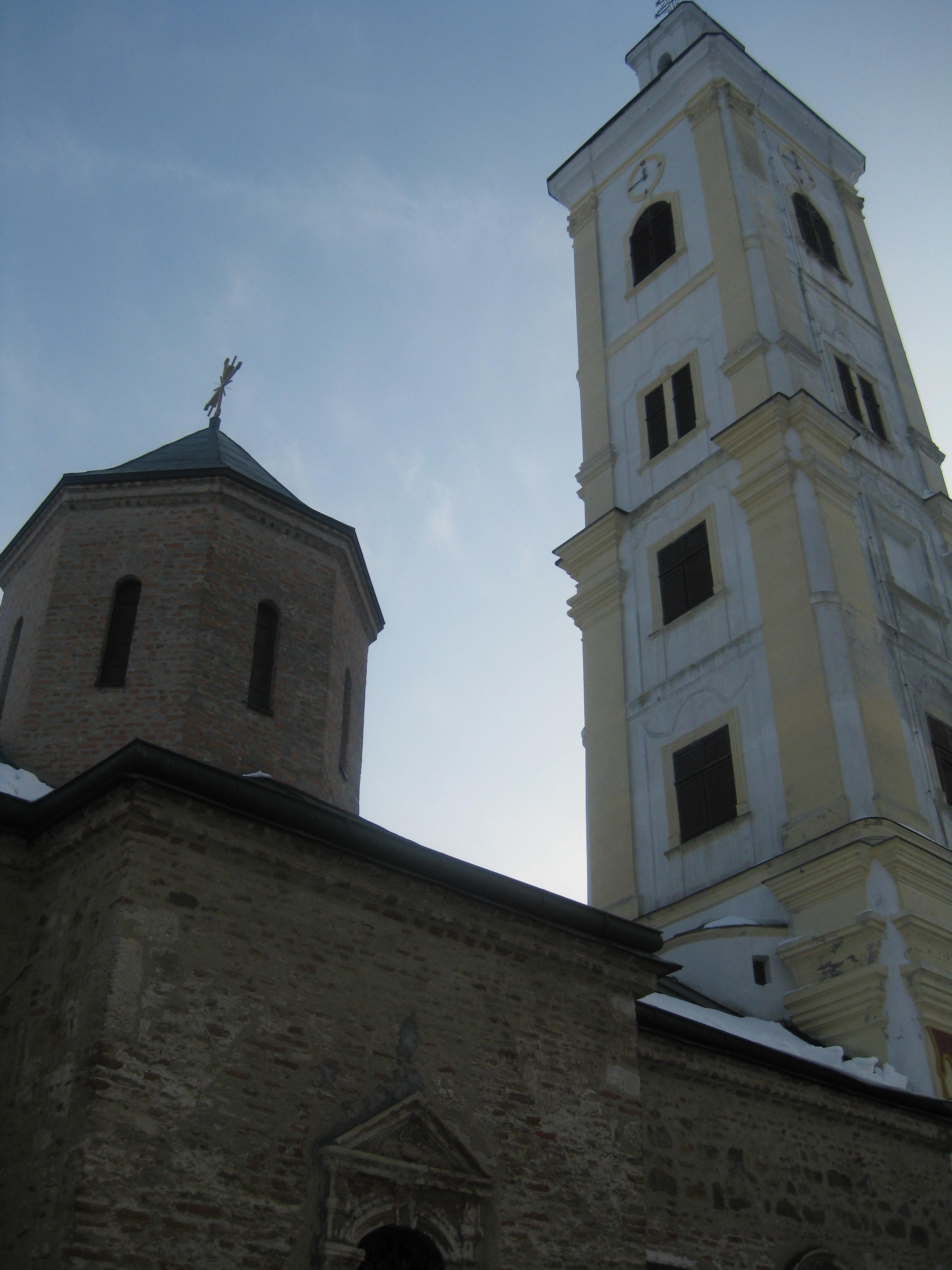 It is not easy to pray for our enemies as Jesus calls his followers to do. We are forced to uncomfortable introspection, asking, “Why do we hate another?” But the other side of this question, the one that this nun raised is even more disturbing and even subversive: “Why do they hate us?”
Remember, I was visiting a monastery in Serbia, a country recently wracked by the Balkan war and with a long history of violence. On our drive to the monastery, we passed a church that is crowned by a cross standing on top of a crescent – an image that even today evokes the slaughter of the Ottoman Muslims by the Serbian Christians. On the drive out of the monastery, we passed a communication tower that was devastated by NATO’s precision bombing. This was a place where enemies are real and where the scars of violence are deep and readily visible. This was a place where justifying the hating and killing of enemies is not difficult but even expected. Here, the nun’s words are all the more powerful: “Pray for those who see us as their enemy.”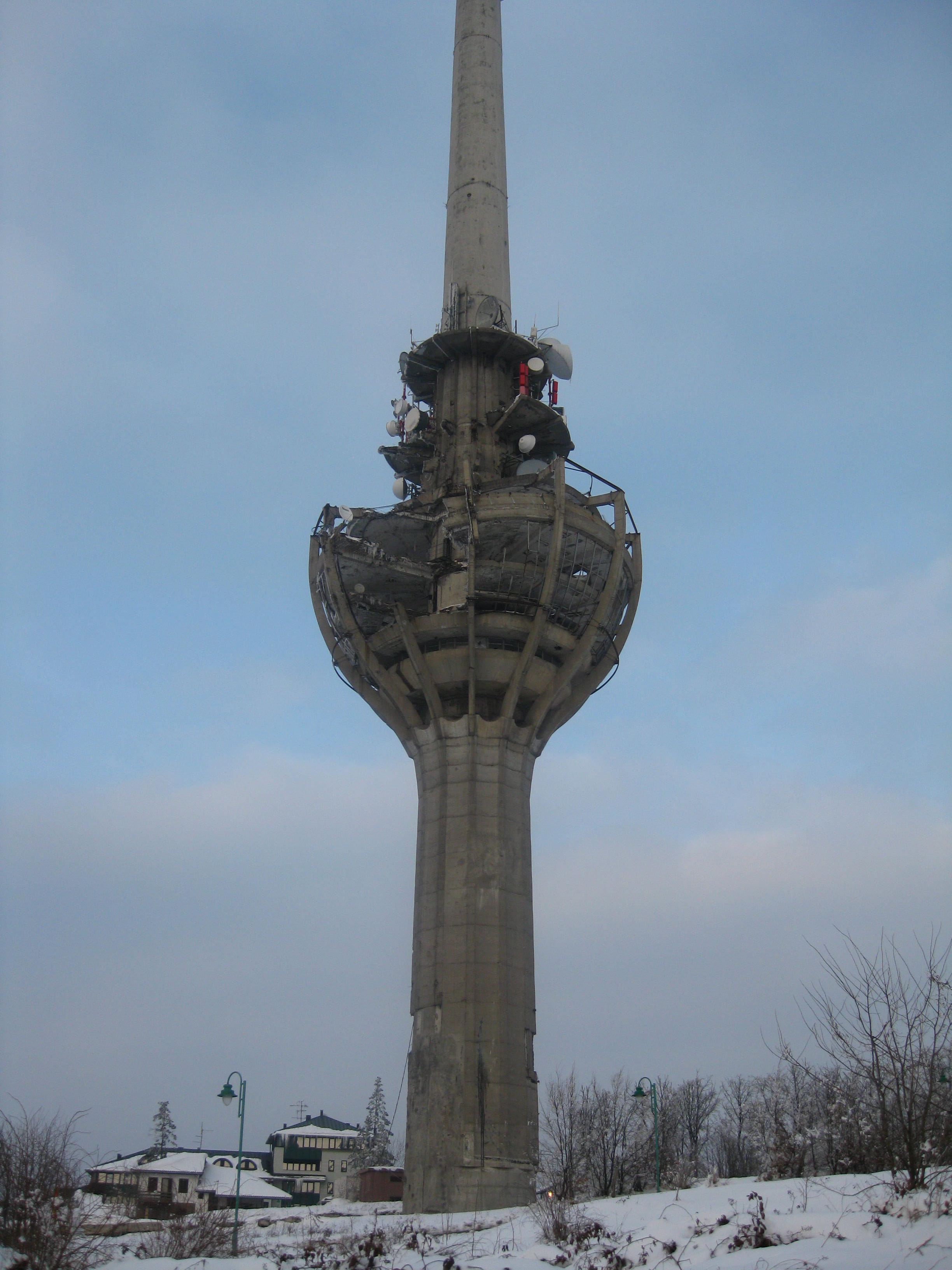
Gaining Perspective
 Romania celebrates May Day as their Labor Day, and most will go out to a lake, a park, or the Black Seato celebrate. Usually, we rent a big bus and take the kids from the “Valley” Community Center to a nearby forest. Although the drive only takes about 20 minutes, it’s always interesting to see the excitement of the kids and to hear their comments as we get out of the city.
For some of the children, it is their first time outside of the city. I sat next to a 12 year old boy, who has been coming to the Community Center since last September. He could barely stay seated as he fought with the bus curtain in order to see everything that passed by. He constantly said, “Look!” or asked “What’s that?” He saw his first wind turbine. He saw his first airport, although it is small and only used for crop-dusters. As he looked out over the vast field, he didn’t understand the differences in color and shades. I explained that the bright areas are where the sun is breaking through the clouds, the darker areas the shadows of the clouds, and the bluish area a large lake.
What was interesting for me was not only the sense of awe that this young boy had before a wide panorama of nature but also the fact that he was just noticing these things for the first time. I thought about how this simple and short excursion outside the norm of city life brought a different perspective on the world – one that is difficult to see from within the confines of tall apartment blocks and asphalt streets.
This young boy’s questions reminded me of another place marked by the sun and the clouds: Shadowlands. The movie includes one of C.S. Lewis’ famous statements: “I pray because I can’t help myself. I pray because I’m helpless. I pray because the need flows out of me all the time- waking and sleeping. It doesn’t change God- it changes me.” Of course, with numerous examples in Scripture of God being moved and changed by human prayer, Lewis’ words are only partially right. Still, his statement carries a particular weight in a culture that so often understands prayer as a means to changing God. Predominantly, we pray that God will answer our wishes, intervene in our circumstances and act on our behalf or the behalf of those we care for. And this is good and right, but not when we forget that when we pray, we are not primarily asking God to do our will but to reveal to us the will of the Father. We are placing ourselves before God and inviting God to change ourselves. When we spend time before God, we are changed – our desires, our values, our perspectives. It is like taking a trip out of the city and getting away from all we know and from all that has become normal, especially the normal that we fail to recognize as sin, dehumanization and all that is less than God’s desire for us.
In the Church, May Day is a celebration of Saint Philip and Saint James. In the midst of a culture, much like ours, that constantly competes to define our perspectives on life and promises to satisfy, Philip said, “Lord, show us the Father and then we shall be satisfied” (John 14:8). Jesus said to him, “Have I been with you all this time, Philip, and you still do not know me?” (14:9). Philip, like us, is so used to the world’s perspective that he, like my 12 year old friend, cannot differentiate the water and the fields from the shadows of the clouds. Gaining perspective comes from seeing Jesus. Jesus said to Philip, “Anyone who has seen me has seen the Father…” (14:9). When we see the Father, we have the perspective to identify the lights and shadows and a world that shimmers and sparkles in the springtime sun. As if seeing the world for the first time, we too sit with a sense of awe.
Although we feel economically depressed…
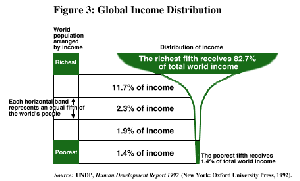 Everything around us seems to tell us that we need more and that we do not have enough. As a result, we carry this strange sensation of “poverty” and sometimes fantasize about “if I were rich…”
But it helps to take a step back and get some perspective. If you make $25,000 per year, you are wealthier than 90% of the world’s population. If you make $50,000 per year, you are wealthier than 99% of the world’s population. We are sitting luxuriously in the top of the wine glass.
Most of us are extremely wealthy but by looking at the super rich we feel poor. If we look, rather, to those who lack, we see that 6.7 billion people in the world and almost half of them live on less than $2 per day. Not only are we rich, but we can afford to help them live. But sadly, the gap between the rich and the poor continues to widen.

Today 40% of world’s wealth is owned by 1% of the population. In fact, the richest fifth of the population receives 82.7% of the total world income.
A World of Work Report from 2008 shows that, between 1990 and 2005, approximately two thirds of the countries experienced an increase in income inequality. The incomes of richer households have increased relative to those of the middle class and poorer households.
Likewise, during the same period, the income gap between the top and bottom 10 per cent of wage earners increased in 70 per cent of the countries for which data are available.
The gap in income inequality is also widening – at an increasing pace – between top executives and the average employee. For example, in the United States in 2007, the chief executive officers (CEOs) of the 15 largest companies earned 520 times more than the average worker. This is up from 360 times more in 2003. Similar patterns, though from lower levels of executive pay, have been registered in Australia, Germany, Hong Kong (China), the Netherlands and South Africa.
Most of us don’t realize how great the disparity is. But when we see these trends, we must ask ourselves how we can change them and how can we create a more just world.
Misperceptions of Wealth in America

Note. Pie charts depict the percentage of wealth possessed by each quintile; for instance, in the United States, the top wealth quintile owns 84% of the total wealth, the second highest 11%, and so on.
The myth of “trickle-down wealth” is still largely held in the U.S., especially by the right-wing, even though Reagan’s own budget director, who promoted this economic policy in the ‘80s, advocates against it today. A new study on American’s beliefs about the U.S. economy shows that American’s perceptions do not match reality.
The study, facilitated by Michael Norton of the Harvard Business School and Dan Ariely of Duke University, discovered that:
- Respondents dramatically underestimated the current level of wealth inequality.
- Respondents constructed ideal wealth distributions that were far more equitable than even their erroneously low estimates of the actual distribution, believing that the wealthiest quintile held about 59% of the wealth when the actual number is closer to 84%.
- All demographic groups – even those not usually associated with wealth redistribution such as Republicans and the wealthy – desired a more equal distribution of wealth than the status quo.
Respondents were presented with the three pair-wise combinations of these pie charts (in random order) and asked them to choose which nation they would rather join. A large nationally representative sample of Americans seems to prefer to live in a country more like Sweden than like the United States.
Given the consensus among disparate groups on the gap between an ideal distribution of wealth and the actual level of wealth inequality, why don’t more Americans – especially those with low income – advocate for greater redistribution of wealth? First, our results demonstrate that Americans appear to drastically underestimate the current level of wealth inequality, suggesting they may simply be unaware of the gap. Second, just as people have erroneous beliefs about the actual level of wealth inequality, they may also hold overly optimistic beliefs about opportunities for social mobility in the United States
Finally, and more broadly, Americans exhibit a general disconnect between their attitudes towards economic inequality and their self-interest and public policy preferences, suggesting that even given increased awareness of the gap between ideal and actual wealth distributions, Americans may remain unlikely to advocate for policies that would narrow this gap. Hopefully, the same wll not be true of the church.
Scandalul Slujirii: Iisus ne spală picioarele
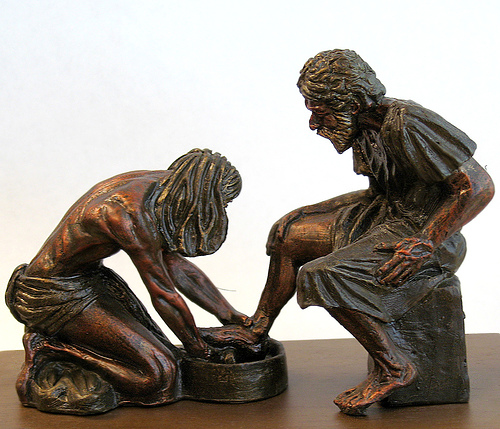 Una dintre celebrările stilului de viața ale comunităţii noastre este slujirea: sărbătorim slujirea care împlineşte părtăşia în comunitatea noastră. În fiecare dimineaţă ne întâlnim pentru părtăşie şi rugăciune. Este un timp când putem veni împreună înaintea lui Dumnezeu ca să ne concentrăm asupra dragostei Lui şi planurilor Lui, când putem să ne rugăm pentru ca slujirea noastră să fie motivată de Duhul Lui. Copiii care vin la Centrul Comunitar „la Vale” au multe nevoi: mâncarea, haina, adăpostul, educaţia şi, nu în ultimul rând, dragostea. Ne străduim să răspundem la aceste nevoi, dar ne gândim la chemarea noatră care nu este în primul rând să-i slujim pe aceşti copii, ci să-L slujim pe Dumnezeu şi să facem tot ca şi cum îi facem Domnului. Ne rugăm ca slujba noastră duhovnicească să fie prin aducerea trupurile noastre ca o jertfă vie, sfântă şi plăcută lui Dumnezeu.
Din păcate, este uşor de vorbit despre această dorinţă, dar e mai greu ca aceasta să fie practicată. De multe ori, nici nu suntem conştienţi de lucrarea lumii care încearcă să dicteze relaţiile noastre şi să ne modeleze după valorile ei. Prea uşor comunitatea noastră devine o instituţie şi slujirea noastră doar un serviciu. Încetul cu încetul valorile noastre devin statice şi structura noastră o ierarhie de domnie. Prin harul lui Dumnezeu, putem recunoaşte că suntem infiltraţi în modurile lumii. Cu toate că ne stăruim să-L cunoaştem pe Iisus şi să-L facem cunoscut în lumea pe care o iubeşte El, ne adâncim prea des în lumea întunecoasă a egoismului, a mândriei şi a abuzului de putere. „…Odată venită Lumina în lume, oamenii au iubit mai mult întunericul decât lumina, pentru că faptele lor erau rele” (Ioan 3:19).
Vedem iubirea întunericului nu numai în cei care urăsc Lumina, ci şi în proprii ucenici ai lui Iisus. „Între apostoli s-a iscat şi o ceartă, ca să ştie care din ei avea să fie socotit cel mai mare.” Trebuie să mărturisim că această ispită ne înfruntă şi pe noi adesea. Vrem să fim cel mai apreciat, cel mai cunoscut, cel mai de seamă. Vrem să locuim poziţiile înalte: preşedinte, director, pastor, lider. Şi de multe ori ne deosebim prin caracteristicle care ne identifică cu aceste locuri de sus: familia noastră, şcoală noastră, casa noastră, maşina noastră, hainele noastre. Întrebăm, împreună cu apostolii, cine este cel mai mare, cine este cel mai bogat, cine este cel mai sigur? Iisus dă aceste valori ale lumii peste cap şi combate într-un mod activ manipularea egoistă a lor.
În al 13-lea capitol din Evanghelia după Ioan, Iisus vorbeşte despre coborârea lui Iisus în micime şi slăbiciune, care culminează apoi în condamnarea şi moartea Lui pe cruce ca un defăimător, un marginalizat şi criminal. Până în acest capitol, Iisus este puternic, e ca un „om” de sus. El face minuni, vindecă pe cei bolnavi şi porunceşte vântului să se liniştească, şi vorbeşte cu autoritatea cărturarilor şi a Fariseilor. Arată ca un mare prooroc, poate chiar…Mesia. Puterea lui Dumnezeu este cu El. Din ce în cei mai mulţi oameni Îl urmăresc, sperând că El îi va înlătura pe romani şi va elibera pe Israel reînnoind demnitatea poporului ales. Timpul de Paşte se apropie iar muţimea şi prietenii lui se întreabă: „se va face cunoscut la Paşte?” „poate atunci vor crede toţi în El”. Toţi aşteaptă să se întâmple ceva deosebit însă în loc să facă ceva extraordinar, Iisus alege calea joasă spre slăbiciune. Se pare că astfel îi lasă pe ceilalţi să-L biruiască. Călătoria aceasta în jos şi în slăbiciune are ca început momentul în care Cuvântul s-a făcut trup în pântecele Mariei şi continuă într-un mod vizibil pentru ucenici la spălarea picioarelor. Se sfârşeşte cu răstignirea, agonia şi cu moartea. Aceste fapte „slabe” ale lui Iisus îi scandalizează pe ucenici aşa cum ne scandalizează şi pe noi.
„Iisus, fiindcă ştia că Tatăl Îi dăduse toate lucrurile în mâni, că de la Dumnezeu a venit şi la Dumnezeu Se duce, S-a sculat dela masă, S-a dezbrăcat de hainele Lui, a luat un ştergar şi S-a încins cu el” (Ioan 13:3-4). Toate lucurile sunt în mâinile Lui, dar El le pune la o parte. Evanghelistul Ioan foloseşte această acţiune în legătură cu viaţa şi moartea lui Iisus (Ioan 10:11,15,17). „Nimeni nu Mi-o (viaţa) ia cu sila, ci o dau Eu dela Mine. Am putere s-o dau şi am putere s-o iau iarăş…” (Ioan 10:18). A-şi da jos hainele înseamnă a-şi da viaţa. Hainele au o semnificaţie importantă. Exprimă identitate, demnitate şi autoritate. Mă gândesc la ce simt copiii noştri atunci când primesc hainele noi. Prin hainele lor curate şi noi, ei au o demnitate nouă nemaiputând fi identificaţi aşa de uşor cu copiii străzii. În cultura evreiască, îmbrăcămintea era consituită dintr-o cămaşă care se putea purta doar în intimitate şi o haină pe deasupra pentru locurile publice. Iisus ne porunceşte „Cine are două haine, să împartă cu cine n-are nici una” (Luca 3:11); „Dacă îţi ia cineva haina cu sila, nu-l opri să-ţi ia şi camaşa” (Luca 6:29); „Şi să nu luaţi nimic cu voi pe drum…nici toiag, nici traistă, nici pâine, nici bani, nici două haine” (Luca 9:3). Vedem în Ioan 19:23-24 că după ce îl răstignesc pe Iisus, soldaţii romani Îi iau hainele „nevaloroase” pe care le împart printre ei. Cămaşa însă, făcută dintr-o singură ţesătură, este prea frumoasă şi de aceea ei trag la sorţi pentru ea. Vorbim despre hainele Lui iar la spălarea picioarelor Iisus se dezbracă de haina care îi distingea identitatea. Îi invită pe ucenicii Lui la intimitate. El se dezbracă de demnitate, Îşi pune deoparte autoritatea (Fil 2), renunţă la statutul Lui social: El-rabinul, învăţătorul, stăpânul. Apoi…spală picioarele uceniciilor Lui.
Această muncă era atât de josnică încât nu permitea nici robilor evrei să o facă. Era muncă pentru un sclav, pentru o femeie faţă de soţul ei sau pentru un copil faţă de tatăl său, dar o ruşine pentru un bărbat, mai ales pentru unul de seamă. Iisus se plasează în această poziţie josnică (Fil 2). Tot El afirmă: „Cei dintâi vor fi cei din urmă şi cei din urmă vor fi cei dintâi.” El este cel mai din urmă, de aceea El este cel mai dintâi. Iisus a pus deoparte ierarhia puterii şi a răsturnat-o, făcând din aceasta o ierarhie de egalitate. Iisus le spune uceniciilor Lui: „V-am numit slujitorii mei, dar acum vă numesc prietenii mei.”
Cum ne organizăm noi familiile, comunitătile, instituţiile? După prietenie, dragoste şi respect reciproc sau după putere, control şi manipulare din cauza fricii noastre şi din cauza dorinţei de a fi „cineva”?
Probabil că ne asemănăm foarte bine cu Petru. El este scandalizat de Stăpânul lui care se aşează la picioarele lui ca să i le spele. La această masă a Domnului, Iisus îi avertizează: „Ce fac Eu, tu nu pricepi acum, dar vei pricepe după aceea” (13:7). Faptele lui Iisus nu se încadrează paradigmei lui Petru de autoritate şi putere. Petru îi spune lui Iisus, „Niciodată nu-mi vei spăla picioarele!” Dar răspunsul este: „Dacă nu te spăl Eu, nu vei avea parte deloc cu Mine” (Ioan 13:8). Petru recită valorile sistemului: Un om al puterii merită să fie slujit, un om al autorităţii îşi hrăneşte şi îşi protejează puterea, un om al puterii profită de poziţia şi de privilegiul lui. Cuvintele lui Iisus sunt aspre. Ne aducem aminte de o altă convorbire între Iisus şi Petru. Petru auzise că Stăpânul lui va urma calea suferinţei şi că va muri pe cruce. Cu cuvintele lumii în gură, Petru îl mustră pe Iisus încerând să-i arate calea cea bună a autorităţii. Iisus însă îi răspunde: „Înapoia Mea, Satano: tu eşti o piatră de poticnire pentru mine! Căci gândurile tale nu sunt gândurile lui Dumnezeu, ci gânduri de ale oamenilor.” (Matei 16:23) Cuvintele lui Iisus sunt foarte aspre. El recunoaşte că aceste gânduri sunt de la Satana şi că îl vor împiedica dacă le ascultă. Putem vedea aceste lucruri chiar în zilele noastre. Satana provoacă pe liderii lumii să trăiască după valorile lui, bazate pe competiţie, înşelătorie, minciună şi luptă inhibând pe cei care încearcă să trăiască după valorile Împărăţiei lui Dumnezeu. Satana îi oferă lui Iisus împărăţiile lumii, dar Iisus răspunde, „Pleacă, Satano căci este scris: Domnului, Dumnezeului tău să te închini şi numai Lui să-I slujeşti” (Matei 4:10). Trebuie să acţionăm la fel. Trebuie să ştim că cea ce facem este spre întâmpinarea Stăpânului care va veni şi care se va încinge şi ne va aşeza la masă. „Mijlocul să vă fie încins şi făcliile aprinse. Şi să fiţi ca nişte oameni, care aşteaptă pe stăpânul lor să se întoarcă de la nuntă, ca să-i deschidă îndată, când va veni şi va bate la uşă. Ferice de robii aceia, pe care stăpânul îi va găsi veghind la venirea lui! Adevărat vă spun, că el se va încinge, îi va pune să şadă la masă, şi se va apropria să le slujească.” (Luca 12:35-37)
Celebrating Passover Lent
 In the Eastern Orthodox Church, Lent (a 40 day fast) is practiced before Christmas as well as before Passover. Fasting Lent is not an option, but rather an expectation of every Christian. While on certain days fasting means eating only one meal of bread and water per day, most of Lent entails fasting from any foods that come from animals (e.g. meat and dairy) or made with oil.
One may be skeptical of the Orthodox fast, as luxuries like dark chocolate and coffee are allowed – an aspect that may irritate certain ascetic sensibilities. But I still think the fast is valuable and particularly important in our day and culture.
In the West, people talk about giving up something for Lent. The Orthodox fast, however, is not subject to the choice of the individual. Rather, it is each Christian’s participation in a collective sacrifice, in the life of the Church community, and in submission to its long tradition. The collective fast challenges the underlying assumptions of western notions of “individual” and “choice.”
The Orthodox Lent also develops a consciousness for eating. Every time you sit down to prepare your meal, you have to consider what is in it. In a culture of fast-eating and in a food market where meals are prepared and packaged for consumption, we are largely out of touch with what we are ingesting. We eat unconsciously. Lent gives us space and distance from our aggressive culture. The fast helps us to think about the fruits of the earth, about the miracle of life and the growth of delicious and nutritious foods that come into being from a seed and dirt and water. When we stop to thank God for His goodness in providing our daily bread, we gratefully recognize where the food came from, who labored for its cultivation and preparation, and how it arrived on our table.
The Orthodox Lent also impedes our drive for immediate gratification. We live in societies that measure their collective health by how much their citizens consume. Therefore, consumption is made to be fast and easy. Fast-food, internet delivery and credit-based spending all enable easy consumption in the now. But fasting cultivates delayed gratification and delayed gratification, like physical exercise, makes us stronger and healthier. By disciplining our intake of certain foods, we enjoy them more when we do eat them. Fasting also develops our power to wait. Here, patience is the ability to endure sacrifice in order to receive something better in the future. By saying “no” to our desires to immediately have and consume, we develop an inner strength that is less motivated and manipulated by desire.
Although Lent is demanding and challenging, it is a celebration. It is a celebration of life together, of consciousness, and discipline. Much more than this, the Lenten celebration is anticipatory: looking and longing for the coming of God.
Visitors

 fragments and reflections